Imagine walking into a cozy bar after a long day. The bartender asks a simple question: “Would you like bourbon or whiskey?” Many people pause at this moment because the terms sound similar, yet they are not exactly the same. Understanding the difference between burbon and whiskey helps drink enthusiasts, culinary learners, and even casual readers appreciate the culture behind these famous spirits.
In everyday conversations, people often compare burbon vs whiskey as if they were two completely different drinks. In reality, bourbon is a specific type of whiskey with strict production rules. Still, the difference between burbon and whiskey matters in taste, ingredients, and heritage. Knowing the difference between burbon and whiskey can help you order confidently, understand drink menus, and recognize the craft behind each bottle.
This article explains the difference between burbon and whiskey in a clear and practical way, making it useful for both beginners and experts.
Key Difference Between the Both
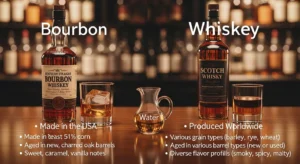
The main difference between burbon and whiskey lies in their ingredients, origin, and production rules.
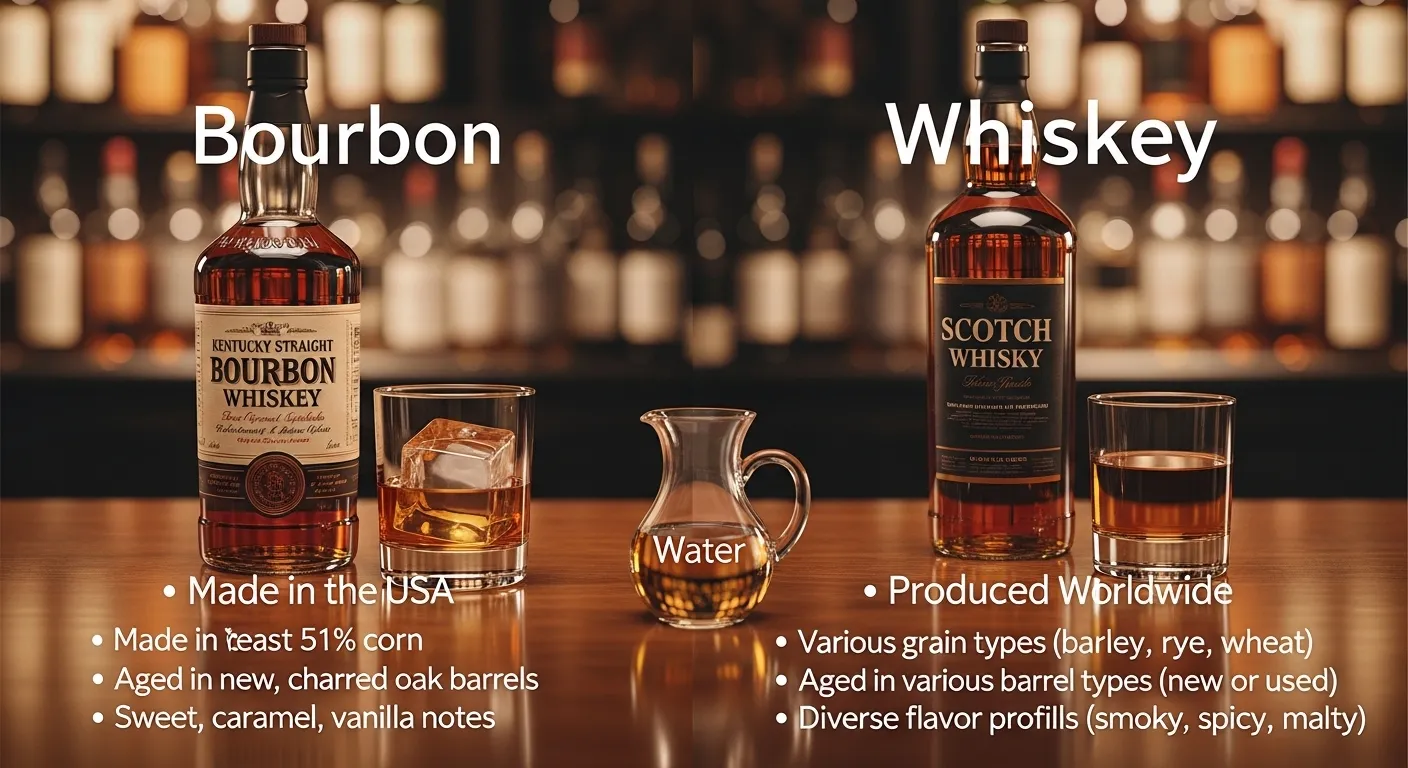
- Bourbon is a type of whiskey made mainly in the United States and must contain at least 51% corn in its grain mixture.
- Whiskey is a broad category of distilled spirits made from fermented grain mash, produced in many countries.
In simple terms:
All bourbon is whiskey, but not all whiskey is bourbon.
Why Is Their Difference Necessary to Know for Learners and Experts?
Understanding the difference between burbon and whiskey is important for cultural, educational, and professional reasons.
First, knowledge of spirits is part of culinary arts and hospitality education. Bartenders, chefs, and beverage experts must understand how each drink is made and served.
Second, the distinction represents heritage and craftsmanship. Bourbon is closely tied to American distilling traditions, while whiskey has roots in Scotland, Ireland, and many other countries.
Third, knowing the burbon vs whiskey difference helps consumers make better choices when selecting drinks for cooking, cocktails, or tasting experiences.
Finally, recognizing the difference between burbon and whiskey helps prevent misunderstandings in menus, recipes, and conversations about spirits.
Pronunciation of the Both
Bourbon
- US pronunciation: /ˈbɝː.bən/
- UK pronunciation: /ˈbɔː.bən/
Whiskey
- US pronunciation: /ˈwɪs.ki/
- UK pronunciation: /ˈwɪs.ki/
Now that the pronunciation is clear, we can explore the detailed difference between burbon and whiskey and understand how they vary in production, flavor, and tradition.
Difference Between the Keywords
1. Grain Composition
Bourbon must contain at least 51% corn, while whiskey can use various grains like barley, rye, wheat, or corn.
Example 1:
A Kentucky bourbon uses 70% corn for sweetness.
Example 2:
Scotch whiskey mainly uses malted barley.
2. Geographic Origin
Bourbon is primarily associated with the United States, especially Kentucky. Whiskey can be produced worldwide.
Example 1:
A bottle labeled Kentucky bourbon comes from the USA.
Example 2:
Irish whiskey is produced in Ireland.
3. Aging Barrels
Bourbon must be aged in new charred oak barrels, while whiskey may use reused barrels.
Example 1:
Bourbon producers burn the inside of barrels before aging.
Example 2:
Scotch whiskey often ages in used wine or sherry barrels.
4. Flavor Profile
Bourbon usually tastes sweet, rich, and caramel-like, while whiskey flavors vary widely.
Example 1:
Bourbon may have vanilla and caramel notes.
Example 2:
Peated Scotch whiskey can taste smoky.
5. Legal Definition
Bourbon has strict legal rules in the United States. Whiskey has broader definitions depending on the country.
Example 1:
US law defines bourbon production standards.
Example 2:
Canadian whiskey follows different regulations.
6. Distillation Proof
Bourbon cannot be distilled above 160 proof and must enter barrels at 125 proof or lower.
Example 1:
A bourbon distillery follows strict proof limits.
Example 2:
Some whiskeys may use slightly different proof standards.
7. Color
Bourbon naturally develops a deep amber color from new charred barrels.
Example 1:
A bourbon bottle often has a dark golden color.
Example 2:
Some whiskeys appear lighter depending on barrel type.
8. Regional Identity
Bourbon is considered an American heritage spirit, while whiskey represents many cultures.
Example 1:
Kentucky celebrates bourbon festivals.
Example 2:
Scotland celebrates Scotch whisky traditions.
9. Production Process
Bourbon production follows strict guidelines, while whiskey-making methods vary.
Example 1:
Bourbon must use new charred barrels.
Example 2:
Irish whiskey often uses triple distillation.
10. Labeling
If a bottle says bourbon, it must follow bourbon laws. Whiskey labels vary.
Example 1:
“Straight bourbon” indicates strict aging rules.
Example 2:
A generic whiskey label may not specify grain ratios.
Nature and Behaviour of Both
Bourbon
Bourbon tends to be smoother and sweeter because of its corn content and charred barrels. Its flavor often includes caramel, vanilla, and oak notes.
Whiskey
Whiskey has a broader personality. Depending on the region and grains used, it can be smoky, spicy, fruity, or malty.
Why People Are Confused About Their Use?
Many people confuse bourbon and whiskey because bourbon is technically part of the whiskey family. The terms often appear interchangeably in menus or casual conversation.
| Aspect | Bourbon | Whiskey | Similarity |
| Category | Specific type | Broad category | Both distilled spirits |
| Main grain | Corn (51%+) | Various grains | Grain-based |
| Origin | USA | Worldwide | Aged beverages |
| Flavor | Sweet | Varies | Often served neat or in cocktails |
Which Is Better in What Situation?
Bourbon
Bourbon works well in classic cocktails like the Old Fashioned or Mint Julep. Its sweetness balances bitters and citrus flavors. Many people also enjoy sipping bourbon slowly because of its smooth caramel taste.
Whiskey
Whiskey is better when you want variety. For example, smoky Scotch works well with rich meals, while Irish whiskey pairs nicely with lighter drinks and desserts.
How the Keywords Are Used in Metaphors and Similes
Bourbon and whiskey sometimes appear in figurative language.
Examples:
- “His voice was as smooth as bourbon.”
- “The story burned like strong whiskey in the throat.”
These metaphors emphasize strength, warmth, and richness.
Connotative Meaning
Bourbon
Positive: tradition, craftsmanship
Example: “The small distillery produced bourbon with pride.”
Neutral: alcoholic beverage
Example: “The restaurant served premium bourbon.”
Negative: excess drinking
Example: “Too much bourbon ruined the evening.”
Whiskey
Positive: heritage and culture
Example: “Irish whiskey represents centuries of tradition.”
Neutral: common spirit
Example: “He ordered whiskey with ice.”
Negative: harsh drinking habit
Example: “Cheap whiskey symbolized a rough lifestyle.”
Idioms or Proverbs Related to the Words
- “Whiskey courage”
Meaning: Confidence gained after drinking alcohol.
Example: “He had whiskey courage before giving the speech.” - “Pouring whiskey on the fire”
Meaning: Making a situation more intense.
Example: “His angry reply poured whiskey on the fire.”
Works in Literature Featuring the Keywords
- “The Bourbon Thief” – Crime novel by Tiffany Reisz (2016)
- “Whiskey When We’re Dry” – Western novel by John Larison (2018)
- “Bourbon Empire” – Historical nonfiction by Reid Mitenbuler (2015)
Movie Names Made on Keywords
- Whiskey Tango Foxtrot – 2016, USA
- The Bourbon Story – Documentary style film (USA)
- Kings of Whiskey – 2014, Scotland documentary
Frequently Asked Questions
1. Is bourbon stronger than whiskey?
Not necessarily. Alcohol strength depends on the specific bottle, not the category.
2. Is bourbon always made in Kentucky?
It can be made anywhere in the United States, but Kentucky produces most of it.
3. Can whiskey taste sweet like bourbon?
Some whiskeys can be sweet, but bourbon naturally tastes sweeter due to corn.
4. Why is bourbon darker?
New charred oak barrels give bourbon a deeper color.
5. Is every bourbon a whiskey?
Yes. Bourbon is a specific type of whiskey.
How Both Are Useful for Surroundings
Both bourbon and whiskey play roles in social culture, hospitality industries, and culinary arts. They are used in cooking sauces, desserts, and traditional cocktails. Distilleries also contribute to tourism and local economies.
Final Words for the Both
Bourbon and whiskey represent centuries of tradition and craftsmanship. While bourbon follows strict American rules, whiskey embraces global diversity and different flavors.
Conclusion
The difference between burbon and whiskey becomes clear once we understand that bourbon is a specialized form of whiskey with unique production rules. Bourbon must contain at least 51% corn and age in new charred oak barrels, while whiskey represents a broader category of grain-based spirits produced worldwide. Exploring burbon vs whiskey helps people appreciate the craftsmanship, heritage, and flavor profiles behind each drink. Whether you prefer the sweet smoothness of bourbon or the wide variety of whiskey styles, knowing their differences allows you to enjoy them more confidently and knowledgeably.

I am content creator and comparison blogger focused on analyzing key differences between terms, concepts, and ideas to deliver accurate, easy-to-understand information. So I decided to create a platform where these differences are explained in the simplest way possible.