Imagine a person ordering coffee at a café. The barista asks, “Do you want regular milk or lactose-free milk?” The customer pauses for a moment, confused. Many people think that lactose and dairy mean the same thing, but they actually describe two different things. Understanding the difference between lactose and dairy can help people make better food choices, especially those with dietary restrictions.
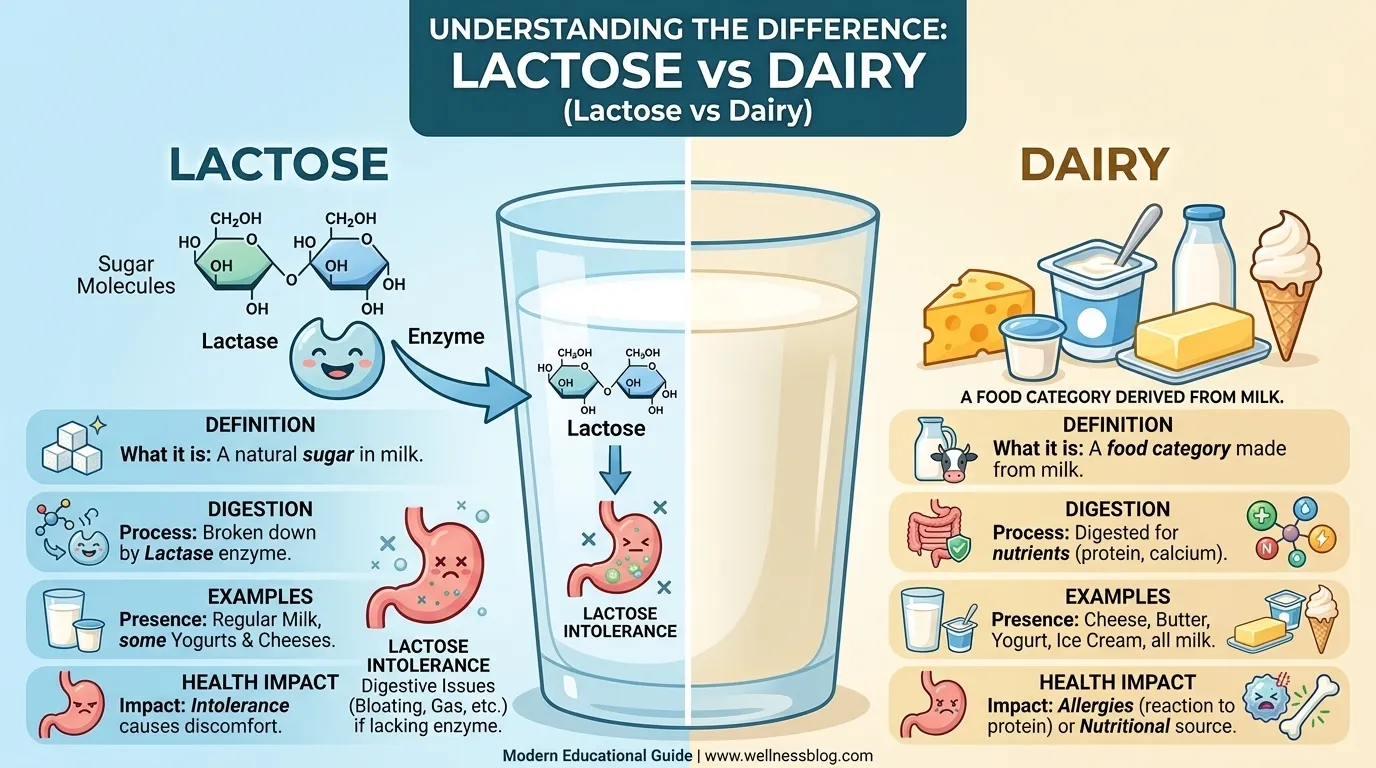
Lactose vs dairy is a common topic in nutrition and health discussions. Lactose refers to a specific natural sugar found in milk, while dairy refers to a broad category of foods made from milk. Because these terms are often used together, people easily mix them up.
Learning the difference between both helps consumers understand food labels, manage allergies or intolerances, and make healthier decisions. Whether you are a student, nutrition learner, or food expert, understanding lactose vs dairy improves knowledge about food science and daily nutrition.
Key Difference Between Both
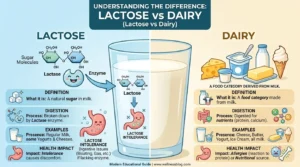
The difference between lactose and dairy lies in their definitions and scope.
- Lactose is a natural sugar present in milk and dairy products.
- Dairy refers to all foods that come from milk, including milk itself, cheese, butter, yogurt, and cream.
In simple terms, lactose is a component inside dairy products, while dairy is the entire category of milk-based foods.
Why Is Their Difference Necessary to Know for Learners and Experts?
Knowing the difference between lactose and dairy is important in several areas of society. Nutritionists, doctors, food scientists, and even consumers need this knowledge to make informed decisions.
For learners, understanding both builds a strong foundation in nutrition and food science. Students studying health sciences often encounter these terms when learning about digestion, metabolism, and dietary allergies.
For experts such as dietitians and medical professionals, the distinction helps them recommend proper diets. For example, a person with lactose intolerance must avoid lactose but may still eat lactose-free dairy products.
Pronunciation of Both (US & UK)
Lactose
- US: /ˈlæk.toʊs/
- UK: /ˈlæk.təʊs/
Dairy
- US: /ˈder.i/
- UK: /ˈdeə.ri/
Although their pronunciation is simple, the meanings differ greatly. Now that we understand how to say the words correctly, let us explore the difference between lactose and dairy in detail.
Difference Between the Keywords
1. Definition
Lactose: A natural sugar found in milk.
Example 1: Lactose gives milk a slightly sweet taste.
Example 2: Babies digest lactose easily with the help of enzymes.
Dairy: Foods produced from milk.
Example 1: Cheese and yogurt are common dairy foods.
Example 2: Butter is another popular dairy product.
2. Nature
Lactose: A chemical compound (carbohydrate).
Example 1: Lactose is broken down into glucose and galactose.
Example 2: The body uses lactase enzyme to digest lactose.
Dairy: A food category.
Example 1: Milk is the most basic dairy item.
Example 2: Ice cream is also part of the dairy family.
3. Scope
Lactose: A single ingredient.
Example 1: Lactose may exist in milk powder.
Example 2: Lactose can be removed in lactose-free milk.
Dairy: Includes many products.
Example 1: Cream and butter belong to dairy.
Example 2: Yogurt and cheese are also dairy foods.
4. Digestion
Lactose: Requires the lactase enzyme.
Example 1: Without lactase, lactose causes stomach discomfort.
Example 2: Lactose intolerance occurs when the body lacks lactase.
Dairy: Digestion depends on product type.
Example 1: Hard cheese contains less lactose and is easier to digest.
Example 2: Yogurt may be easier to digest due to bacteria.
5. Health Conditions
Lactose: Linked to lactose intolerance.
Example 1: Some people cannot digest lactose.
Example 2: They may experience bloating or gas.
Dairy: Linked to milk allergies.
Example 1: Some people are allergic to milk proteins.
Example 2: They must avoid all dairy products.
6. Presence
Lactose: Found only in milk and milk-derived ingredients.
Example 1: Milk contains natural lactose.
Example 2: Whey powder contains lactose.
Dairy: Includes milk and processed products.
Example 1: Cheese is a dairy food.
Example 2: Cream is also dairy.
7. Dietary Alternatives
Lactose: Can be removed from milk.
Example 1: Lactose-free milk is available in stores.
Example 2: Lactase tablets help digest lactose.
Dairy: Can be replaced with plant products.
Example 1: Almond milk replaces dairy milk.
Example 2: Coconut yogurt replaces dairy yogurt.
8. Role in Food
Lactose: Adds sweetness and energy.
Example 1: Lactose contributes to milk flavor.
Example 2: It helps in fermentation of yogurt.
Dairy: Provides nutrients and variety.
Example 1: Dairy foods provide calcium.
Example 2: Dairy products add richness to recipes.
9. Nutritional Value
Lactose: Provides carbohydrate energy.
Example 1: Lactose supplies calories.
Example 2: It helps infants grow.
Dairy: Provides multiple nutrients.
Example 1: Milk provides calcium and protein.
Example 2: Cheese contains vitamins and minerals.
10. Food Labeling
Lactose: May appear as an ingredient on labels.
Example 1: Lactose may be listed in processed foods.
Example 2: Some medicines contain lactose.
Dairy: Listed as a food category.
Example 1: Food labels may mention “contains milk.”
Example 2: Dairy warnings help allergic individuals.
Nature and Behaviour of Both
Lactose
Lactose behaves like a carbohydrate. It dissolves in milk and gives it mild sweetness. During digestion, enzymes break lactose into simpler sugars. In fermentation processes, bacteria convert lactose into lactic acid.
Dairy
Dairy products behave as nutrient-rich foods. They contain proteins, fats, vitamins, minerals, and sometimes lactose. Dairy products can be fermented, processed, or aged to create different foods like cheese, yogurt, and butter.
Why People Are Confused About Their Use?
Many people confuse lactose vs dairy because the two terms are strongly connected. Since lactose exists in dairy products, people assume they mean the same thing.
| Feature | Lactose | Dairy | Similarity |
| Meaning | Sugar in milk | Food from milk | Both related to milk |
| Type | Chemical compound | Food group | Found together |
| Scope | Specific ingredient | Broad category | Used in nutrition discussions |
| Health issue | Lactose intolerance | Milk allergy | Affect diet choices |
Which Is Better in What Situation?
Lactose
Lactose itself is beneficial for people who can digest it properly. It provides quick energy and supports infant nutrition. Lactose also helps the body absorb calcium effectively. However, individuals with lactose intolerance should avoid it or use lactose-free products.
Dairy
Dairy products are valuable sources of calcium, protein, and vitamins. They support bone health and overall nutrition. In cooking, dairy adds flavor and texture. However, people with dairy allergies or strict vegan diets may choose plant-based alternatives instead.
How the Keywords Are Used in Metaphors and Similes
Sometimes food words appear in creative language.
Lactose
- “Sweet as lactose in fresh milk.”
- “His explanation dissolved like lactose in warm milk.”
Dairy
- “Life on the farm was rich like a dairy harvest.”
- “Her work ethic was steady like a dairy farmer’s routine.”
Connotative Meaning
Lactose
- Neutral: “Milk naturally contains lactose.”
- Negative: “Lactose causes stomach discomfort for some people.”
Dairy
- Positive: “Dairy foods strengthen bones.”
- Neutral: “The store sells fresh dairy products.”
Idioms or Proverbs Related to the Words
Although there are no common idioms specifically about lactose, dairy connects to milk-related sayings.
- Don’t cry over spilled milk.
Example: Losing one chance is not the end, so don’t cry over spilled milk. - Milk the situation.
Example: He continued to milk the situation for sympathy. - The cream rises to the top.
Example: Hard-working people succeed because the cream rises to the top.
Works in Literature
- “The Omnivore’s Dilemma” – Nonfiction, Michael Pollan, 2006
- “Milk: The Surprising Story of Milk Through the Ages” – History, Anne Mendelson, 2008
- “The Milk of Human Kindness” – Drama reference, inspired by William Shakespeare themes
Movies Related to Dairy or Milk
- Milk (2008, USA)
- The Milk of Sorrow (2009, Peru/Spain)
- Milk Money (1994, USA)
Frequently Asked Questions
1. What is the main difference between lactose and dairy?
Lactose is a sugar found in milk, while dairy refers to all foods made from milk.
2. Can someone be lactose intolerant but still eat dairy?
Yes. Some dairy foods like aged cheese contain very little lactose.
3. Is lactose present in all dairy products?
Most dairy products contain lactose, but some processed items remove or reduce it.
4. Are lactose-free products still dairy?
Yes. Lactose-free milk is still dairy because it comes from milk.
5. Are plant-based milks dairy?
No. Almond, soy, and oat milk are not dairy products.
How Both Are Useful for Surroundings
Lactose and dairy play important roles in food systems. Lactose supports fermentation processes used in yogurt and cheese production. Dairy farming provides food, employment, and economic stability in many regions. Dairy products also contribute to balanced diets by supplying essential nutrients like calcium and protein.
Final Words for Both
Understanding lactose vs dairy helps people read food labels correctly and choose foods that suit their health needs. Lactose represents a single sugar molecule in milk, while dairy represents an entire category of foods derived from milk.
Conclusion
The difference between lactose and dairy is simple yet important. Lactose is a natural sugar found in milk, whereas dairy includes all foods made from milk such as cheese, butter, and yogurt. Understanding both helps individuals manage lactose intolerance, dairy allergies, and dietary preferences. It also improves knowledge of nutrition and food science. Whether you are a student, health professional, or everyday consumer, recognizing the distinction between both allows you to make smarter food choices and understand how milk-based foods affect the body.

My name is Ryan Mitchell, and I am a comparison content writer based in the United States. I specialize in creating clear and easy-to-understand articles that explain the differences between similar concepts, products, and ideas. My work focuses on helping readers quickly understand what makes two things different so they can make better decisions.