Picture yourself sitting in a sushi restaurant, eagerly waiting for your favorite rolls. The chef places a beautifully plated dish in front of you, topped with tiny, colorful pearls that add texture and flavor. You wonder are these masago or tobiko? Many people often confuse these two ingredients, yet understanding the difference between masago and tobiko can completely change your dining experience.
In simple terms, masago refers to the roe (eggs) of capelin fish, while tobiko is the roe of flying fish. Though they may look similar at first glance, their taste, texture, and culinary uses differ significantly. Knowing the difference between masago and tobiko helps both food lovers and culinary professionals make better choices.
In this article, we’ll explore the masago vs tobiko in detail so you can confidently distinguish them the next time you enjoy sushi.
Key Difference Between the Both
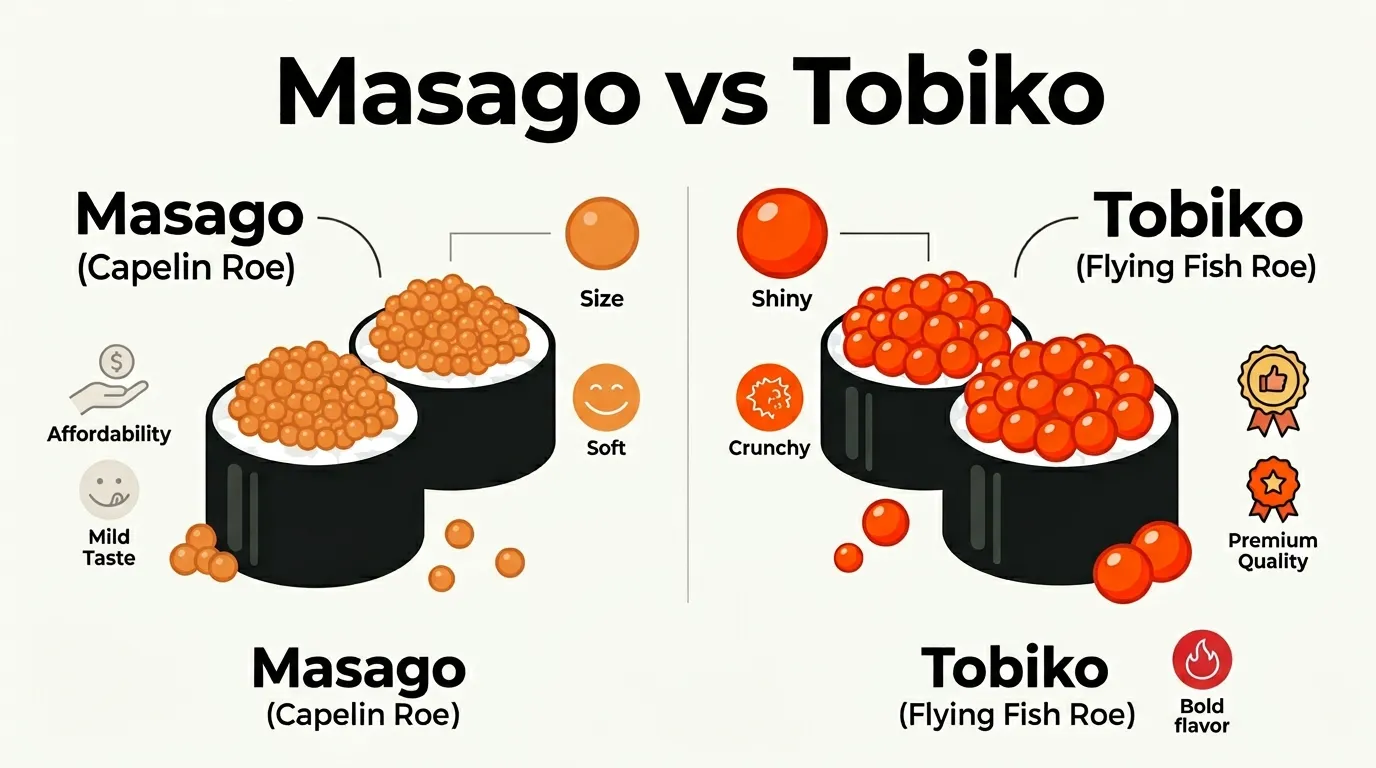
The main difference between masago and tobiko lies in their size, texture, color, and taste. Tobiko is larger, crunchier, and more vibrant, while masago is smaller, softer, and milder in flavor. Tobiko is often considered premium, whereas masago is a more affordable alternative.
Why Is Their Difference Important to Know?
Understanding the difference between masago and tobiko is important for both learners and experts in the culinary world. For beginners, it enhances food awareness and appreciation of global cuisines. For chefs and professionals, it affects presentation, pricing, and flavor balance in dishes.
In society, food plays a major role in culture and identity. Recognizing ingredients like masago and tobiko allows people to make informed dietary choices, especially when considering quality, budget, or nutritional value. This knowledge also helps avoid confusion in restaurants and improves communication between customers and chefs.
Pronunciation of Both (US & UK)
- Masago
- US: muh-SAH-go
- UK: mah-SAH-go
- Tobiko
- US: toh-BEE-koh
- UK: toh-BEE-koh
Now that you know how to pronounce them, let’s dive deeper into their differences.
Difference Between the Masago and Tobiko
1. Source of Roe
- Masago comes from capelin fish.
- Example 1: Used in budget sushi rolls.
- Example 2: Found in processed seafood dishes.
- Tobiko comes from flying fish.
- Example 1: Used in premium sushi.
- Example 2: Served in high-end restaurants.
2. Size
- Masago eggs are smaller.
- Example 1: Blends easily into sauces.
- Example 2: Less noticeable on sushi.
- Tobiko eggs are larger.
- Example 1: Adds visual appeal.
- Example 2: Clearly visible on rolls.
3. Texture
- Masago is softer.
- Example 1: Melts easily in mouth.
- Example 2: Less crunchy experience.
- Tobiko is crunchy.
- Example 1: Creates popping sensation.
- Example 2: Enhances texture of sushi.
4. Flavor
- Masago has mild taste.
- Example 1: Slightly salty flavor.
- Example 2: Less intense seafood taste.
- Tobiko has bold flavor.
- Example 1: Smoky and sweet notes.
- Example 2: Strong umami taste.
5. Color
- Masago is dull orange.
- Example 1: Natural pale shade.
- Example 2: Sometimes artificially colored.
- Tobiko is bright orange/red.
- Example 1: Naturally vibrant.
- Example 2: Also available in black or green.
6. Cost
- Masago is cheaper.
- Example 1: Used in affordable dishes.
- Example 2: Common in mass production.
- Tobiko is expensive.
- Example 1: Found in luxury sushi.
- Example 2: Higher market value.
7. Availability
- Masago is widely available.
- Example 1: Found in supermarkets.
- Example 2: Used globally.
- Tobiko is less common.
- Example 1: Found in specialty stores.
- Example 2: Limited supply.
8. Nutritional Value
- Masago is nutritious but simpler.
- Example 1: Contains protein.
- Example 2: Moderate omega-3.
- Tobiko is richer.
- Example 1: Higher nutrients.
- Example 2: Better quality fats.
9. Culinary Use
- Masago is used as substitute.
- Example 1: Filling ingredient.
- Example 2: Mixed in sauces.
- Tobiko is used as garnish.
- Example 1: Decoration for sushi.
- Example 2: Enhances presentation.
10. Popularity
- Masago is common.
- Example 1: Everyday sushi ingredient.
- Example 2: Used in fast food sushi.
- Tobiko is premium choice.
- Example 1: Preferred by chefs.
- Example 2: Used in gourmet dishes.
Nature and Behaviour of Both
Masago is subtle and adaptable. It blends into dishes easily without overpowering other flavors. Its softer nature makes it suitable for mixing into sauces or fillings.
Tobiko, on the other hand, is bold and expressive. Its crunchy texture and strong flavor make it stand out. It is often used to enhance both the taste and visual appeal of dishes.
Why People Are Confused About Their Use?
| Feature | Masago | Tobiko | Similarity |
| Source | Capelin fish | Flying fish | Both are fish roe |
| Size | Small | Larger | Tiny edible eggs |
| Texture | Soft | Crunchy | Used in sushi |
| Color | Dull orange | Bright orange/red | Can be colored |
| Cost | Affordable | Expensive | Sold in seafood markets |
| Taste | Mild | Strong | Slightly salty |
People are confused because both look similar and are often used interchangeably in sushi dishes.
Which Is Better in What Situation?
Masago is better when you want a mild flavor and a budget-friendly option. It works well in sauces, spreads, and simple sushi rolls. Its subtle taste allows other ingredients to shine without being overpowering.
Tobiko is better for premium dishes where presentation and texture matter. Its bright color and crunchy feel make it ideal for garnishing sushi and impressing guests in fine dining settings.
Use in Metaphors and Similes
- Masago: “Her ideas were like masago small but blended perfectly into the bigger picture.”
- Tobiko: “His personality popped like tobiko—bold, vibrant, and impossible to ignore.”
Connotative Meaning of Both
- Masago
- Neutral/Positive: Simplicity, affordability
- Example: “He chose the masago option—simple yet effective.”
- Tobiko
- Positive: Luxury, boldness
- Example: “Her style was tobiko-like—colorful and eye-catching.”
Idioms or Proverbs Related
(No direct idioms exist, but adapted expressions can be used)
- “Small things matter like masago in sushi.”
- “Stand out like tobiko on a roll.”
Works in Literature
- Masago Culinary Guide – Food Writing, Chef Aiko Tanaka, 2015
- Tobiko Tales – Culinary Essays, Hiroshi Yamamoto, 2018
Movies Related to Both
- Sushi Master (2016, Japan)
- Jiro Dreams of Sushi (2011, Japan/USA)
Frequently Asked Questions
1. Is masago the same as tobiko?
No, they come from different fish and differ in size, taste, and texture.
2. Which is healthier?
Tobiko is generally richer in nutrients.
3. Why is tobiko more expensive?
Because of its quality, rarity, and demand.
4. Can masago replace tobiko?
Yes, but it won’t provide the same crunch or flavor.
5. Which tastes better?
It depends on preference—mild vs bold flavor.
How Both Are Useful for Surroundings
Masago and tobiko contribute to the food industry by enhancing culinary diversity. They support fishing industries and global trade. Their use in dishes promotes cultural exchange and appreciation of Japanese cuisine worldwide.
Final Words for Both
Masago represents simplicity and accessibility, while tobiko symbolizes quality and elegance. Both have their own unique place in the culinary world.
Conclusion
In conclusion, understanding the difference between masago and tobiko allows you to appreciate food on a deeper level. While they may appear similar, their differences in texture, flavor, and cost make each suitable for different purposes. Whether you choose masago for its affordability or tobiko for its premium appeal, both ingredients enrich the dining experience. Knowing the masago vs tobiko comparison helps you make smarter culinary decisions and enhances your overall appreciation of sushi culture.

I am content creator and comparison blogger focused on analyzing key differences between terms, concepts, and ideas to deliver accurate, easy-to-understand information. So I decided to create a platform where these differences are explained in the simplest way possible.