Imagine you are getting ready for an important meeting or a wedding. You open your fragrance collection and see two bottles: one labeled Eau de Toilette and the other Perfume. Many people face this situation daily but often do not fully understand the difference between toilette and perfume. The fragrance industry uses several terms, and beginners often confuse them. Understanding the toilette vs perfume distinction helps you choose the right fragrance for different occasions.
The difference between toilette and perfume mainly lies in fragrance concentration, longevity, and intensity. When someone wants a light scent for daily use, they may choose toilette. On the other hand, perfume is usually richer and lasts longer. Knowing the difference between toilette and perfume can improve your fragrance choices and prevent overspending on the wrong product.
This guide explains the toilette vs perfume concept in simple words so both beginners and fragrance enthusiasts can easily understand it.
Key Difference Between the Both
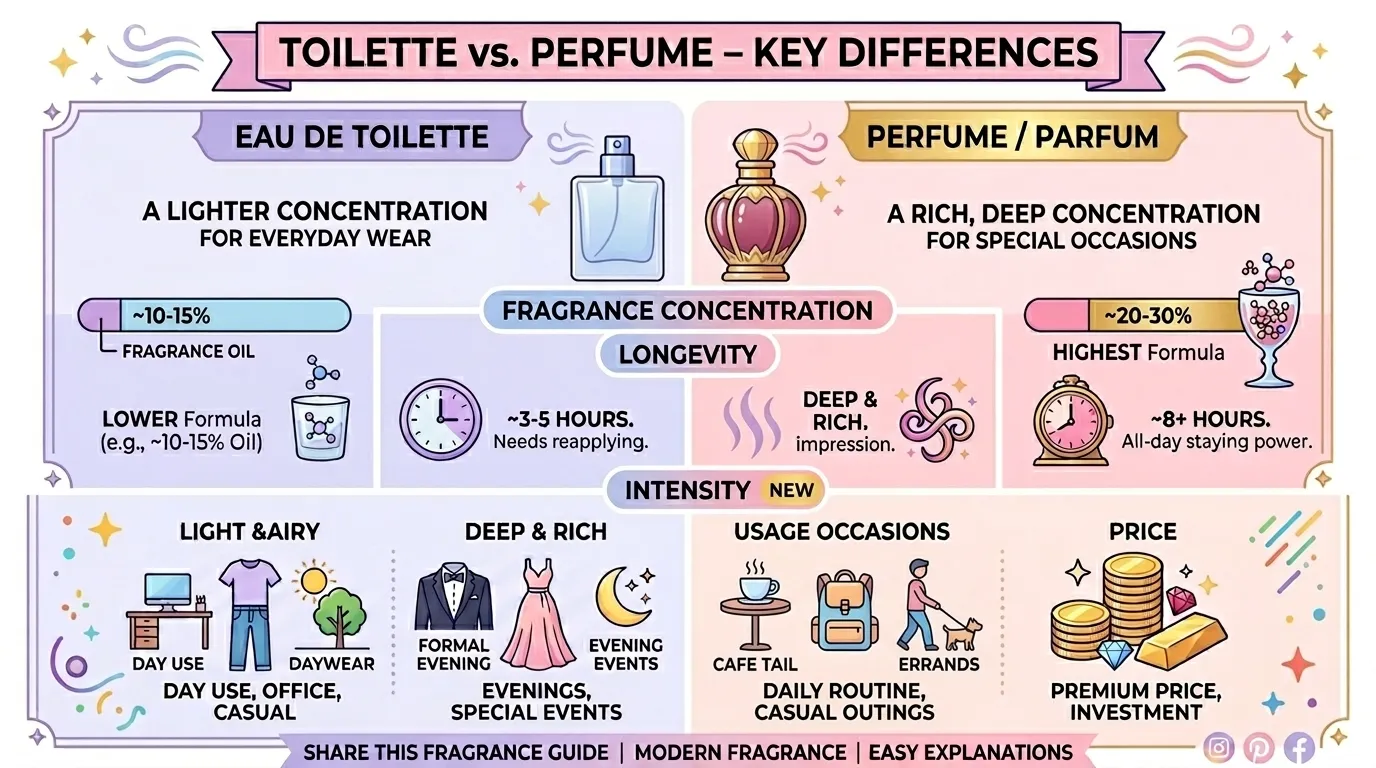
The difference between toilette and perfume mainly depends on the concentration of aromatic oils used in the product.
- Perfume (Parfum) contains the highest concentration of fragrance oils, usually between 20–30%.
- Eau de Toilette (Toilette) contains a lower concentration, usually around 5–15%.
Because of this difference, perfume lasts longer and smells stronger, while toilette is lighter and fades faster. This is the core idea behind toilette vs perfume.
Why Is Their Difference Necessary to Know for Learners and Experts?
Understanding the difference between toilette and perfume is important for both beginners and fragrance experts.
For learners, it helps them buy fragrances wisely. Many people spend money on perfumes without knowing their concentration or longevity. By understanding toilette vs perfume, they can choose the right fragrance for work, parties, or daily use.
For experts and professionals in the beauty industry, this knowledge helps them guide customers effectively. It also allows perfume designers to create balanced fragrances suitable for different climates and cultures.
In society, fragrances play an important role in personal grooming, confidence, and social interactions. Knowing the difference between toilette and perfume helps individuals present themselves better in professional and social environments.
Pronunciation of the Both (US & UK)
| Word | US Pronunciation | UK Pronunciation |
| Toilette | /twah-LET/ | /twah-LET/ |
| Perfume | /per-FYOOM/ | /PER-fyoom/ |
Before exploring more about toilette vs perfume, let us move to the detailed comparison that explains their differences clearly.
Difference Between the Keywords
1. Fragrance Concentration
Perfume contains a higher concentration of fragrance oils.
Examples:
- A luxury perfume may contain 25% aromatic oils.
- High-end brands often sell concentrated perfumes.
Toilette contains lower fragrance concentration.
Examples:
- Eau de Toilette usually contains around 10% oils.
- Many everyday fragrances come in toilette form.
2. Longevity
Perfume lasts much longer on the skin.
Examples:
- A perfume can last 8–12 hours.
- Strong perfumes may remain noticeable all day.
Toilette fades more quickly.
Examples:
- Eau de toilette may last 3–5 hours.
- It often requires reapplication during the day.
3. Intensity of Scent
Perfume smells richer and stronger.
Examples:
- A perfume may leave a strong scent trail.
- People standing nearby can easily notice it.
Toilette is lighter and softer.
Examples:
- It produces a subtle fragrance.
- It is suitable for people who prefer mild scents.
4. Price
Perfume is usually more expensive.
Examples:
- Luxury perfumes often cost hundreds of dollars.
- Small bottles of perfume are costly due to concentration.
Toilette is more affordable.
Examples:
- Eau de toilette bottles are cheaper.
- Many budget brands offer toilettes.
5. Usage Occasion
Perfume is ideal for special occasions.
Examples:
- Weddings and evening parties.
- Romantic dinners.
Toilette is better for daily use.
Examples:
- Office environments.
- Casual outings.
6. Quantity Used
Perfume requires fewer sprays.
Examples:
- Two sprays can last all day.
- A small bottle lasts longer.
Toilette needs more sprays.
Examples:
- People may apply it several times a day.
- Larger bottles are common.
7. Skin Interaction
Perfume reacts strongly with body chemistry.
Examples:
- It may smell different on different people.
- Heat can intensify the scent.
Toilette reacts more gently.
Examples:
- It feels lighter on skin.
- It is less overwhelming.
8. Packaging
Perfume bottles are often luxurious.
Examples:
- Crystal bottles.
- Premium packaging.
Toilette bottles are simpler.
Examples:
- Lightweight glass bottles.
- Minimal packaging.
9. Popularity
Perfume is associated with luxury.
Examples:
- Designer brands promote perfumes heavily.
- Perfume is seen as a premium product.
Toilette is more common.
Examples:
- Many everyday fragrances are toilettes.
- Widely used by students and workers.
10. Climate Suitability
Perfume suits colder climates.
Examples:
- Winter evenings.
- Indoor events.
Toilette suits warm climates.
Examples:
- Summer days.
- Outdoor activities.
Nature and Behaviour of Both
Perfume behaves as a long-lasting, intense fragrance. It evolves slowly on the skin and reveals different scent layers over time.
Toilette, however, behaves as a light and refreshing fragrance. It spreads quickly and fades faster, making it suitable for everyday refreshment.
Why People Are Confused About Their Use?
Many people confuse these terms because the bottles look similar and brands market them together. The difference in concentration is often written in small text, which most buyers ignore.
Difference and Similarity Table
| Feature | Perfume | Toilette | Similarity |
| Concentration | High | Medium | Both contain fragrance oils |
| Longevity | Long | Short | Both provide scent |
| Price | Expensive | Affordable | Both sold in fragrance stores |
| Usage | Special events | Daily use | Both used for personal grooming |
Which Is Better in What Situation?
Perfume is better for formal occasions and evenings. Because it lasts longer and smells stronger, it creates a lasting impression. If someone attends a wedding or a special event, perfume is usually the better option.
Toilette is better for everyday use. It is lighter and refreshing, which makes it comfortable for work or school. In warm weather, many people prefer toilette because it does not feel too heavy.
How the Keywords Are Used in Metaphors and Similes
Fragrance words are sometimes used metaphorically.
Examples:
- “Her presence was like perfume in the air, impossible to ignore.”
- “His kindness spread like a gentle toilette fragrance in the room.”
These metaphors compare pleasant experiences to fragrance.
Connotative Meaning of Both
Perfume (Positive):
- Luxury
- Elegance
- Attraction
Example:
“Her perfume symbolized sophistication.”
Toilette (Neutral):
- Freshness
- Daily grooming
Example:
“He sprayed toilette before leaving for work.”
Idioms or Proverbs Related to the Words
Though direct idioms are rare, fragrance-related expressions exist.
Example:
- “Good perfume advertises itself.”
Meaning: Quality speaks for itself.
Sentence example:
“Her excellent work was like good perfume—it advertised itself.”
Works in Literature
- Perfume: The Story of a Murderer — Novel, Patrick Süskind, 1985
- The Perfume Garden — Fiction, Kate Lord Brown, 2013
- Perfume River — Novel, Robert Olen Butler, 2016
Movie Names Related to the Keywords
- Perfume: The Story of a Murderer (2006, Germany/France/Spain)
- Perfume Nightmare (1977, Philippines)
Frequently Asked Questions
1. What is the main difference between toilette and perfume?
The main difference is fragrance oil concentration. Perfume has more oils than toilette.
2. Which lasts longer?
Perfume lasts longer than eau de toilette.
3. Is toilette cheaper than perfume?
Yes, toilette is usually more affordable.
4. Can both be used daily?
Yes, but toilette is more suitable for daily use.
How Both Are Useful for Surroundings
Fragrances improve personal hygiene and social comfort. They make environments pleasant and help individuals feel confident. Both toilette and perfume contribute to positive social interactions by creating a fresh and attractive scent around people.
Final Words for the Both
Perfume represents luxury, depth, and long-lasting fragrance. Toilette represents freshness, lightness, and everyday practicality. Understanding toilette vs perfume helps people make smarter fragrance choices.
Conclusion
The difference between toilette and perfume is mainly related to fragrance concentration, longevity, and intensity. Perfume offers a richer and longer-lasting scent, while toilette provides a lighter and more refreshing fragrance. Understanding toilette vs perfume helps individuals select the right fragrance for the right moment. Whether someone prefers a strong luxurious scent or a gentle daily fragrance, knowing the difference between toilette and perfume ensures better fragrance choices and improved personal grooming.

I am content creator and comparison blogger focused on analyzing key differences between terms, concepts, and ideas to deliver accurate, easy-to-understand information. So I decided to create a platform where these differences are explained in the simplest way possible.