Imagine setting up your computer for an important presentation, only to notice blurry visuals on your screen. You check the cables and find yourself choosing between VGA and DVI. At that moment, understanding the VGA vs DVI difference becomes more than just technical knowledge it becomes essential.
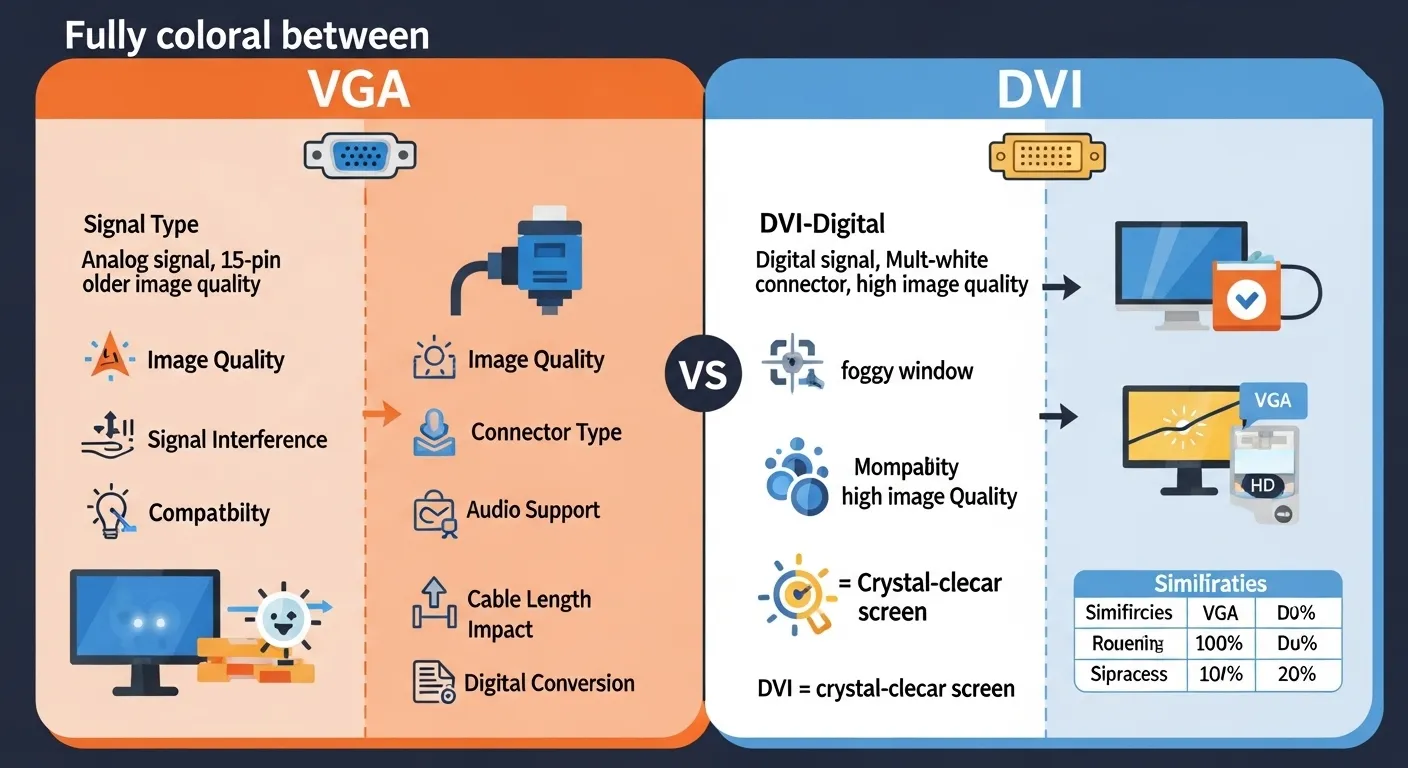
VGA (Video Graphics Array) and DVI (Digital Visual Interface) are both display connection standards used to transmit video signals from a computer to a monitor. However, the difference between VGA and DVI lies in how they handle signals analog vs digital. Many users still search for vga vs dvi comparisons when upgrading monitors or PCs.
In real life, whether you’re a student, gamer, or office worker, knowing the difference between VGA and DVI helps you make smarter decisions. The debate of vga vs dvi continues because both have their own advantages. Understanding both ensures better display quality and performance in everyday tasks.
Key Difference Between VGA and DVI
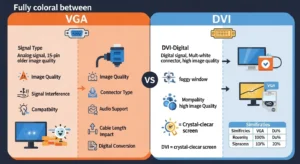
The main difference between VGA and DVI is that VGA transmits analog signals, while DVI transmits digital signals. This directly impacts image clarity, sharpness, and overall display performance.
Why Is Their Difference Necessary to Know?
Understanding the difference between VGA and DVI is important for both learners and professionals.
For students, it helps in selecting the right display setup for studies and presentations. For IT professionals and designers, it ensures optimal visual quality, especially in tasks like graphic design and video editing. In society, where digital screens are everywhere—from offices to homes—knowing these differences improves productivity and user experience.
Moreover, as technology evolves, recognizing the strengths of VGA and DVI helps users transition smoothly to modern interfaces like HDMI and DisplayPort.
Pronunciation of Both (US & UK)
- VGA
- US: /ˌviː dʒiː ˈeɪ/
- UK: /ˌviː dʒiː ˈeɪ/
- DVI
- US: /ˌdiː viː ˈaɪ/
- UK: /ˌdiː viː ˈaɪ/
Now that you know how to say them correctly, let’s dive deeper into their technical differences.
VGA vs DVI Difference in Details
1. Signal Type
VGA uses analog signals, while DVI uses digital signals.
- Example 1: VGA may show blurry text on modern monitors.
- Example 2: DVI provides sharp and clear images.
2. Image Quality
DVI offers better image quality than VGA.
- Example 1: Watching HD videos looks clearer on DVI.
- Example 2: VGA may distort high-resolution images.
3. Resolution Support
DVI supports higher resolutions than VGA.
- Example 1: DVI can handle 1080p easily.
- Example 2: VGA struggles with high-definition displays.
4. Signal Interference
VGA is more prone to interference.
- Example 1: Long VGA cables reduce quality.
- Example 2: DVI maintains stable signals.
5. Connector Type
VGA uses a 15-pin connector; DVI has multiple pin configurations.
- Example 1: VGA connectors are blue and simple.
- Example 2: DVI connectors are larger and more complex.
6. Compatibility
VGA is widely compatible with older devices.
- Example 1: Old projectors use VGA.
- Example 2: Modern monitors prefer DVI.
7. Audio Support
Neither VGA nor DVI supports audio natively.
- Example 1: Separate audio cables are needed.
- Example 2: HDMI replaces both for audio-video.
8. Usage Era
VGA is older technology; DVI is newer.
- Example 1: VGA was popular in early computers.
- Example 2: DVI became common with LCD screens.
9. Cable Length Impact
VGA quality drops with longer cables.
- Example 1: 10-meter VGA cable reduces clarity.
- Example 2: DVI maintains quality over longer distances.
10. Digital Conversion
VGA requires digital-to-analog conversion.
- Example 1: This reduces efficiency.
- Example 2: DVI avoids conversion, improving output.
Nature and Behaviour of Both
VGA:
VGA behaves as an analog system. It converts digital data into analog signals, which can lead to quality loss. It is reliable for older systems but less efficient for modern displays.
DVI:
DVI operates digitally, maintaining signal integrity. It delivers consistent and high-quality visuals, making it suitable for modern computing needs.
Why People Are Confused About Their Use (VGA vs DVI)?
| Feature | VGA | DVI | Similarity |
| Signal Type | Analog | Digital | Both transmit video |
| Image Quality | Lower | Higher | Used for displays |
| Connector | 15-pin | Multi-pin | Require cables |
| Usage | Older devices | Modern devices | Connect PC to monitor |
| Audio Support | No | No | Need external audio |
Confusion arises because both serve the same purpose but differ in performance.
Which Is Better in What Situation?
VGA:
VGA is better for older systems and devices where compatibility matters more than quality. It is commonly used in schools, offices, and legacy systems. If you are working with outdated hardware, VGA is still a practical choice.
DVI:
DVI is better for modern systems requiring high-quality visuals. It is ideal for gaming, video editing, and professional work where clarity is essential. If you want better performance, DVI is the smarter choice.
Use in Metaphors and Similes
- “Using VGA in today’s world is like watching a movie through a foggy window.”
- “DVI is as clear as crystal compared to VGA.”
Connotative Meaning of Both
VGA:
- Neutral/Negative: Outdated, basic
- Example: “His setup still uses VGA, showing he hasn’t upgraded.”
DVI:
- Positive/Neutral: Modern, reliable
- Example: “She uses DVI for a crisp display experience.”
Idioms or Proverbs Related to the Words
(Not directly available, but used creatively)
- “Don’t settle for VGA when you can choose DVI.”
- “Upgrade from VGA to DVI to see the bigger picture.”
Works in Literature (Related Mentions)
- Digital Design Basics – Tech Guide, John Smith, 2010
- Understanding Computer Hardware – Educational, Lisa Ray, 2015
- Modern Display Systems – Academic, Alan Brown, 2018
Movie Names Related to Both
- The Social Network (2010, USA) – features early tech setups using VGA
- Steve Jobs (2015, USA) – showcases evolution of display technology
Frequently Asked Questions
1. What is the main difference between VGA and DVI?
VGA uses analog signals, while DVI uses digital signals for better quality.
2. Is DVI better than VGA?
Yes, DVI provides sharper and clearer images.
3. Can VGA and DVI be used together?
Yes, with adapters, but quality may vary.
4. Why is VGA still used?
Because many older devices still support it.
5. Does DVI support audio?
No, DVI only supports video signals.
How Both Are Useful for Surroundings
VGA is useful in schools, offices, and older setups where upgrading is not feasible. DVI improves visual environments in homes and workplaces by providing clearer displays, enhancing productivity and comfort.
Final Words for Both
VGA and DVI both have their place in technology. While VGA represents the foundation of display connectivity, DVI represents improvement and clarity. Choosing between them depends on your needs and equipment.
Conclusion
The difference between VGA and DVI is crucial in today’s digital world. VGA, being analog, serves older systems, while DVI, being digital, delivers superior performance. Understanding vga vs dvi helps users make better decisions for their setups. Whether you prioritize compatibility or quality, knowing the strengths of both ensures you get the best display experience. As technology continues to evolve, the knowledge of vga vs dvi remains relevant for both beginners and professionals.

I am content creator and comparison blogger focused on analyzing key differences between terms, concepts, and ideas to deliver accurate, easy-to-understand information. So I decided to create a platform where these differences are explained in the simplest way possible.