Imagine you are walking in a park, and you suddenly step sideways to avoid a puddle. In that simple moment, different muscle groups in your body work together to control movement. Some muscles pull your legs toward your body, while others move them away. These are known as adductor and abductor muscles. Understanding the adductor vs abductor difference is not essential for just athletes but for anyone interested in how the human body moves efficiently.
In everyday life, we unknowingly use both types of muscles when sitting, standing, running, or even crossing our legs. The difference between both becomes more noticeable when studying anatomy, fitness training, or rehabilitation exercises.
Whether you’re a beginner or a professional, learning about adductor vs abductor helps you improve posture, prevent injuries, and enhance performance. This guide will break down the difference between adductor and abductor in a simple and practical way so you can fully understand their role in human movement.
Adductor vs Abductor Key Difference
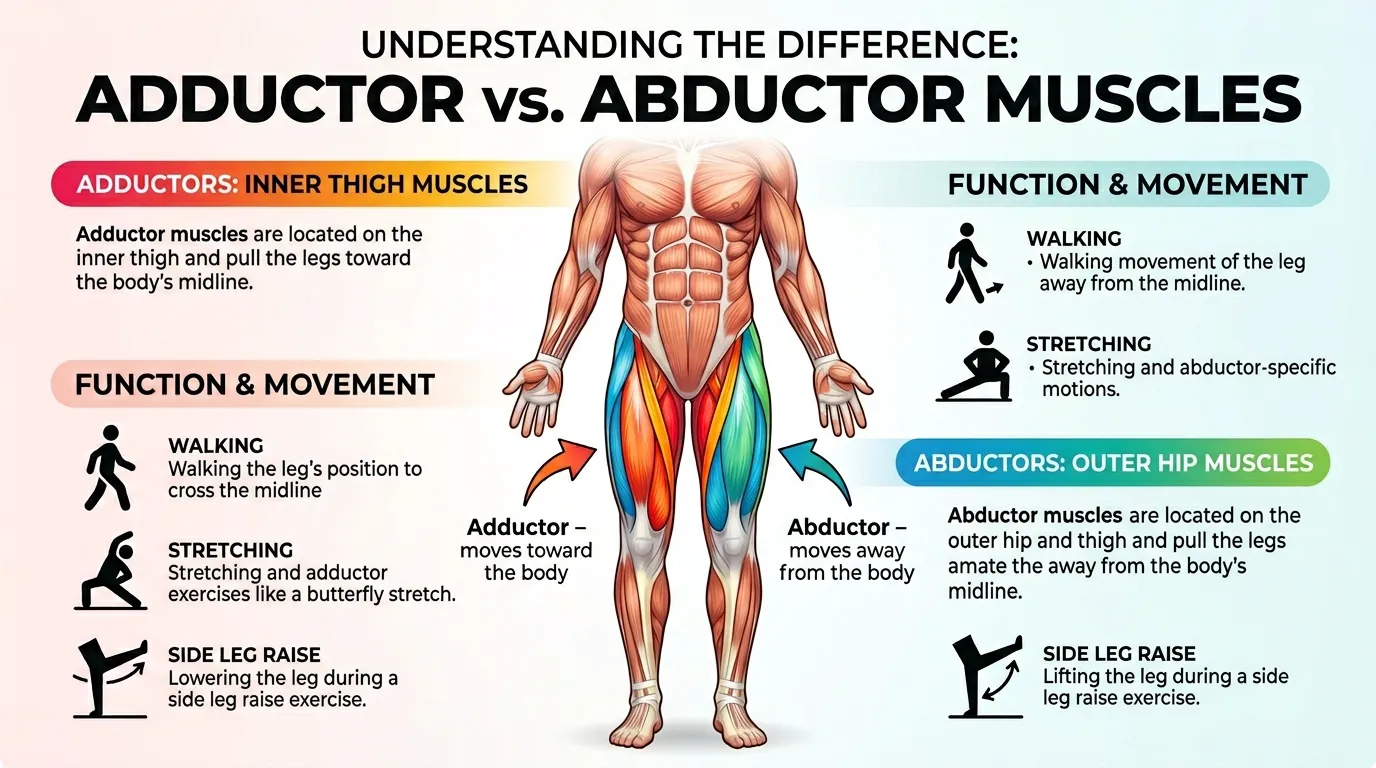
The main difference between adductor and abductor lies in the direction of movement:
- Adductor muscles move a limb toward the center of the body.
- Abductor muscles move a limb away from the center of the body.
For example, when you bring your legs together, adductors are working. When you spread your legs apart, abductors take over.
Why Is This Difference Important to Know?
Understanding the difference between adductor and abductor is crucial for both learners and experts because it directly impacts health, fitness, and medical knowledge.
For students, it builds a strong foundation in anatomy and physiology. For fitness professionals, it helps design balanced workout programs. Athletes rely on this knowledge to improve performance and prevent injuries, especially in sports like football and running.
In society, physiotherapists use this distinction to treat muscle imbalances and injuries. Trainers use it to strengthen weak muscles, while doctors rely on it for diagnosing movement disorders. Knowing adductor vs abductor also helps individuals maintain proper posture and avoid strain in daily activities.
Pronunciation of Both (US & UK)
- Adductor
- US: /əˈdʌk.tɚ/
- UK: /əˈdʌk.tə/
- Abductor
- US: /æbˈdʌk.tɚ/
- UK: /æbˈdʌk.tə/
Now that you know how to pronounce them correctly, let’s move deeper into the difference between adductor and abductor in practical terms.
Adductor vs Abductor Difference in Details
1. Direction of Movement
- Adductor: Moves limbs toward the body.
- Example 1: Bringing legs together.
- Example 2: Lowering arms to the sides.
- Abductor: Moves limbs away from the body.
- Example 1: Spreading legs apart.
- Example 2: Raising arms sideways.
2. Location in the Body
- Adductor: Mostly found in inner thighs.
- Example 1: Inner thigh muscles.
- Example 2: Groin muscles.
- Abductor: Found in outer hips and thighs.
- Example 1: Hip muscles.
- Example 2: Shoulder muscles.
3. Function in Walking
- Adductor: Stabilizes legs during movement.
- Example 1: Keeping legs aligned.
- Example 2: Preventing overextension.
- Abductor: Helps in sideways movement.
- Example 1: Stepping sideways.
- Example 2: Balancing body weight.
4. Role in Exercise
- Adductor: Used in squeezing movements.
- Example 1: Leg press inward.
- Example 2: Cable adduction exercise.
- Abductor: Used in lifting outward.
- Example 1: Leg raises.
- Example 2: Resistance band walks.
5. Injury Risk
- Adductor: Prone to groin injuries.
- Example 1: Sudden sprinting.
- Example 2: Overstretching.
- Abductor: Prone to hip strain.
- Example 1: Overtraining.
- Example 2: Weak hip muscles.
6. Muscle Strength Importance
- Adductor: Supports core stability.
- Example 1: Maintaining posture.
- Example 2: Controlling movement.
- Abductor: Supports balance.
- Example 1: Standing on one leg.
- Example 2: Preventing falls.
7. Sports Usage
- Adductor: Used in kicking and sprinting.
- Example 1: Football kicks.
- Example 2: Running acceleration.
- Abductor: Used in lateral movement.
- Example 1: Basketball defense.
- Example 2: Tennis side steps.
8. Movement Type
- Adductor: Pulling motion.
- Example 1: Closing legs.
- Example 2: Bringing arms down.
- Abductor: Pushing outward motion.
- Example 1: Opening legs.
- Example 2: Lifting arms sideways.
9. Muscle Groups
- Adductor: Includes adductor longus, brevis, magnus.
- Example 1: Inner thigh control.
- Example 2: Hip stabilization.
- Abductor: Includes gluteus medius and minimus.
- Example 1: Hip movement.
- Example 2: Leg lifting.
10. Daily Life Role
- Adductor: Helps sit and stand properly.
- Example 1: Crossing legs.
- Example 2: Sitting upright.
- Abductor: Helps maintain balance.
- Example 1: Walking on uneven ground.
- Example 2: Climbing stairs.
Nature and Behaviour of Both
Adductor muscles are generally stabilizing and controlling in nature. They focus on maintaining balance and keeping the body aligned. Their behavior is more about control and precision.
Abductor muscles are more dynamic and active. They allow wider movement and flexibility. Their behavior supports motion, expansion, and mobility.
Why People Are Confused About Their Use (adductor vs abductor)?
People often confuse them because their names sound similar and both relate to movement. The prefixes “ad-” (toward) and “ab-” (away) are not always obvious to beginners.
| Feature | Adductor | Abductor |
| Meaning | Toward body | Away from body |
| Location | Inner thigh | Outer hip |
| Function | Stabilization | Movement |
| Similarity | Both are muscles | Both control motion |
Which Is Better in What Situation?
Adductors are better when stability and control are needed. For example, during sitting, maintaining posture, or performing controlled exercises, adductors play a key role. They help keep the body balanced and aligned.
Abductors are better in situations requiring movement and flexibility. Activities like dancing, sports, or side stepping rely heavily on abductors. They allow the body to move freely and maintain balance during dynamic actions.
Use in Metaphors and Similes
- Adductor (Metaphor): “He acted like an adductor, bringing the team together.”
- Abductor (Simile): “She moved like an abductor, spreading ideas outward.”
Connotative Meaning
- Adductor: Positive (unity, control)
- Example: “She acted as an adductor, keeping everyone united.”
- Abductor: Neutral/Positive (freedom, expansion)
- Example: “His ideas worked like abductors, expanding possibilities.”
Idioms or Proverbs Related
While direct idioms are rare:
- “Pull together” (Adductor-like)
- Example: “The team pulled together to win.”
- “Spread your wings” (Abductor-like)
- Example: “It’s time to spread your wings and grow.”
Works in Literature
- Adductor
- Gray’s Anatomy – Medical – Henry Gray – 1858
- Abductor
- Principles of Anatomy and Physiology – Science – Tortora – 1987
Movies Related to Both
(No direct movies exist specifically on these muscles, but featured in medical/documentary films)
- The Human Body – 2001 – UK
- Inside the Human Body – 2011 – UK
FAQs
1. What is the main difference between adductor and abductor?
Adductors move limbs toward the body, while abductors move them away.
2. Where are adductor muscles located?
They are mainly located in the inner thigh region.
3. Why is adductor vs abductor important in fitness?
It helps in designing balanced workouts and preventing injuries.
4. Can weak abductors cause problems?
Yes, weak abductors can lead to poor balance and hip pain.
5. Are adductors and abductors equally important?
Yes, both are essential for proper movement and stability.
How Both Are Useful for Surroundings
Adductors help maintain posture and stability in daily activities like sitting and walking. Abductors help in movement, balance, and flexibility, especially on uneven surfaces. Together, they ensure smooth and coordinated body function.
Final Words for Both
Adductors and abductors are equally important muscle groups. One focuses on control and stability, while the other supports movement and flexibility. Understanding adductor vs abductor helps improve both physical health and knowledge.
Conclusion
The difference between adductor and abductor is simple yet highly significant. These muscle groups work together to create balance, movement, and stability in the human body. Whether you are walking, exercising, or simply standing, both play an essential role. By understanding the difference between adductor and abductor, you can improve your posture, avoid injuries, and enhance overall performance. In short, mastering the concept of adductor vs abductor is a small step that leads to a better understanding of how your body works.

I am content creator and comparison blogger focused on analyzing key differences between terms, concepts, and ideas to deliver accurate, easy-to-understand information. So I decided to create a platform where these differences are explained in the simplest way possible.