Last summer, Ali noticed a small red bump on his forehead before an important event. He casually called it “acne,” while his friend corrected him, saying it was just a “pimple.” This simple confusion reflects a common real-life misunderstanding. The acne vs pimple difference is something many people overlook, yet it plays a significant role in skincare awareness.
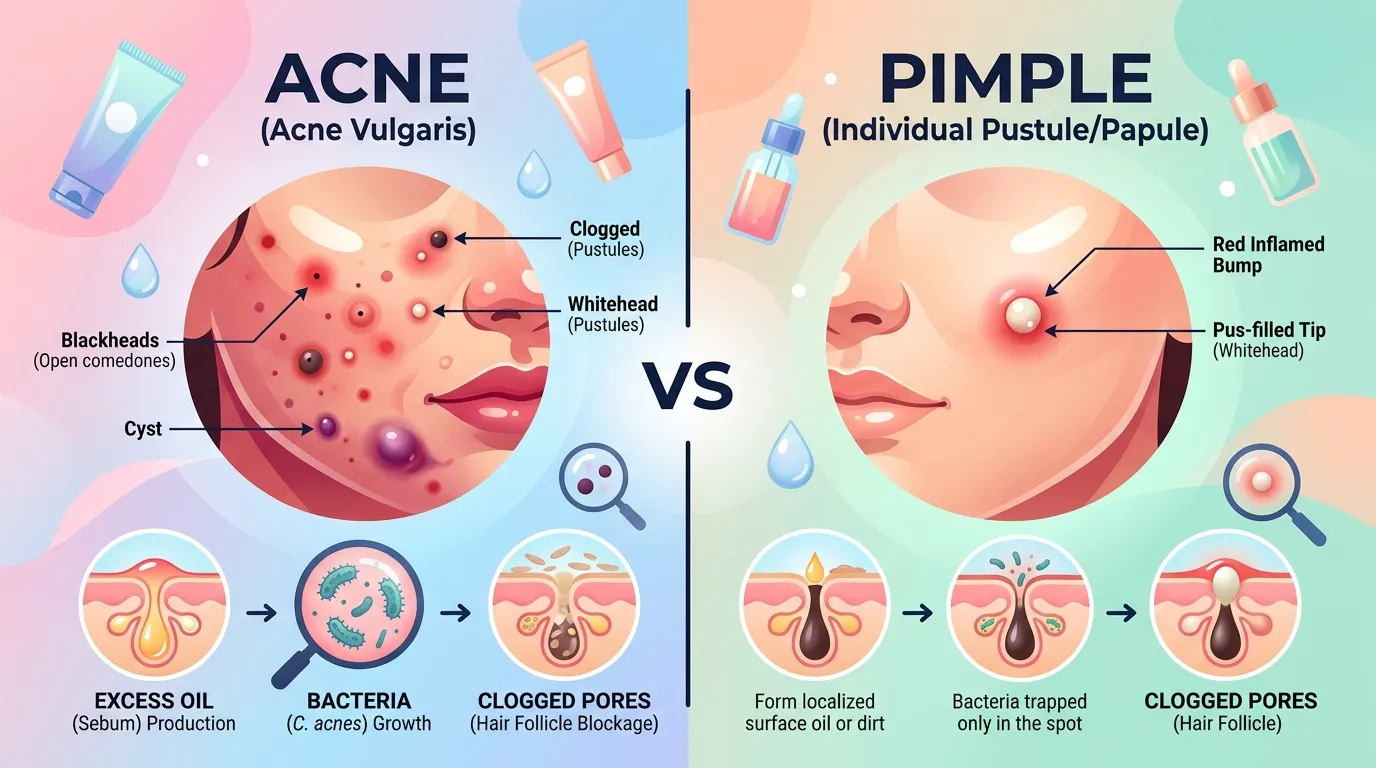
When we talk about difference between acne and pimple, we are actually comparing a broader skin condition with a specific symptom. Acne is a long-term skin disorder, while a pimple is a single visible spot caused by it.
Understanding the acne vs pimple difference helps people choose the right treatment and avoid unnecessary stress. In everyday life, recognizing both ensures better skin care decisions and more accurate communication, especially when discussing skin health with professionals.
Key Difference Between Acne and Pimple
The main difference between acne and pimple lies in their nature and scope. Acne is a chronic skin condition involving clogged pores, bacteria, and inflammation, often affecting large areas like the face, back, and chest. A pimple, on the other hand, is a single small bump that appears due to blocked pores and is one of the symptoms of acne.
In simple terms:
- Acne = Condition
- Pimple = Symptom
Why Is Their Difference Important to Know?
Understanding the difference between acne and pimple is essential for both learners and experts. For learners, it prevents misuse of terms and promotes better skincare habits. Many people panic over a single pimple, assuming they have severe acne, which leads to unnecessary treatments.
For experts such as dermatologists, distinguishing between acne and pimples helps in accurate diagnosis and treatment planning. In society, this awareness reduces misinformation and encourages people to seek appropriate medical advice. The knowledge of acne vs pimple also plays a role in mental health, as skin conditions often affect confidence and self-esteem.
Pronunciation of Both (US & UK)
- Acne
- US: /ˈæk.ni/
- UK: /ˈæk.ni/
- Pimple
- US: /ˈpɪm.pəl/
- UK: /ˈpɪm.pəl/
Now that you know how to pronounce them correctly, let’s dive deeper into their detailed differences.
Acne vs Pimple Difference in Details
1. Definition
- Acne: A skin condition involving multiple lesions.
- Example 1: She visited a doctor for severe acne.
- Example 2: Acne can last for years if untreated.
- Pimple: A single inflamed spot.
- Example 1: A pimple appeared overnight.
- Example 2: He popped a pimple before school.
2. Scope
- Acne: Covers a wide area.
- Example 1: Acne spread across his back.
- Example 2: Facial acne affected her cheeks.
- Pimple: Localized spot.
- Example 1: One pimple on the nose.
- Example 2: A pimple on the chin.
3. Cause
- Acne: Hormones, bacteria, oil.
- Example 1: Teenage hormones caused acne.
- Example 2: Oily skin worsens acne.
- Pimple: Blocked pore.
- Example 1: Dirt caused a pimple.
- Example 2: Sweat led to a pimple.
4. Duration
- Acne: Long-term condition.
- Example 1: Acne lasted for months.
- Example 2: Chronic acne needs treatment.
- Pimple: Short-term.
- Example 1: Pimple healed in days.
- Example 2: It disappeared quickly.
5. Severity
- Acne: Can be severe.
- Example 1: Severe acne causes scars.
- Example 2: Painful acne needs medication.
- Pimple: Usually mild.
- Example 1: Small pimple causes little pain.
- Example 2: Minor pimple fades easily.
6. Types
- Acne: Includes blackheads, cysts, nodules.
- Example 1: Cystic acne is painful.
- Example 2: Blackheads are part of acne.
- Pimple: Single type.
- Example 1: Red pimple on skin.
- Example 2: Whitehead pimple.
7. Treatment
- Acne: Requires long-term care.
- Example 1: Acne treated with medication.
- Example 2: Dermatologists treat acne.
- Pimple: Simple remedies.
- Example 1: Cream heals pimple.
- Example 2: Ice reduces swelling.
8. Impact
- Acne: Affects confidence.
- Example 1: Acne lowered his self-esteem.
- Example 2: Acne caused anxiety.
- Pimple: Temporary effect.
- Example 1: One pimple caused slight worry.
- Example 2: It didn’t affect confidence much.
9. Recurrence
- Acne: Frequent recurrence.
- Example 1: Acne keeps coming back.
- Example 2: Chronic acne cycles.
- Pimple: Occasional.
- Example 1: Random pimple appears.
- Example 2: Not frequent.
10. Medical Attention
- Acne: Needs professional help.
- Example 1: Doctor prescribed acne treatment.
- Example 2: Acne requires diagnosis.
- Pimple: Usually self-treated.
- Example 1: Used cream for pimple.
- Example 2: Home remedy worked.
Nature and Behaviour of Both
Acne behaves as a persistent skin condition that may worsen over time if ignored. It often appears in clusters and can lead to scars.
Pimples are temporary and usually appear suddenly. They may cause discomfort but typically heal without leaving marks if handled properly.
Why People Are Confused About Their Use (Acne vs Pimple)?
People often use acne and pimple interchangeably because both involve skin breakouts. However, this confusion arises due to lack of awareness and similar appearance.
| Feature | Acne | Pimple |
|---|---|---|
| Meaning | Skin condition | Single symptom |
| Duration | Long-term | Short-term |
| Severity | Can be severe | Usually mild |
| Treatment | Medical care needed | Simple remedies |
| Similarity | Both involve skin inflammation | Both appear on skin |
Which Is Better in What Situation?
When discussing a single spot on your face, the word “pimple” is more accurate. It is suitable for casual conversation and daily use. For example, saying “I have a pimple” clearly communicates a minor issue.
On the other hand, “acne” is more appropriate when referring to a medical condition affecting multiple areas. It is commonly used in professional or clinical contexts. Understanding acne vs pimple ensures you use the right term depending on the situation.
Use in Metaphors and Similes
- Acne metaphor: “His problems spread like acne across his life.”
- Pimple simile: “That issue popped up like a pimple overnight.”
Connotative Meaning
- Acne: Negative
- Example: Acne can symbolize persistent problems.
- Pimple: Neutral to negative
- Example: A pimple may represent a minor issue.
Idioms or Proverbs
While there are no direct idioms, similar expressions include:
- “A small crack becomes a big problem” (like a pimple turning into acne)
- Example: Ignoring small issues is like ignoring a pimple that becomes acne.
Works in Literature
- The Beauty Myth – Naomi Wolf (1990, Non-fiction)
- Skin Deep – Various authors (Modern essays)
Movies Related to Skin or Appearance
- The Fault in Our Stars (2014, USA)
- Mean Girls (2004, USA)
FAQs
1. What is the main difference between acne vs pimple?
The main difference is that acne is a skin condition affecting multiple areas, while a pimple is a single visible spot caused by clogged pores.
2. Is acne the same as a pimple?
No, acne is a condition, while a pimple is a symptom.
3. Can a pimple turn into acne?
A single pimple doesn’t become acne, but multiple pimples indicate acne.
4. Which is more serious?
Acne is more serious than a pimple.
5. Can pimples occur without acne?
Yes, occasional pimples can appear without chronic acne.
6. How can I prevent acne and pimples?
Maintain hygiene, use suitable skincare products, and consult experts if needed.
How Both Are Useful for Surroundings
Understanding acne and pimples promotes better hygiene awareness and encourages healthy skincare practices. It also helps reduce stigma around skin conditions in society.
Final Words for Both
Acne and pimples, though related, are not identical. Recognizing their difference empowers individuals to take proper care of their skin and communicate more effectively.
Conclusion
The difference between acne and pimple is more than just terminology it reflects understanding of skin health. Acne is a complex condition requiring attention, while a pimple is a temporary and minor issue. By learning about acne vs pimple, individuals can avoid confusion, choose appropriate treatments, and improve their overall confidence. In today’s world, where appearance plays a key role, such knowledge is not just helpful but essential. Whether you’re a student, professional, or skincare enthusiast, knowing this distinction can make a meaningful difference in daily life.

I am content creator and comparison blogger focused on analyzing key differences between terms, concepts, and ideas to deliver accurate, easy-to-understand information. So I decided to create a platform where these differences are explained in the simplest way possible.