In today’s digital marketing world, brands constantly seek new ways to connect with their audience. Imagine a popular athlete who represents a sports brand for years versus a social media personality promoting a product in a short campaign both are powerful, yet very different. This is where understanding the Brand Ambassador vs Influencer concept becomes essential.
The debate of difference between Brand Ambassador and Influencer often arises among marketers, students, and business owners. While both roles aim to promote products and build trust, their approach, commitment, and impact vary significantly. Knowing the difference between Brand Ambassador vs Influencer helps in choosing the right marketing strategy.
As businesses evolve, the comparison of Brand Ambassador vs Influencer becomes even more relevant. Whether you’re a learner exploring marketing or an expert refining campaigns, understanding this distinction is key to success.
Key Difference Between Brand Ambassador and Influencer
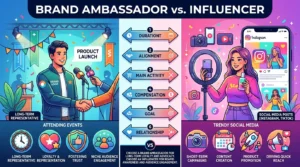
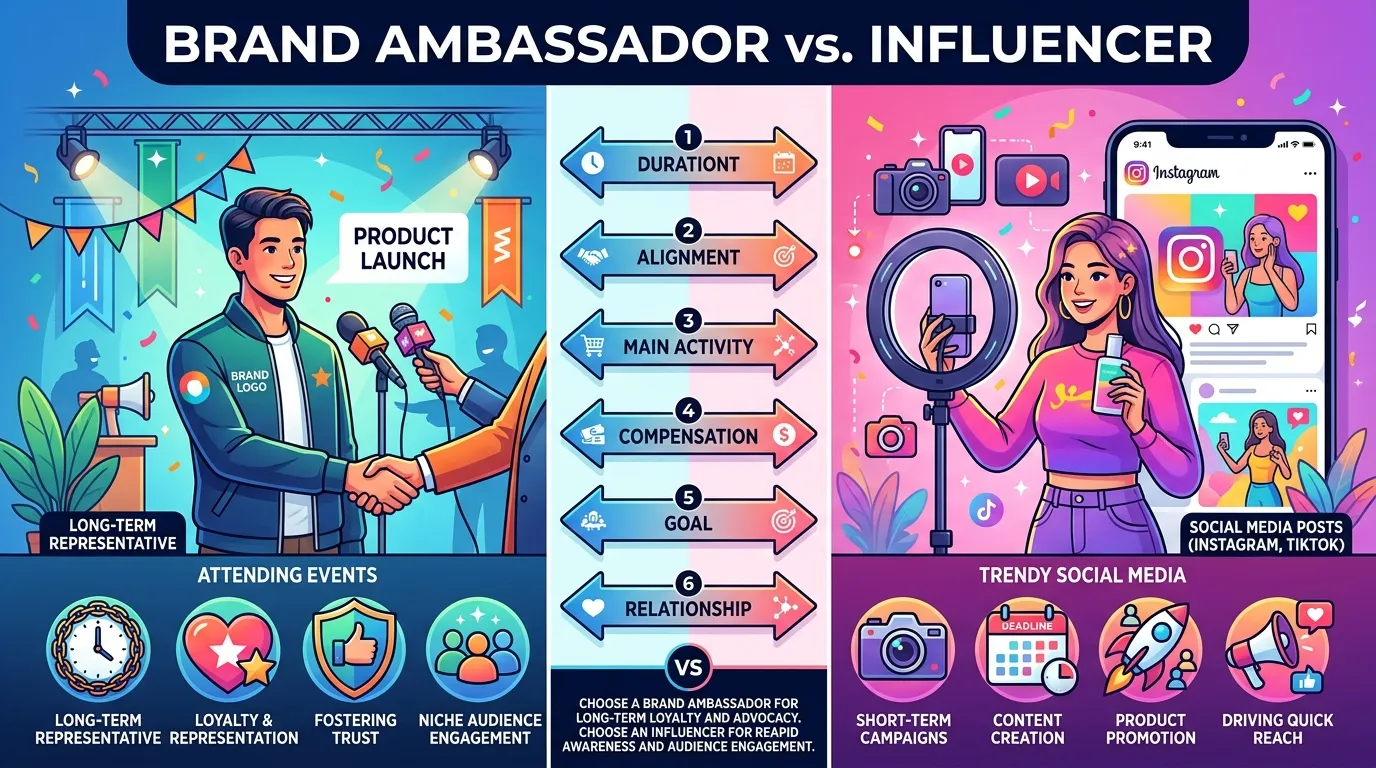
The main difference between a brand ambassador and an influencer lies in commitment and relationship with the brand.
- A brand ambassador builds a long-term relationship with a brand and represents its values consistently.
- An influencer typically works on short-term campaigns, promoting products to their audience for a limited time.
Why Is Their Difference Necessary to Know?
Understanding the difference between brand ambassadors and influencers is crucial for both learners and professionals. For students, it builds a strong foundation in modern marketing strategies. For experts, it ensures effective campaign planning and better ROI.
In society, these roles influence consumer behavior significantly. Brand ambassadors create trust over time, while influencers drive quick engagement and trends. Knowing when to use each can shape brand reputation, audience loyalty, and overall success.
Pronunciation of Both (US & UK)
- Brand Ambassador
- US: /ˈbrænd æmˈbæsədər/
- UK: /ˈbrænd æmˈbæsədə/
- Influencer
- US: /ˈɪnfluənsər/
- UK: /ˈɪnfluənsə/
Hook: Now that you can confidently pronounce both terms, let’s dive deeper into how they truly differ in real-world applications.
Brand Ambassador vs Influencer Difference in Details
1. Duration of Relationship
- Brand ambassadors work long-term with brands.
Example 1: A celebrity represents a brand for years.
Example 2: A student promotes a campus brand throughout college. - Influencers work short-term.
Example 1: A YouTuber promotes a product for one video.
Example 2: An Instagram post for a one-time campaign.
2. Level of Commitment
- Ambassadors are deeply committed.
Example 1: They only promote one brand in a category.
Example 2: They attend brand events regularly. - Influencers have flexible commitments.
Example 1: Promote multiple brands.
Example 2: Switch partnerships easily.
3. Brand Representation
- Ambassadors represent brand identity.
Example 1: Appearing in official ads.
Example 2: Acting as brand face. - Influencers focus on product promotion.
Example 1: Reviewing items.
Example 2: Sharing discount codes.
4. Audience Connection
- Ambassadors build trust over time.
Example 1: Loyal fan base trusts recommendations.
Example 2: Seen as authentic brand users. - Influencers rely on engagement.
Example 1: High likes and shares.
Example 2: Trend-based content.
5. Payment Structure
- Ambassadors receive fixed contracts.
Example 1: Monthly salary.
Example 2: Long-term deals. - Influencers get paid per campaign.
Example 1: Paid per post.
Example 2: Affiliate earnings.
6. Marketing Goal
- Ambassadors focus on brand loyalty.
Example 1: Strengthening identity.
Example 2: Building trust. - Influencers focus on reach.
Example 1: Increasing sales quickly.
Example 2: Boosting visibility.
7. Content Style
- Ambassadors create consistent messaging.
Example 1: Professional ads.
Example 2: Brand-focused campaigns. - Influencers create creative content.
Example 1: Personal storytelling.
Example 2: Trendy videos.
8. Control by Brand
- Ambassadors follow strict guidelines.
Example 1: Scripted campaigns.
Example 2: Brand-approved messaging. - Influencers have creative freedom.
Example 1: Personal tone.
Example 2: Unique style.
9. Trust Factor
- Ambassadors build deeper trust.
Example 1: Long-term association.
Example 2: Consistent presence. - Influencers build quick trust.
Example 1: Relatable content.
Example 2: Honest reviews.
10. Platform Dependency
- Ambassadors are not platform-specific.
Example 1: TV ads.
Example 2: Events. - Influencers depend on social media.
Example 1: Instagram.
Example 2: TikTok.
Nature and Behaviour of Both
Brand ambassadors are loyal, consistent, and professional. They align deeply with brand values and maintain a long-term image.
Influencers are dynamic, creative, and trend-driven. They adapt quickly to audience preferences and market trends.
Why People Are Confused About Their Use?
People often confuse these roles because both promote products and influence audiences. However, the difference lies in duration, commitment, and purpose.
Comparison Table
| Feature | Brand Ambassador | Influencer | Similarity |
| Duration | Long-term | Short-term | Both promote brands |
| Commitment | High | Flexible | Both engage audiences |
| Goal | Loyalty | Reach | Both increase visibility |
| Platform | Multiple | Social media | Both create content |
| Trust | Deep | Quick | Both influence decisions |
Which Is Better in What Situation?
A brand ambassador is better for long-term branding strategies. If a company wants to build trust, loyalty, and a consistent identity, ambassadors are ideal. They help create a strong emotional connection with the audience over time.
An influencer is better for short-term campaigns. If a brand wants quick visibility, product launches, or viral marketing, influencers are more effective. Their ability to reach large audiences instantly makes them valuable for fast results.
Use in Metaphors and Similes
- Brand Ambassador
- “He is a brand ambassador like a bridge connecting trust and identity.”
- “She represents the company like a loyal guardian.”
- Influencer
- “He spreads trends like wildfire.”
- “She influences minds like a magnet attracts metal.”
Connotative Meaning
- Brand Ambassador
- Positive: Trustworthy, loyal
- Neutral: Representative
- Negative: Sometimes seen as controlled
- Example: “He is a loyal brand ambassador for the company.”
- Influencer
- Positive: Trendsetter, creative
- Neutral: Promoter
- Negative: Sometimes seen as inauthentic
- Example: “She is a popular influencer in fashion.”
Idioms or Proverbs
- “Actions speak louder than words”
Example: A brand ambassador proves loyalty through actions. - “Word of mouth is powerful”
Example: Influencers rely on audience sharing.
Works in Literature
- Brand Ambassador
- Marketing Management – Philip Kotler (Business, 2016)
- Influencer
- Influencer: Building Your Personal Brand – Brittany Hennessy (Non-fiction, 2018)
Movies Related to Both
- Influencer
- The Social Dilemma (2020, USA)
- Brand Representation
- The Joneses (2009, USA)
Frequently Asked Questions
1. What is the main difference between Brand Ambassador vs Influencer?
A brand ambassador works long-term, while an influencer works short-term.
2. Who earns more?
It depends ambassadors earn stable income, influencers can earn high per campaign.
3. Can an influencer become a brand ambassador?
Yes, with long-term collaboration and trust.
4. Which is more trustworthy?
Brand ambassadors are generally more trusted.
5. Are influencers necessary for marketing?
Yes, they help brands reach large audiences quickly.
How Both Are Useful for Surroundings
Both roles contribute to society by shaping opinions, promoting products, and spreading awareness. They help businesses grow and consumers make informed decisions.
Final Words for the Both
Brand ambassadors and influencers are both essential in modern marketing. Their roles may differ, but their impact is equally powerful.
Conclusion
Understanding the difference between brand ambassadors and influencers is essential in today’s digital age. While ambassadors focus on long-term relationships and trust-building, influencers excel in short-term engagement and reach. The comparison of Brand Ambassador vs Influencer highlights how both roles serve unique purposes in marketing. By choosing the right approach, businesses can achieve their goals effectively. Whether you’re a learner or a professional, mastering the concept of Brand Ambassador vs Influencer will enhance your understanding of modern branding strategies.

My name is Ryan Mitchell, and I am a comparison content writer based in the United States. I specialize in creating clear and easy-to-understand articles that explain the differences between similar concepts, products, and ideas. My work focuses on helping readers quickly understand what makes two things different so they can make better decisions.