A few years ago, a woman visited her doctor after experiencing irregular bleeding and discomfort. Initially, she assumed it was a minor hormonal issue. However, after proper diagnosis, the doctor explained the difference between fibroids and polyps and how each condition required a different approach.
This real-life situation highlights how confusing these terms can be for many people. Understanding fibroids vs polyps is essential because both are common growths in the female reproductive system, yet they differ in structure, symptoms, and treatment.
When discussing difference between both, many people use these terms interchangeably. However, fibroids are muscular growths, while polyps are soft tissue growths. The confusion around both often leads to delayed diagnosis or incorrect assumptions.
Therefore, knowing the difference between them helps individuals make informed health decisions. In fact, understanding fibroids vs polyps can improve awareness, early detection, and proper treatment.
Key Difference Between Both
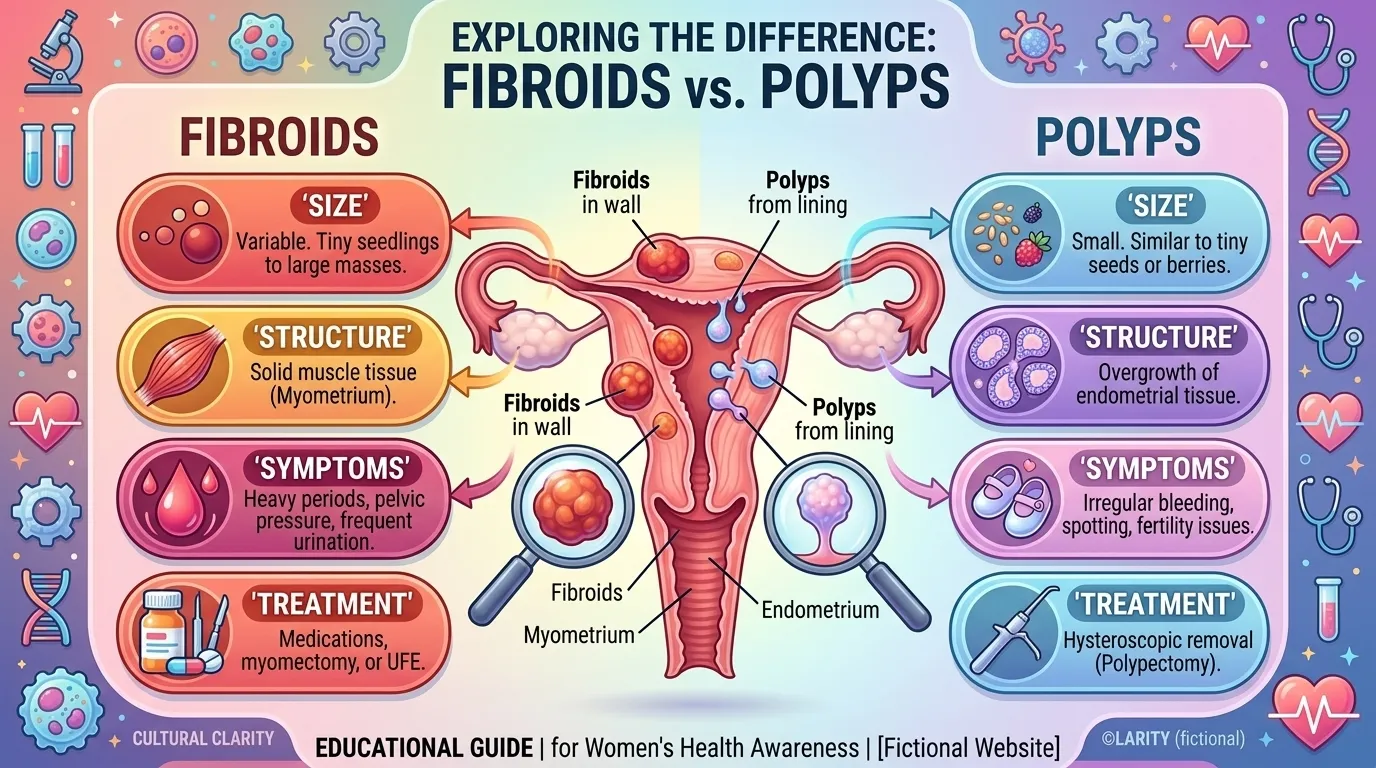
Fibroids are non-cancerous tumors made of muscle tissue that grow in or around the uterus. In contrast, polyps are small, soft growths that develop in the lining of the uterus or cervix. While both are usually benign, their structure, location, and impact on health differ significantly.
Why Is Their Difference Important?
Understanding the difference between fibroids and polyps is important for both learners and medical experts. For learners, it builds basic health awareness and prevents confusion. For healthcare professionals, accurate identification ensures proper treatment planning.
Moreover, in society, women’s health is often overlooked. Raising awareness about conditions like these can encourage early medical consultation. This knowledge also reduces anxiety, as people can better understand symptoms and avoid unnecessary fear.
Pronunciation of Both (US & UK)
- Fibroids
- US: /ˈfaɪ.brɔɪdz/
- UK: /ˈfaɪ.brɔɪdz/
- Polyps
- US: /ˈpɑː.lɪps/
- UK: /ˈpɒl.ɪps/
Now that you know how to pronounce them correctly, let’s move deeper into understanding their differences in detail.
Difference Between the Fibroids and Polyps
1. Structure
Fibroids are made of muscle tissue, while polyps consist of soft glandular tissue.
- Example (Fibroids): A firm lump in the uterus.
- Example (Fibroids): Thick muscular mass detected in scan.
- Example (Polyps): Soft growth in uterine lining.
- Example (Polyps): Small jelly-like structure in cervix.
2. Location
Fibroids grow within or around the uterus, whereas polyps grow in the uterine lining or cervix.
- Example (Fibroids): Inside uterine wall.
- Example (Fibroids): Outside uterus surface.
- Example (Polyps): Inside uterine cavity.
- Example (Polyps): On cervical opening.
3. Size
Fibroids can grow large, while polyps are usually small.
- Example (Fibroids): Size of a grapefruit.
- Example (Fibroids): Multiple large masses.
- Example (Polyps): Few millimeters long.
- Example (Polyps): Small pea-sized growth.
4. Symptoms
Fibroids often cause heavy bleeding; polyps cause irregular bleeding.
- Example (Fibroids): Long menstrual periods.
- Example (Fibroids): Pelvic pressure.
- Example (Polyps): Spotting between periods.
- Example (Polyps): Bleeding after menopause.
5. Growth Pattern
Fibroids grow slowly; polyps can appear suddenly.
- Example (Fibroids): Gradual enlargement over years.
- Example (Fibroids): Stable size for long time.
- Example (Polyps): Sudden appearance.
- Example (Polyps): Quick removal needed.
6. Number
Fibroids may be multiple; polyps are usually fewer.
- Example (Fibroids): Several tumors in uterus.
- Example (Fibroids): Cluster of fibroids.
- Example (Polyps): Single polyp.
- Example (Polyps): Few small growths.
7. Cancer Risk
Fibroids are rarely cancerous; polyps have a slightly higher risk.
- Example (Fibroids): Mostly benign.
- Example (Fibroids): Rare transformation.
- Example (Polyps): Some may become cancerous.
- Example (Polyps): Require biopsy.
8. Pain
Fibroids can cause pain; polyps usually do not.
- Example (Fibroids): Pelvic discomfort.
- Example (Fibroids): Lower back pain.
- Example (Polyps): Mild discomfort.
- Example (Polyps): Often painless.
9. Treatment
Fibroids may need surgery; polyps are often removed easily.
- Example (Fibroids): Myomectomy surgery.
- Example (Fibroids): Hormonal therapy.
- Example (Polyps): Simple removal.
- Example (Polyps): Outpatient procedure.
10. Impact on Fertility
Fibroids can affect fertility more than polyps.
- Example (Fibroids): Block implantation.
- Example (Fibroids): Distort uterus shape.
- Example (Polyps): Minor interference.
- Example (Polyps): Easier to treat.
Nature and Behaviour
Fibroids are dense and muscular, often growing slowly over time. They may remain stable or increase in size depending on hormones.
On the other hand, polyps are soft and delicate. They grow from the inner lining and may bleed easily. Their behavior is less aggressive but can still cause discomfort.
Why Are People Confused?
People often confuse them because both occur in the uterus and share similar symptoms like abnormal bleeding.
| Feature | Fibroids | Polyps |
| Tissue Type | Muscle | Soft tissue |
| Size | Large | Small |
| Location | Uterine wall | Uterine lining |
| Pain | Common | Rare |
| Cancer Risk | Very low | Slightly higher |
| Symptoms | Heavy bleeding | Irregular bleeding |
Which Is Better in What Situation?
Fibroids are manageable if they remain small and symptom-free. However, when they grow large, medical intervention becomes necessary. Therefore, early detection is crucial. Polyps, on the other hand, are easier to treat and usually removed quickly. In most cases, they pose less long-term risk. However, monitoring is still important to avoid complications.
Metaphors and Similes
- Fibroids are like “hidden rocks inside a river,” strong and firm.
- Polyps are like “soft leaves floating on water,” delicate and light.
Connotative Meaning
- Fibroids: Neutral to negative
- Example: “Fibroids created a challenge in her health journey.”
- Polyps: Neutral
- Example: “Polyps were detected early and treated easily.”
Idioms or Proverbs
Though no direct idioms exist, similar expressions can apply:
- “A small problem can grow big” (Fibroids example)
- “Nip it in the bud” (Polyps example)
Works in Literature
- The Female Body in Medicine – Health genre, Various authors, 2015
- Understanding Women’s Health – Medical guide, Dr. Jane Smith, 2018
Movies Related to Both
- Private Life (2018, USA) – touches on fertility issues
- Pieces of a Woman (2020, USA) – explores reproductive health
FAQs
1. What is the main difference between both?
Fibroids are muscular tumors, while polyps are soft tissue growths.
2. Are fibroids more dangerous than polyps?
Fibroids are usually harmless but can cause complications if large.
3. Can polyps turn into cancer?
Yes, but the risk is low and manageable with early detection.
4. Do both cause pain?
Fibroids often cause pain, while polyps usually do not.
How Both Are Useful for Surroundings
Although they are medical conditions, studying fibroids and polyps helps improve healthcare awareness. This knowledge supports better diagnosis, research, and treatment advancements in society.
Conclusion
In conclusion, the difference between fibroids and polyps lies in their structure, behavior, and impact on health. While both are usually non-cancerous, their symptoms and treatments vary significantly. Understanding both is essential for early diagnosis and proper care. Moreover, awareness of fibroids vs polyps empowers individuals to seek timely medical advice and avoid complications. By learning these differences, both patients and professionals can make informed decisions, leading to better health outcomes and improved quality of life.

My name is Ryan Mitchell, and I am a comparison content writer based in the United States. I specialize in creating clear and easy-to-understand articles that explain the differences between similar concepts, products, and ideas. My work focuses on helping readers quickly understand what makes two things different so they can make better decisions.