Imagine two friends buying homes in the same neighborhood. One proudly says the land and house belong completely to them forever, while the other mentions that they own the home but the land technically belongs to someone else for a fixed period. These two situations perfectly describe freehold and leasehold property ownership. In real estate, the difference between freehold and leasehold determines how much control a person has over property and land.
Many buyers explore the difference between freehold and leasehold before purchasing homes or apartments. Understanding the difference between freehold and leasehold helps people make better financial decisions and avoid legal confusion. In the property market, the difference between freehold both often influences property value, long-term security, and ownership rights.
Both ownership types are common around the world, but they work differently. Knowing their distinctions can save buyers from future misunderstandings and help them choose the right investment.
Key Difference Between the Both
The core difference lies in ownership rights and duration.
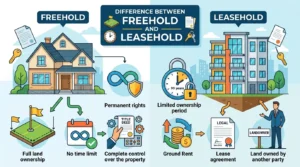
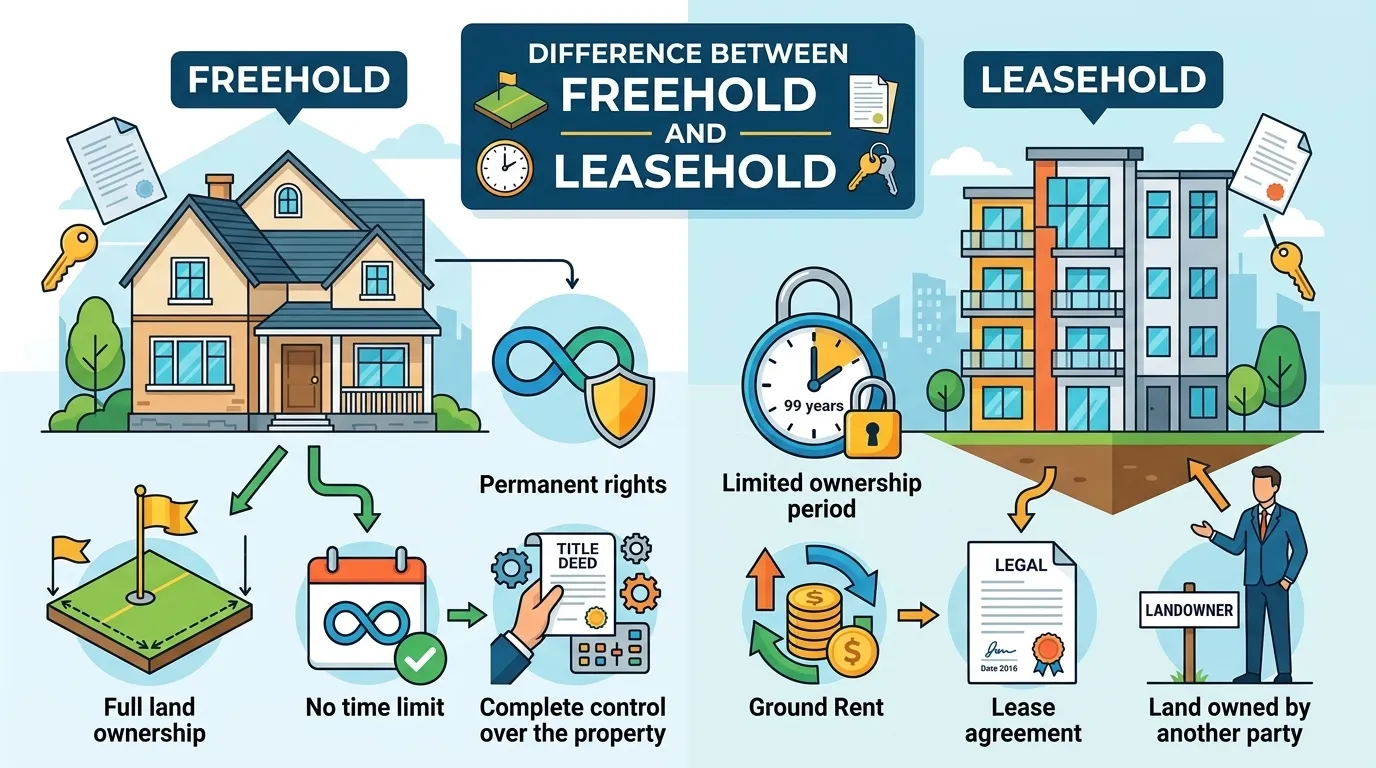
A freehold property means the buyer owns both the building and the land permanently. There is no time limit on ownership, and the owner has full control over the property.
A leasehold property, however, means the buyer owns the property for a specific number of years under a lease agreement. The land belongs to the freeholder (landowner), and once the lease expires, ownership may revert back to the freeholder unless it is renewed.
Simply put, one represents permanent ownership, while the other represents temporary rights to use property.
Why Their Difference Is Important for Learners and Experts
Understanding property ownership structures is essential for both beginners and professionals in real estate. The difference between freehold and leasehold affects property prices, resale value, financing, and long-term investment security.
For learners, understanding these concepts prevents costly mistakes when purchasing property. Many first-time buyers mistakenly assume that buying a home always means owning the land beneath it, which is not always true.
For experts such as property investors, real estate agents, and legal advisors, the difference between freehold and leasehold helps in evaluating investment potential and legal obligations. Governments, urban planners, and developers also rely on these ownership models to organize land use in growing cities.
Therefore, knowledge of these concepts contributes to smarter property decisions and more stable housing systems in society.
Pronunciation of the Both
Freehold
- US pronunciation: /ˈfriːˌhoʊld/
- UK pronunciation: /ˈfriː.həʊld/
Leasehold
- US pronunciation: /ˈliːsˌhoʊld/
- UK pronunciation: /ˈliːs.həʊld/
These terms may sound simple, but their meanings carry significant legal and financial implications. To understand them more clearly, let us explore their differences in detail.
Difference Between the Keywords
Ownership Rights
In freehold ownership, the buyer owns both the property and the land indefinitely.
Example 1: Sarah buys a house with freehold ownership and can modify or sell it whenever she wants.
Example 2: A family inherits a freehold farmhouse and keeps it for generations.
In leasehold ownership, the property is owned only for a limited period.
Example 1: John buys an apartment with a 99-year lease.
Example 2: A commercial shop is leased for 50 years.
Duration of Ownership
Freehold ownership lasts forever unless the owner decides to sell it.
Example 1: A homeowner passes the property to their children.
Example 2: A company keeps its office building permanently.
Leasehold ownership lasts for a fixed time.
Example 1: A property may have a 30-year lease.
Example 2: A residential building may have a 120-year lease.
Control Over Property
Freehold owners have complete control over their property.
Example 1: They can renovate the building.
Example 2: They can rent the property to tenants.
Leasehold owners often need permission from the freeholder.
Example 1: Renovations may require approval.
Example 2: Some leases restrict subletting.
Maintenance Responsibility
Freehold owners handle all maintenance themselves.
Example 1: Fixing the roof is the owner’s responsibility.
Example 2: Landscaping the yard is also their duty.
Leasehold properties often involve shared maintenance.
Example 1: Apartment building maintenance is handled by management.
Example 2: Leaseholders may pay service charges.
Property Value
Freehold properties often have higher value.
Example 1: Buyers prefer permanent ownership.
Example 2: Banks offer easier mortgages.
Leasehold value may decrease as lease years reduce.
Example 1: A property with 20 years left on lease may lose value.
Example 2: Buyers hesitate if renewal costs are high.
Legal Structure
Freehold ownership involves fewer legal restrictions.
Example 1: Owners can sell property freely.
Example 2: There are no lease renewal concerns.
Leasehold properties require legal agreements.
Example 1: Contracts define rights and responsibilities.
Example 2: Lease renewal may involve negotiations.
Financial Obligations
Freehold owners pay standard property taxes.
Example 1: Annual land tax.
Example 2: Local municipal charges.
Leasehold owners may pay additional fees.
Example 1: Ground rent payments.
Example 2: Building service charges.
Inheritance Rights
Freehold properties are easier to pass on to heirs.
Example 1: Parents leave property to children.
Example 2: Family estates remain within generations.
Leasehold inheritance depends on remaining lease years.
Example 1: A short lease may reduce inheritance value.
Example 2: Renewal may be required.
Flexibility
Freehold offers more independence.
Example 1: Owners can rebuild the property.
Example 2: They can sell land separately.
Leasehold has limited flexibility.
Example 1: Structural changes may be restricted.
Example 2: Certain activities may be prohibited.
Long-Term Security
Freehold provides permanent security.
Example 1: Owners never worry about lease expiration.
Example 2: Property remains theirs indefinitely.
Leasehold has long-term uncertainty.
Example 1: Lease expiration can create ownership issues.
Example 2: Renewal costs may be high.
Nature and Behaviour of Both
Freehold ownership represents complete independence and long-term stability. Owners act as full controllers of the property and can use it as they wish within legal limits.
Leasehold ownership represents shared authority and temporary rights. Leaseholders enjoy property usage but must follow conditions set by the freeholder or management authority.
Why People Are Confused About Their Use?
Many people assume that buying property automatically means owning the land forever. This misunderstanding leads to confusion between these ownership types.
Another reason is that both ownership forms look similar in everyday life. Someone living in a leasehold apartment may feel like a full owner, even though the legal structure is different.
| Aspect | Freehold | Leasehold |
| Ownership | Permanent | Temporary |
| Land Rights | Full ownership | Land owned by freeholder |
| Duration | Unlimited | Fixed term |
| Control | Complete control | Limited control |
| Value Trend | Usually stable | May decline over time |
| Similarity | Both allow property use and resale within legal conditions |
Which Is Better in What Situation?
Freehold property is better for individuals seeking long-term security and full ownership rights. It suits families planning to stay in one place for generations or investors who want maximum control over property development. Since there is no lease expiration, freehold ownership provides stability and greater resale value.
Leasehold property can be suitable in situations where the purchase price is lower and maintenance responsibilities are shared. Many city apartments are leasehold, making them accessible to buyers who cannot afford freehold land. In urban environments, leasehold systems help organize large residential buildings and shared facilities.
How the Keywords Are Used in Metaphors and Similes
These terms can sometimes appear metaphorically in discussions about control and freedom.
Example 1: “She wanted a career with freehold freedom, where nobody controlled her choices.”
Example 2: “His contract felt like a leasehold life, limited by strict rules.”
Connotative Meaning of Both the Keywords
Freehold
Positive: stability, independence, permanence
Example: “Owning a freehold home gave the family peace of mind.”
Neutral: legal ownership structure
Example: “The contract confirmed the house was freehold.”
Leasehold
Neutral: temporary ownership arrangement
Example: “The apartment was sold under a leasehold agreement.”
Negative: restrictions or limitations
Example: “The leasehold conditions prevented major renovations.”
Idioms or Proverbs Related to the Words
While there are no direct idioms specifically about these words, property-related expressions are often used.
“A man’s home is his castle.”
Example: Freehold owners often feel this proverb strongly because they control their property fully.
“Don’t build castles in the air.”
Example: Buyers should research lease agreements before assuming full ownership rights.
Works in Literature with the Names of Keywords
- Leasehold Reform in Modern Housing — nonfiction, Martin Dixon, 2002
- The Freehold Estate — historical study, A. W. B. Simpson, 1986
- Leasehold Enfranchisement Law — legal reference, Nicholas Roberts, 2014
Movies Related to Property Ownership Themes
- The Money Pit — 1986, United States
- 99 Homes — 2014, United States
- The Landlord — 1970, United States
Frequently Asked Questions
1. What is the main difference between freehold and leasehold?
Freehold ownership gives permanent property and land rights, while leasehold provides ownership for a limited period under a lease agreement.
2. Can a leasehold property become freehold?
Yes, in some cases leaseholders can purchase the freehold through a legal process known as enfranchisement.
3. Why are leasehold properties cheaper?
They are usually cheaper because the ownership period is limited and buyers may need to pay ground rent or service charges.
4. Do leasehold properties lose value?
Yes, properties with shorter lease periods often decrease in market value.
5. Is freehold always better?
Not always. Leasehold properties may be suitable for city apartments and shared residential complexes.
How Both Are Useful for Surroundings
Freehold ownership supports stable residential communities because families can maintain homes for generations. This often encourages better neighborhood development and long-term investment.
Leasehold systems are useful in urban planning. They allow governments or developers to manage land efficiently, especially in large apartment complexes where shared spaces require organized maintenance.
Final Words for the Both
Understanding property ownership structures helps buyers make informed decisions. The concept of freehold vs leasehold highlights two different approaches to owning property. While one focuses on permanent ownership, the other provides flexible but limited rights.
Conclusion
Property ownership is one of the most important financial decisions in life. The difference between freehold and leasehold shapes how much control, security, and responsibility a property owner has. Freehold ownership offers long-term stability and independence, making it attractive for families and investors who want full authority over their land and buildings. Leasehold ownership, on the other hand, provides access to property at a lower cost and is common in modern urban developments. By understanding the rights, responsibilities, and limitations associated with each structure, buyers can choose the ownership model that best fits their financial goals and lifestyle needs. The discussion of freehold vs leasehold ultimately highlights the importance of informed property decisions.

My name is Ryan Mitchell, and I am a comparison content writer based in the United States. I specialize in creating clear and easy-to-understand articles that explain the differences between similar concepts, products, and ideas. My work focuses on helping readers quickly understand what makes two things different so they can make better decisions.