Last weekend, Ahmed planned a relaxing day outdoors. He told his friend he was going for a “walk,” but when he returned hours later, covered in dust and tired, his friend laughed and said, “That wasn’t a walk, that was a hike!” This simple confusion shows how often people mix up these two common activities.
The difference between hike and walk may seem small at first, but it actually involves terrain, intensity, purpose, and preparation. Understanding the hike vs walk distinction helps you choose the right activity for your fitness, mood, and environment.
Whether you’re a beginner or an outdoor enthusiast, knowing the difference between them can improve your experience and safety. In daily conversations, people often use these words interchangeably, but in reality, hike vs walk represents two distinct experiences.
Key Difference Between the Both
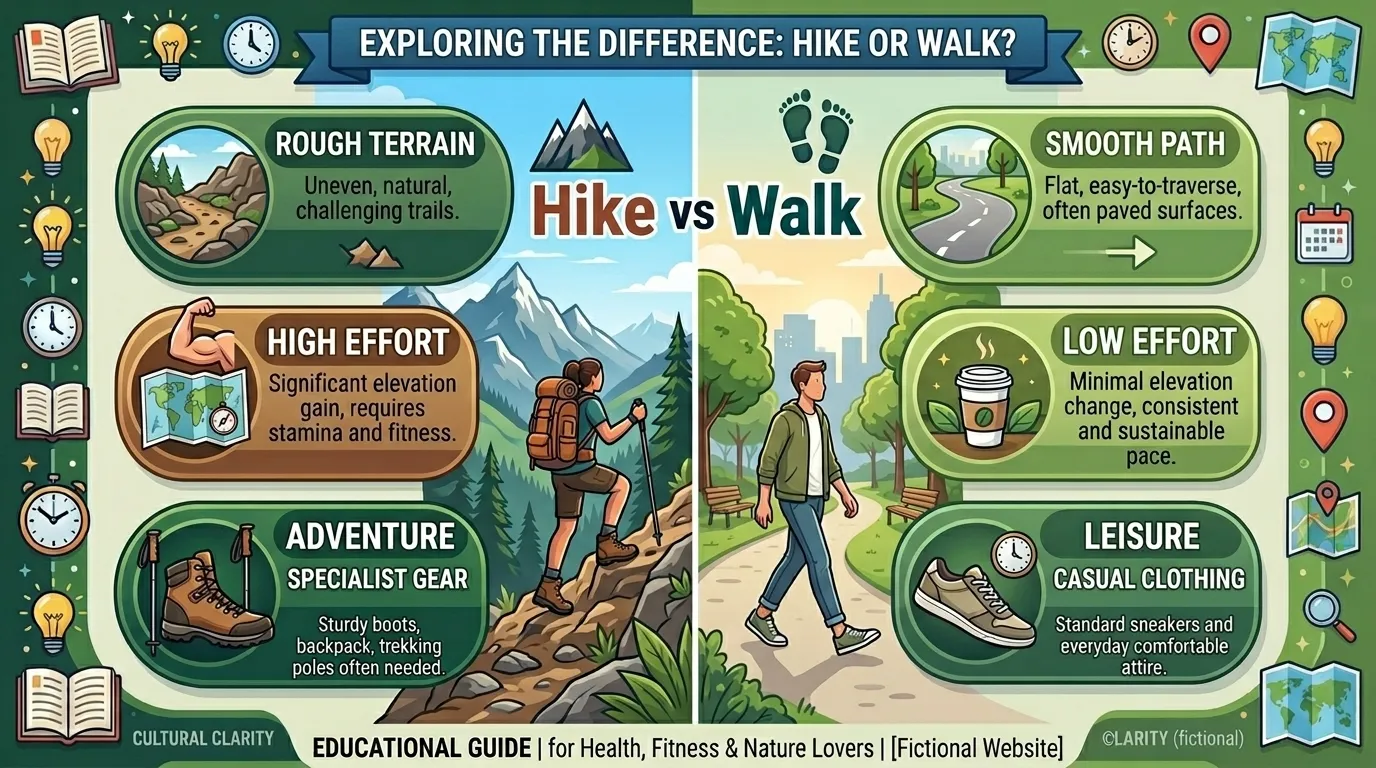
The main difference between a hike and a walk lies in terrain and intensity. A walk is usually done on smooth, flat surfaces like sidewalks or parks, while a hike involves rough, natural trails with elevation changes and requires more physical effort.
Why Is Their Difference Important for Learners and Experts?
Understanding the difference between hike and walk is essential for both beginners and professionals. For learners, it helps in selecting suitable physical activities based on their fitness level. A simple walk can be a great starting point, while hiking demands more preparation and endurance.
For experts like fitness trainers, travel guides, or outdoor enthusiasts, the hike vs walk distinction is crucial for planning safe and effective activities. In society, both activities promote health, reduce stress, and encourage connection with nature. Knowing their differences ensures people engage responsibly and enjoyably.
Pronunciation of Both (US & UK)
- Hike
- US: /haɪk/
- UK: /haɪk/
- Walk
- US: /wɔːk/
- UK: /wɔːk/
Now that you know how to pronounce them, let’s move deeper into understanding their practical differences.
Difference Between the Hike and Walk
1. Terrain
- Hike: Done on uneven, natural trails.
- Example 1: Climbing a mountain trail.
- Example 2: Walking through a forest path.
- Walk: Done on smooth, paved surfaces.
- Example 1: Walking in a park.
- Example 2: Walking on a sidewalk.
2. Intensity
- Hike: More physically demanding.
- Example 1: Steep uphill climbing.
- Example 2: Carrying a backpack.
- Walk: Light and easy activity.
- Example 1: Casual stroll.
- Example 2: Walking to a store.
3. Duration
- Hike: Usually longer (hours or full day).
- Example 1: Half-day mountain hike.
- Example 2: Full-day trail journey.
- Walk: Short duration.
- Example 1: 20-minute walk.
- Example 2: Evening stroll.
4. Preparation
- Hike: Requires gear and planning.
- Example 1: Hiking boots.
- Example 2: Water and map.
- Walk: Minimal preparation.
- Example 1: Casual shoes.
- Example 2: No special gear.
5. Environment
- Hike: Natural environments.
- Example 1: Mountains.
- Example 2: Forests.
- Walk: Urban or controlled spaces.
- Example 1: Streets.
- Example 2: Parks.
6. Purpose
- Hike: Adventure and exploration.
- Example 1: Exploring nature.
- Example 2: Trekking challenge.
- Walk: Relaxation or routine.
- Example 1: Daily exercise.
- Example 2: Leisure walk.
7. Speed
- Hike: Slower due to terrain.
- Example 1: Climbing rocks.
- Example 2: Crossing streams.
- Walk: Steady and faster.
- Example 1: Brisk walking.
- Example 2: Jogging pace walk.
8. Risk Level
- Hike: Higher risk.
- Example 1: Slippery trails.
- Example 2: Wildlife encounters.
- Walk: Low risk.
- Example 1: Safe sidewalks.
- Example 2: Public parks.
9. Equipment
- Hike: Specialized equipment needed.
- Example 1: Hiking poles.
- Example 2: Backpack.
- Walk: No special equipment.
- Example 1: Sneakers.
- Example 2: Comfortable clothes.
10. Fitness Level
- Hike: Requires higher fitness.
- Example 1: Endurance hiking.
- Example 2: Long-distance trekking.
- Walk: Suitable for all fitness levels.
- Example 2: Beginner exercise.
Nature and Behaviour of Both
A hike is adventurous, challenging, and often unpredictable. It connects people deeply with nature and pushes physical limits.
A walk is calm, controlled, and relaxing. It suits everyday life and helps maintain general fitness without stress.
Why People Are Confused About Their Use?
| Aspect | Hike | Walk | Similarity |
| Meaning | Outdoor trail activity | Simple movement on foot | Both involve walking |
| Effort | High | Low | Physical activity |
| Terrain | Rough | Smooth | Movement outdoors |
| Purpose | Adventure | Relaxation | Health benefits |
People confuse them because both involve moving on foot, but the context differs significantly.
Which Is Better in What Situation?
A walk is better for daily routines, beginners, and people looking for light exercise. It is safe, easy, and requires no preparation, making it ideal for all age groups.
A hike, on the other hand, is better for adventure lovers and those seeking physical challenges. It is perfect for exploring nature, building stamina, and experiencing scenic beauty.
Use in Metaphors and Similes
- Hike:
- “Life is a hike, full of ups and downs.”
- “Success feels like a steep hike.”
- Walk:
- “Life is a walk in the park.”
- “He handled it like a walk.”
Connotative Meaning
- Hike: Positive (adventure), sometimes negative (difficulty)
- Example: “The hike was exhausting but rewarding.”
- Walk: Neutral to positive (ease, calmness)
- Example: “She took a peaceful walk.”
Idioms and Proverbs
- Walk:
- “Walk in the park” (something easy)
- Example: The exam was a walk in the park.
- “Walk the talk”
- Example: He walks the talk in leadership.
- “Walk in the park” (something easy)
- Hike: (less common in idioms)
- “Take a hike” (go away)
- Example: He told the rude person to take a hike.
- “Take a hike” (go away)
Works in Literature
- Hike
- A Walk in the Woods – Travel, Bill Bryson, 1998
- Walk
- The Walk – Memoir, Richard Paul Evans, 2010
Movies Based on Both
- Hike
- A Walk in the Woods (2015, USA)
- Walk
- The Walk (2015, USA)
FAQs
1. What is the main difference between hike and walk?
A hike involves rough terrain and more effort, while a walk is easy and done on smooth surfaces.
2. Can a walk become a hike?
Yes, if the terrain becomes rough and challenging, a walk can turn into a hike.
3. Is hiking better than walking?
Both are beneficial; it depends on your fitness level and purpose.
4. Do I need special shoes for hiking?
Yes, hiking usually requires strong, supportive footwear.
5. Is walking enough for fitness?
Yes, regular walking is excellent for maintaining basic health.
How Both Are Useful for Surroundings
Walking reduces pollution and promotes eco-friendly habits. Hiking encourages environmental awareness and conservation of natural areas. Both activities connect humans with their surroundings and promote a healthier lifestyle.
Final Words for Both
The hike vs walk comparison shows that both activities serve different purposes. One offers adventure, while the other provides simplicity. Understanding the difference between hike and walk helps you choose wisely based on your needs.
Conclusion
In conclusion, the difference between hike and walk goes beyond simple movement. It includes terrain, effort, preparation, and purpose. While walking is ideal for everyday health and relaxation, hiking offers adventure and physical challenges. The hike vs walk distinction is important for making informed decisions about outdoor activities. By understanding these differences, you can enjoy both experiences safely and effectively, improving your lifestyle and connection with nature.

I am content creator and comparison blogger focused on analyzing key differences between terms, concepts, and ideas to deliver accurate, easy-to-understand information. So I decided to create a platform where these differences are explained in the simplest way possible.