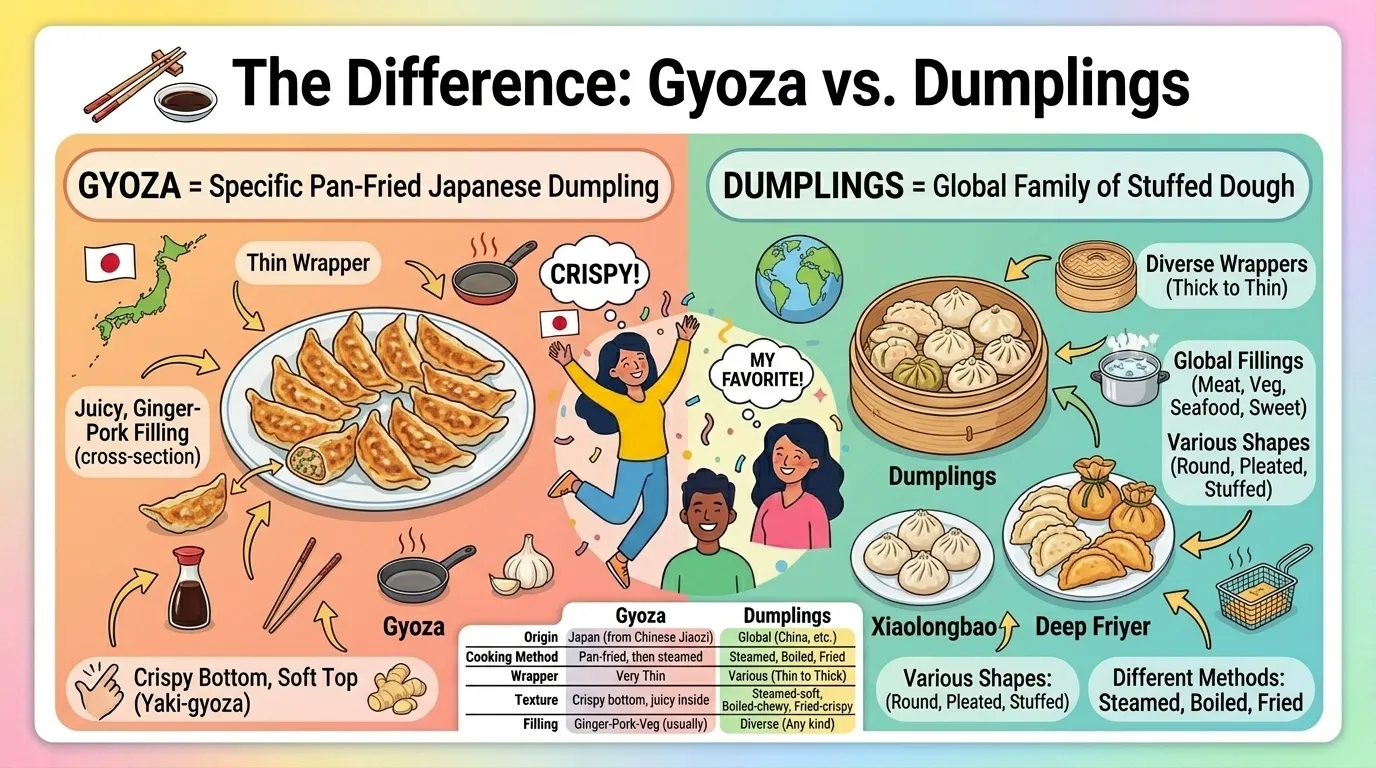
One evening at a busy street food market, a traveler ordered a plate of what looked like dumplings, only to be told they were actually gyoza. Confused but curious, the traveler wondered about the real gyoza vs dumplings difference.
This common mix-up happens worldwide because both foods share similar shapes and fillings. However, understanding the gyoza vs dumplings distinction can enhance your culinary knowledge and appreciation.
Whether you’re a food lover or a curious learner, knowing the difference between these delicious bites matters. In this article, we’ll explore the difference between gyoza and dumplings in depth, uncovering their origins, characteristics, and uses in everyday life.
Key Difference Between the Gyoza vs Dumplings
The primary difference lies in origin, preparation, and texture. Gyoza is a Japanese dish derived from Chinese dumplings, typically pan-fried with a thin wrapper, while dumplings is a broad term that includes various styles worldwide, prepared by boiling, steaming, or frying.
Why Is Their Difference Necessary to Know for Learners and Experts?
Understanding the difference between gyoza and dumplings is essential for both beginners and culinary experts. For learners, it builds a strong foundation in global cuisine and helps avoid confusion when ordering or cooking. For professionals, it ensures accuracy in menus, recipes, and cultural representation. In society, food is a bridge between cultures. Knowing these distinctions promotes respect for traditions and enhances communication in the culinary world.
Pronunciation of Both (US & UK)
- Gyoza (US & UK): gyoh-zuh
- Dumplings (US & UK): duhm-plingz
Before diving deeper, let’s explore how these two differ in detail.
Difference Between the Gyoza and Dumplings
1. Origin
- Gyoza originates from Japan.
Examples: Served in Japanese restaurants; popular in Tokyo street food. - Dumplings originate globally (China, Europe, etc.).
Examples: Chinese jiaozi; Italian gnocchi.
2. Wrapper Thickness
- Gyoza has a thin wrapper.
Examples: Crispy bottom; delicate folds. - Dumplings can have thick or thin wrappers.
Examples: Doughy pierogi; soft steamed buns.
3. Cooking Method
- Gyoza is usually pan-fried then steamed.
Examples: Crispy base; juicy inside. - Dumplings can be boiled, steamed, or fried.
Examples: Boiled wontons; steamed momos.
4. Filling
- Gyoza typically contains minced pork and vegetables.
Examples: Pork and cabbage; garlic chives filling. - Dumplings have diverse fillings.
Examples: Meat, cheese, or even sweet fillings.
5. Shape
- Gyoza has a crescent shape with fine pleats.
Examples: Half-moon shape; tightly sealed edges. - Dumplings vary widely in shape.
Examples: Round balls; folded pockets.
6. Flavor Profile
- Gyoza has a strong garlic and sesame flavor.
Examples: Soy dipping sauce; chili oil pairing. - Dumplings vary in taste depending on region.
Examples: Mild European dumplings; spicy Asian ones.
7. Serving Style
- Gyoza is served as a side or appetizer.
Examples: Served with ramen; eaten with dipping sauce. - Dumplings can be a main dish or dessert.
Examples: Sweet dumplings; hearty meals.
8. Cultural Identity
- Gyoza is strongly tied to Japanese cuisine.
Examples: Izakaya menus; Japanese home cooking. - Dumplings belong to multiple cultures.
Examples: Chinese, Polish, Indian cuisines.
9. Texture
- Gyoza is crispy outside, soft inside.
Examples: Crunchy base; juicy filling. - Dumplings vary in texture.
Examples: Soft, chewy, or fluffy.
10. Popularity Context
- Gyoza is popular in Japanese dining settings.
Examples: Street food stalls; ramen shops. - Dumplings are globally recognized.
Examples: Festival foods; home meals worldwide.
Nature and Behaviour of Both
Gyoza is specific, refined, and consistent in preparation. It reflects Japanese precision and simplicity. Dumplings, on the other hand, are diverse and adaptable, representing cultural variety and creativity across the globe.
Why People Are Confused About Their Use?
People often confuse gyoza and dumplings because gyoza is technically a type of dumpling. The overlapping characteristics—such as dough wrapping and fillings—make them seem identical.
Comparison Table (Gyoza vs Dumplings)
| Feature | Gyoza | Dumplings |
| Origin | Japan | Global |
| Wrapper | Thin | Thick/Thin |
| Cooking | Pan-fried + steamed | Boiled/Steamed/Fried |
| Filling | Mostly pork | Variety |
| Shape | Crescent | Various |
| Role | Appetizer | Main/Dessert |
| Texture | Crispy + soft | Varies |
Which Is Better in What Situation? (Gyoza vs Dumplings)
Gyoza is better when you want a light, crispy appetizer with bold flavors. It works perfectly in casual dining or as a side dish with noodles or soup. Its texture makes it ideal for quick snacks.
Dumplings are better when you want versatility. They can be a full meal, dessert, or comfort food. Depending on the type, they suit different occasions, from festive meals to everyday dining.
Use in Metaphors and Similes
- “Life is like dumplings—full of surprises inside.”
- “He handled the situation like perfectly cooked gyoza—balanced and precise.”
Connotative Meaning of Both
- Gyoza (Positive/Neutral): Precision, flavor, Japanese culture
Example: “Her cooking is as refined as gyoza.” - Dumplings (Positive/Neutral): Comfort, tradition, diversity
Example: “Home feels like a bowl of warm dumplings.”
Idioms or Proverbs Related
While there are no direct idioms for gyoza, dumplings appear in cultural sayings:
- “Dumplings are better than medicine.” (Chinese proverb)
Example: Eating comfort food during winter.
Works in Literature
- “The Dumpling Galaxy Cookbook” – Cookbook, Helen You, 2017
- “Shark’s Fin and Sichuan Pepper” – Memoir, Fuchsia Dunlop, 2008
Movie Names Related
- “The Ramen Girl” (2008, USA/Japan) – features gyoza culture
- “Eat Drink Man Woman” (1994, Taiwan) – includes dumpling traditions
FAQs
1. Are gyoza and dumplings the same?
No, gyoza is a type of dumpling but not all dumplings are gyoza.
2. Which is healthier?
Gyoza can be less oily if pan-fried lightly, but dumplings vary widely.
3. Can dumplings be sweet?
Yes, many cultures have sweet dumplings.
4. Is gyoza always fried?
Mostly, but it can also be steamed or boiled.
5. Why are dumplings popular worldwide?
Because they are versatile, affordable, and easy to prepare.
How Both Are Useful for Surroundings
Gyoza and dumplings bring people together. They are often shared meals that promote bonding, cultural exchange, and culinary creativity. They also support food industries and local businesses worldwide.
Final Words for Both
Gyoza represents precision and tradition within a specific culture, while dumplings symbolize diversity and global unity. Both have their own charm and importance.
Conclusion
Understanding the difference between gyoza and dumplings helps you appreciate global cuisines more deeply. While gyoza is a specialized Japanese dish with a unique cooking style, dumplings cover a wide range of foods across cultures. Knowing Gyoza vs Dumplings differences improves your culinary knowledge and enhances your dining experiences. Whether you enjoy crispy gyoza or comforting dumplings, both offer delicious insights into cultural traditions and flavors.

I am content creator and comparison blogger focused on analyzing key differences between terms, concepts, and ideas to deliver accurate, easy-to-understand information. So I decided to create a platform where these differences are explained in the simplest way possible.