A few months ago, a friend stood confused in a skincare aisle, holding two tiny bottles one labeled “serum” and the other “oil.” She asked, “Aren’t they the same thing?” That simple question reflects a common confusion many people face today. Understanding the difference between serum and oil is essential for building an effective skincare routine.
In the world of beauty, the phrase serum vs oil often comes up when discussing hydration, nourishment, and skin repair. While both products promise glowing skin, their functions differ significantly.
Knowing the difference between serum and oil helps you choose the right product for your skin type and concerns. Whether you’re a beginner or an expert, understanding both can transform your skincare results and prevent costly mistakes.
Key Difference Between the Both
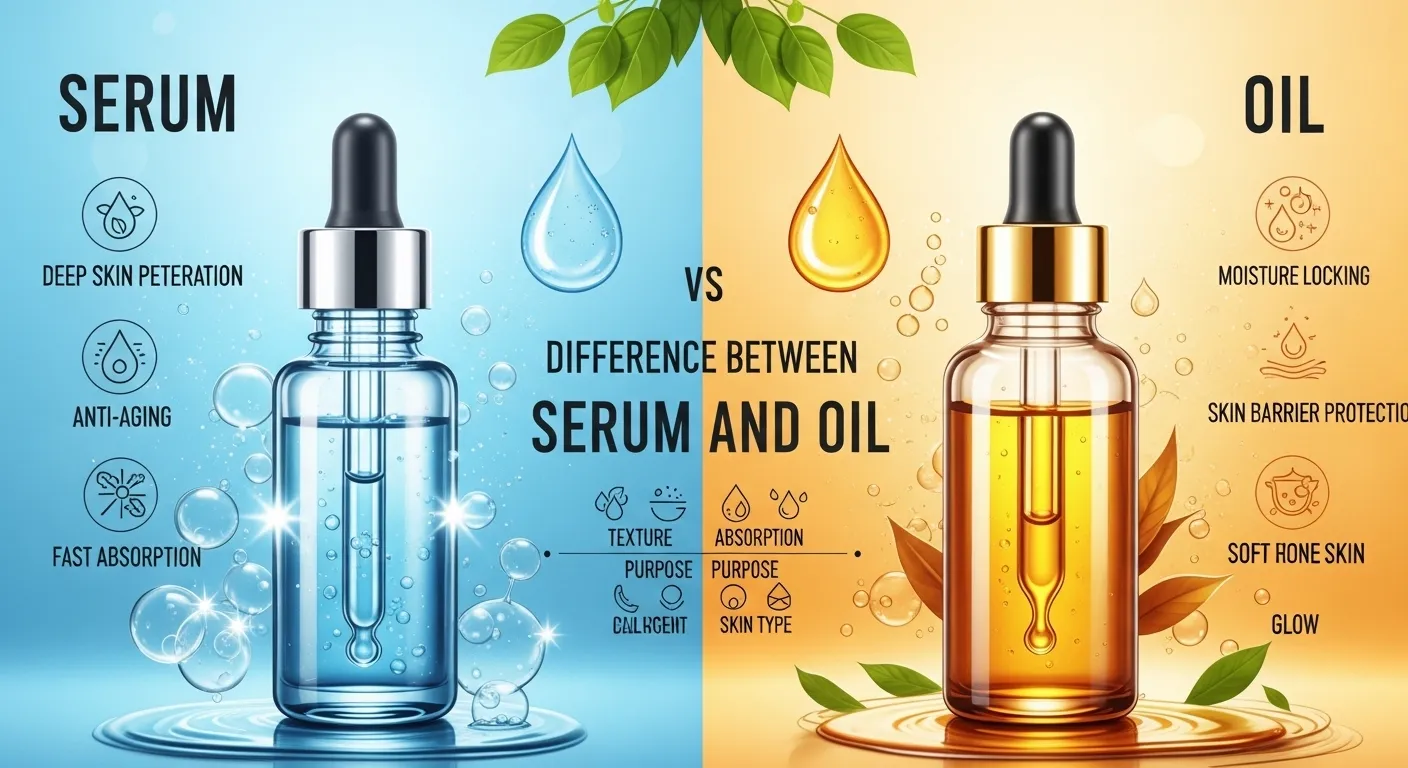
The main difference between serum and oil lies in their composition and purpose. Serums are lightweight, water-based formulations designed to deliver active ingredients deep into the skin. Oils, on the other hand, are thicker, lipid-based products that lock in moisture and strengthen the skin barrier.
Why Is Their Difference Important for Learners and Experts?
Understanding the difference between serum and oil is crucial for both beginners and professionals. For learners, it prevents misuse of products and helps in creating a proper skincare routine. Experts, such as dermatologists and beauty specialists, rely on this knowledge to recommend targeted treatments.
In society, skincare has become more than just appearance—it reflects health, hygiene, and confidence. Knowing when to use a serum or oil can improve skin conditions like dryness, acne, and aging. The debate of serum vs oil is not just technical; it directly impacts how people care for their skin daily.
Pronunciation of the Both
- Serum
- US: /ˈsɪrəm/
- UK: /ˈsɪərəm/
- Oil
- US: /ɔɪl/
- UK: /ɔɪl/
Now that you know how to pronounce them correctly, let’s dive deeper into their real differences and practical uses.
Difference Between Serum and Oil
1. Composition
- Serum: Water-based with active ingredients.
- Example 1: Vitamin C serum for brightening
- Example 2: Hyaluronic acid serum for hydration
- Oil: Lipid-based and rich in fatty acids.
- Example 1: Argan oil for nourishment
- Example 2: Coconut oil for moisture
2. Texture
- Serum: Lightweight and fast-absorbing.
- Example 1: Gel-like consistency
- Example 2: Non-greasy finish
- Oil: Thick and greasy texture.
- Example 1: Leaves a shiny layer
- Example 2: Takes longer to absorb
3. Function
- Serum: Targets specific skin concerns.
- Example 1: Anti-aging treatment
- Example 2: Acne control
- Oil: Seals moisture and protects skin.
- Example 1: Prevents dryness
- Example 2: Strengthens skin barrier
4. Absorption Level
- Serum: Penetrates deeply into skin layers.
- Example 1: Reaches dermis level
- Example 2: Works on cellular level
- Oil: Stays mostly on the surface.
- Example 1: Forms protective layer
- Example 2: Locks hydration
5. Skin Type Suitability
- Serum: Suitable for all skin types.
- Example 1: Oily skin benefits from lightweight formula
- Example 2: Sensitive skin uses calming serums
- Oil: Best for dry or mature skin.
- Example 1: Dry skin needs extra moisture
- Example 2: Aging skin benefits from nourishment
6. Usage Order
- Serum: Applied before moisturizer.
- Example 1: After cleansing
- Example 2: Before sunscreen
- Oil: Applied after moisturizer.
- Example 1: Final step in routine
- Example 2: Night skincare sealing
7. Purpose
- Serum: Treatment product.
- Example 1: Reduces wrinkles
- Example 2: Brightens complexion
- Oil: Protective and hydrating product.
- Example 1: Prevents moisture loss
- Example 2: Adds glow
8. Ingredients
- Serum: Active compounds like peptides and acids.
- Example 1: Retinol
- Example 2: Niacinamide
- Oil: Natural plant-based extracts.
- Example 1: Jojoba oil
- Example 2: Rosehip oil
9. Feel on Skin
- Serum: Light and invisible.
- Example 1: No residue
- Example 2: Smooth finish
- Oil: Heavy and visible.
- Example 1: Glossy look
- Example 2: Slight stickiness
10. Cost Factor
- Serum: Often more expensive due to active ingredients.
- Example 1: Anti-aging serums
- Example 2: Clinical-grade formulas
- Oil: Generally more affordable.
- Example 1: Natural oils
- Example 2: Multi-purpose oils
Nature and Behaviour of Both
Serums behave like targeted treatments. They are designed to work beneath the skin surface and deliver fast, visible results. Oils, however, act as protectors. They sit on top of the skin and prevent water loss while enhancing softness.
Why Are People Confused About Their Use?
| Feature | Serum | Oil | Similarity |
|---|---|---|---|
| Texture | Lightweight | Thick | Both are liquid products |
| Purpose | Treatment | Moisturizing | Improve skin health |
| Absorption | Deep | Surface | Applied on skin |
| Ingredients | Active compounds | Natural lipids | Contain beneficial nutrients |
| Usage | Before moisturizer | After moisturizer | Part of skincare routine |
Which Is Better in What Situation?
Serums are better when you want to treat specific issues like acne, dark spots, or wrinkles. They deliver concentrated ingredients quickly and effectively. If your goal is targeted improvement, a serum is the ideal choice.
Oils are better when your skin feels dry, flaky, or dehydrated. They help lock in moisture and protect the skin barrier. In harsh weather conditions, oils provide long-lasting hydration and nourishment.
Metaphors and Similes
- Serum is like a “medicine” for the skin.
- Oil is like a “blanket” that protects the skin.
- Serum works like a “doctor,” while oil acts like a “shield.”
Connotative Meaning
- Serum
- Positive: Effective, advanced, targeted
- Neutral: Scientific skincare product
- Negative: Expensive or complex
- Oil
- Positive: Natural, nourishing, soothing
- Neutral: Traditional skincare item
- Negative: Greasy or भारी (heavy)
Examples:
- “This serum is powerful for anti-aging.”
- “The oil feels too greasy on my skin.”
Idioms or Proverbs
Though not directly related, we can creatively connect:
- “Oil the wheels” (make things smoother)
- Example: Using oil makes your skincare routine smoother.
- “A drop in the ocean”
- Example: One serum drop can still be powerful.
Works in Literature
- The Oil of Gladness – Genre: Religious, Writer: Unknown, Year: Ancient
- The Serum (fictional references in sci-fi themes) – Genre: Science Fiction
Movies Related to Both
- Lorenzo’s Oil (1992, USA)
- The Oil Factor (2009, USA)
- Serum-related concepts often appear in sci-fi movies involving experiments
FAQs
1. What is the main difference between serum and oil?
Serums treat skin issues, while oils lock in moisture.
2. Can I use serum and oil together?
Yes, apply serum first and oil last.
3. Which is better for oily skin?
Serum is better due to its lightweight formula.
4. Is oil necessary in skincare?
Yes, especially for dry or mature skin.
5. Can serum replace oil?
No, both serve different purposes.
How Both Are Useful for Surroundings
Serums and oils contribute to personal hygiene and self-care culture. Their production also supports industries like cosmetics, agriculture (for natural oils), and science. They influence beauty standards and promote healthy living habits.
Final Words for Both
Serums and oils are not competitors but partners. Understanding their roles helps you use them effectively. The discussion of serum vs oil becomes meaningful when you apply both correctly in your routine.
Conclusion
In conclusion, the difference between serum and oil is clear once you understand their composition, function, and usage. Serums penetrate deeply to treat specific concerns, while oils provide surface-level protection and hydration. Both products play essential roles in skincare, and choosing between them depends on your needs. Instead of debating serum vs oil, it’s wiser to combine their strengths for optimal results. A balanced approach ensures healthier, glowing skin and a smarter skincare routine.

My name is Ryan Mitchell, and I am a comparison content writer based in the United States. I specialize in creating clear and easy-to-understand articles that explain the differences between similar concepts, products, and ideas. My work focuses on helping readers quickly understand what makes two things different so they can make better decisions.