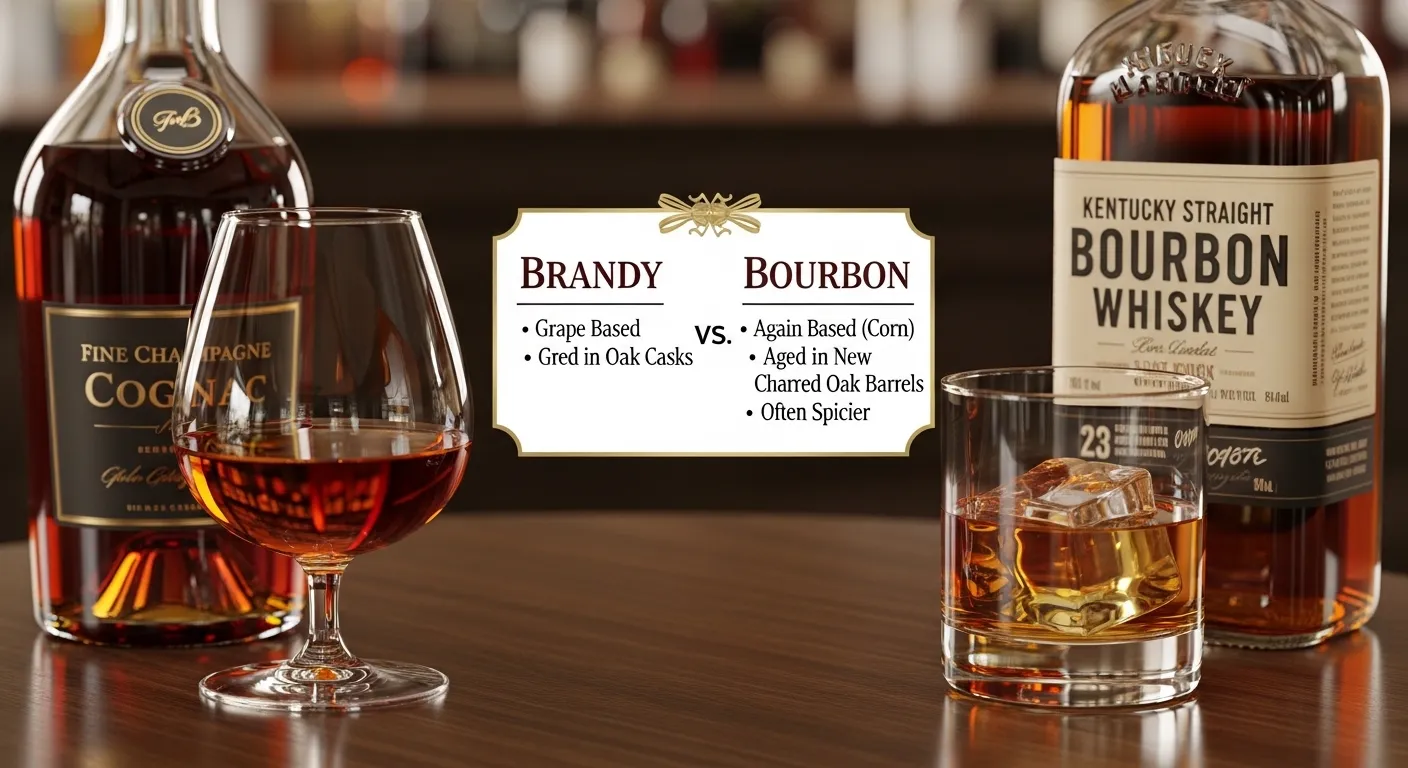
Picture a winter evening where two old friends sit by the fireplace. One gently swirls a glass of brandy, enjoying its fruity aroma, while the other slowly sips bourbon, savoring its smoky sweetness. Although both drinks look similar in their amber color, the difference between brandy and bourbon is deeper than most people realize. Many people often mix them up at gatherings or restaurants, not knowing the true difference between brandy and bourbon in terms of ingredients, origin, and flavor. Understanding the difference between brandy and bourbon not only helps you choose the right drink but also improves your knowledge of global beverage traditions. Whether you are a learner, enthusiast, or expert, knowing the difference between brandy and bourbon enhances appreciation and cultural awareness.
Key Difference Between the Both
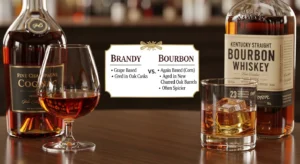
The key difference lies in their base ingredients and production process. Brandy is distilled from fermented fruit juice, usually grapes. Bourbon, on the other hand, is a type of American whiskey made primarily from corn and aged in new charred oak barrels.
Why Is Their Difference Necessary to Know for Learners and Experts?
Understanding these differences is important for cultural, culinary, and commercial reasons. For learners, it improves vocabulary and beverage knowledge. For experts in hospitality or culinary arts, distinguishing between brandy and bourbon ensures professional credibility. In society, these drinks represent different traditions — brandy connects to European heritage, especially countries like France and Spain, while bourbon is deeply rooted in United States history. Knowing their differences prevents confusion in business, trade, and social settings.
Pronunciation (US & UK)
Brandy
- US: /ˈbræn.di/
- UK: /ˈbræn.di/
Bourbon
- US: /ˈbɝː.bən/
- UK: /ˈbɔː.bən/
Now that we understand their background and importance, let us explore the detailed differences between them.
Difference Between Brandy and Bourbon
1. Base Ingredient
Brandy: Made from fermented fruit juice, mostly grapes.
Example 1: Grape brandy is common in France.
Example 2: Apple brandy is popular in some regions.
Bourbon: Made from at least 51% corn.
Example 1: Corn mash is the main ingredient.
2. Origin
Brandy: Originated in Europe.
Example 1: Cognac comes from a specific French region.
Example 2: Spanish brandy has its own style.
Bourbon: Originated in the United States.
Example 1: Kentucky is famous for bourbon production.
Example 2: Tennessee also produces similar whiskey styles.
3. Production Process
Brandy: Distilled from wine or fruit mash.
Example 1: Wine is heated in copper stills.
Example 2: Fruit mash fermentation takes weeks.
Bourbon: Distilled from grain mash.
Example 1: Grains are ground and fermented.
Example 2: The spirit is distilled and aged in new charred barrels.
4. Aging Requirement
Brandy: Often aged in wooden casks, but rules vary.
Example 1: Some brandies age for two years.
Example 2: Premium brandies age much longer.
Bourbon: Must be aged in new charred oak barrels.
Example 1: Aging gives it a smoky flavor.
Example 2: Straight bourbon must age at least two years.
5. Alcohol Content
Brandy: Usually 35–60% alcohol.
Example 1: Standard brandy is about 40%.
Example 2: Stronger fruit brandies may exceed 50%.
Bourbon: Typically around 40–50%.
Example 1: Most bottles are 40% ABV.
Example 2: Barrel-proof versions are stronger.
6. Flavor Profile
Brandy: Fruity, sweet, and smooth.
Example 1: Notes of raisins and dried fruits.
Example 2: Sometimes hints of vanilla.
Bourbon: Sweet, smoky, and caramel-like.
Example 1: Flavors of vanilla and oak.
Example 2: Sometimes spicy due to rye.
7. Color
Brandy: Amber to deep brown.
Example 1: Lighter if aged briefly.
Example 2: Darker if aged longer.
Bourbon: Rich amber due to charred oak.
Example 1: Deep golden tone.
Example 2: Darkens with age.
8. Legal Definition
Brandy: Laws vary by country.
Example 1: Cognac must come from a French region.
Example 2: Other countries have flexible rules.
Bourbon: Strictly regulated by U.S. law.
Example 1: Must contain 51% corn.
Example 2: Must be produced in the U.S.
9. Cultural Association
Brandy: Linked with European tradition.
Example 1: Often served after dinner.
Example 2: Associated with classic elegance.
Bourbon: Symbol of American heritage.
Example 1: Common in cocktails like Old Fashioned.
Example 2: Popular in Southern culture.
10. Usage in Cooking
Brandy: Used in desserts and sauces.
Example 1: Brandy in Christmas pudding.
Example 2: Added to creamy sauces.
Bourbon: Used in barbecue and glazes.
Example 1: Bourbon chicken recipes.
Example 2: Bourbon-flavored sauces.
Nature and Behaviour of Both
Brandy behaves as a smooth, aromatic spirit often enjoyed slowly. It is delicate and fruit-forward. Bourbon behaves as a bold, structured spirit with a strong oak presence and sweetness from corn.
Why People Are Confused About Their Use?
People are confused because both are brown spirits served in similar glasses. Additionally, both are distilled and aged, which creates similar colors. However, their ingredients and traditions differ significantly.
Table: Difference and Similarity Between Brandy and Bourbon
| Feature | Brandy | Bourbon | Similarity |
| Base | Fruit | Corn | Both distilled |
| Origin | Europe | USA | Both global |
| Flavor | Fruity | Sweet & smoky | Both aromatic |
| Aging | Wooden casks | New charred oak | Barrel aged |
| Use | After dinner | Cocktails | Social drink |
Which Is Better in What Situation?
Brandy is better for calm evenings and formal dinners. Its smooth and fruity nature makes it ideal for sipping slowly after meals. It also pairs well with desserts and chocolate-based dishes.
Bourbon is better for social gatherings and cocktails. It adds bold flavor to mixed drinks and barbecue dishes. Its sweet and smoky notes suit lively occasions and outdoor events.
Use in Metaphors and Similes
Brandy: “Her voice was smooth like aged brandy.”
Bourbon: “His personality was strong as bourbon.”
Connotative Meaning
Brandy
Positive: Elegance and warmth.
Example: “The evening felt like fine brandy.”
Neutral: A type of spirit.
Negative: Sometimes linked with overindulgence.
Bourbon
Positive: Strength and tradition.
Example: “He stood firm like bourbon.”
Neutral: A whiskey variety.
Negative: Associated with heavy drinking.
Idioms or Proverbs
While there are no direct common idioms, phrases like:
“Smooth as brandy” — Example: His speech was smooth as brandy.
“Strong as bourbon” — Example: Her determination was strong as bourbon.
Works in Literature
- Brandy for the Parson — Novel, C. E. Vulliamy, 1952
- The Bourbon Dynasty — Historical Non-fiction, Edward Hazen, 1876
Movies Based on the Keywords
- Brandy for the Parson — 1952, United Kingdom
- Bourbon Street — 1948, United States
Five Frequently Asked Questions
1. Is bourbon a type of brandy?
No, bourbon is a type of whiskey made from corn.
2. Can brandy be made from fruits other than grapes?
Yes, apple and pear brandy are common examples.
3. Does bourbon have to be made in Kentucky?
No, but it must be made in the United States.
4. Which is sweeter?
Bourbon often tastes sweeter due to corn.
5. Can both be used in cooking?
Yes, but they give different flavors.
How Both Are Useful for Surroundings
Brandy supports fruit farming industries. Bourbon supports corn agriculture and American distilleries. Both contribute economically and culturally to their regions.
Final Words for the Both
Brandy represents fruit heritage and European elegance. Bourbon reflects American tradition and bold character. Both hold historical and cultural importance.
Conclusion
In conclusion, the difference between brandy and bourbon lies in their ingredients, origin, production, and flavor. While brandy is fruit-based and connected to European tradition, bourbon is corn-based and rooted in American history. Although they share similarities as distilled spirits, their identities remain distinct. Knowing these differences enriches knowledge, improves social awareness, and enhances appreciation of global beverage culture.

I am content creator and comparison blogger focused on analyzing key differences between terms, concepts, and ideas to deliver accurate, easy-to-understand information. So I decided to create a platform where these differences are explained in the simplest way possible.