If you have ever stood in a pharmacy aisle wondering about the Difference Between Tums and Pepcid, you are not alone. Many people experience heartburn, acid indigestion, or acid reflux and are unsure which medicine is the better choice. Understanding the Difference Between Tums and Pepcid can help you choose the right treatment for your symptoms and avoid unnecessary discomfort.
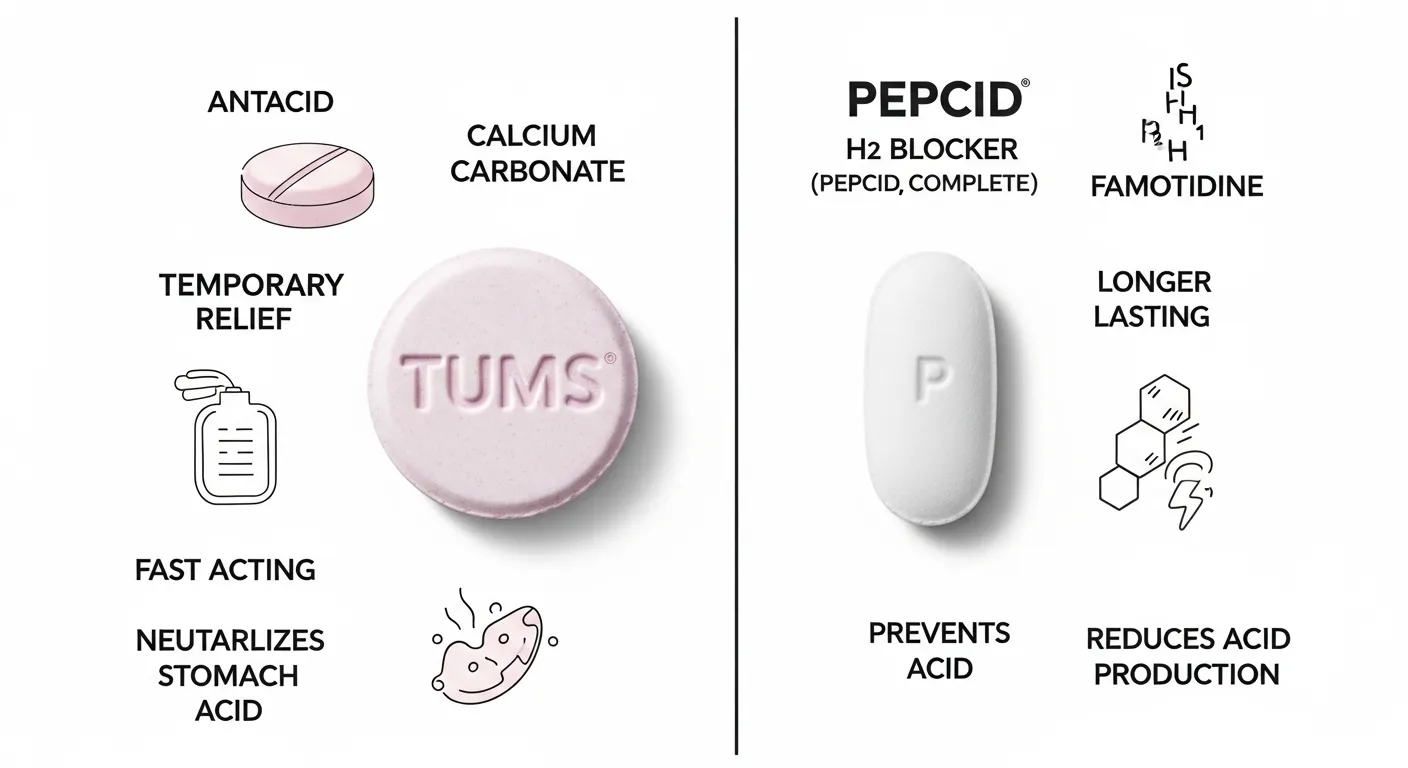
The main Difference Between Tums and Pepcid is that Tums works immediately by neutralizing stomach acid, while Pepcid reduces the amount of acid your stomach produces. Because they work differently, each medication is useful in different situations.
In this guide, you’ll learn how both medicines work, their benefits, side effects, similarities, key differences, and when each option may be the best choice for heartburn relief.
Quick Answer: Difference Between Tums and Pepcid
Tums is an antacid that provides fast relief by neutralizing stomach acid already present in the stomach. Pepcid is an acid reducer that decreases acid production and provides longer-lasting relief.
Example: If you get heartburn after eating spicy pizza, Tums may help within minutes. If you frequently experience heartburn several times a week, Pepcid may provide better long-term symptom control.
Definition of Tums and Pepcid
- Tums: An over-the-counter antacid containing calcium carbonate that neutralizes stomach acid for quick relief of heartburn and indigestion.
- Pepcid: An over-the-counter acid reducer containing famotidine that blocks histamine receptors in the stomach, reducing acid production.
Simple Example: Tums fights existing acid, while Pepcid helps prevent your stomach from making as much acid in the first place.
Pronunciation of Both Terms
| Medication | US Pronunciation | UK Pronunciation |
|---|---|---|
| Tums | /tʌmz/ | /tʌmz/ |
| Pepcid | /PEP-sid/ | /PEP-sid/ |
Now that you know what each medicine is, let’s explore the differences in detail and determine which option fits different heartburn situations.
Tums vs Pepcid Comparison Table
| Feature | Tums | Pepcid |
|---|---|---|
| Drug Type | Antacid | H2 blocker (acid reducer) |
| Active Ingredient | Calcium carbonate | Famotidine |
| How It Works | Neutralizes stomach acid | Reduces acid production |
| Speed of Relief | Usually within minutes | Usually within 30–60 minutes |
| Duration | Short-term relief | Longer-lasting relief |
| Best For | Occasional heartburn | Frequent heartburn |
| Prevention Use | Limited | Can be taken before trigger foods |
| Calcium Source | Yes | No |
| Availability | OTC | OTC |
| Typical Use | Immediate symptom relief | Ongoing acid control |
Key Differences Explained Between Tums and Pepcid
1. Speed of Relief
Tums works almost immediately because it directly neutralizes acid already present in the stomach.
Pepcid takes longer because it must reduce acid production before symptoms improve.
Real-life example: Someone with sudden heartburn after a heavy meal may prefer Tums for quick relief.
2. Duration of Action
One major difference between Tums and Pepcid is how long they last.
Tums generally provides temporary relief, while Pepcid often works for many hours.
Example: If heartburn frequently returns throughout the day, Pepcid may offer better symptom control.
3. Prevention vs Treatment
Tums mainly treats symptoms after they appear.
Pepcid can be taken before eating foods known to trigger heartburn.
Example: Before a spicy restaurant meal, Pepcid may help prevent discomfort.
4. Active Ingredients
Tums contains calcium carbonate.
Pepcid contains famotidine.
Because the ingredients work differently, the medications serve different purposes.
5. Frequency of Symptoms
People with occasional heartburn often find Tums sufficient.
People with recurring symptoms may benefit more from Pepcid.
6. Nutritional Impact
Tums provides calcium, which some people appreciate.
Pepcid does not provide dietary calcium.
7. Acid Reflux Management
For chronic acid reflux symptoms, healthcare providers often recommend acid-reducing medications like Pepcid rather than relying solely on antacids.
How Does Tums Work?
Tums belongs to a group of medications called antacids.
When stomach acid causes a burning sensation in the chest or throat, calcium carbonate reacts with that acid and neutralizes it. This reduces irritation and discomfort.
Benefits of Tums
- Fast relief
- Easy to carry
- Available without prescription
- Useful for occasional indigestion
- Provides calcium
Best Situations for Tums
- After spicy foods
- After overeating
- Occasional heartburn
- Mild acid indigestion
How Does Pepcid Work?
Pepcid contains famotidine, an H2 receptor blocker.
It reduces acid production by blocking signals that tell the stomach to produce acid.
Because it reduces acid production rather than neutralizing existing acid, it works differently from Tums.
Benefits of Pepcid
- Longer-lasting relief
- Can help prevent symptoms
- Useful for recurring heartburn
- Reduces nighttime acid production
Best Situations for Pepcid
- Frequent heartburn
- Nighttime symptoms
- Prevention before trigger foods
- Regular acid reflux episodes
Difference Between Tums and Pepcid for Acid Reflux
Many users search for the best medicine for acid reflux.
Tums for Acid Reflux
Tums can provide temporary relief when acid reflux symptoms suddenly occur.
However, it does not address ongoing acid production.
Pepcid for Acid Reflux
Pepcid may help control recurring acid reflux because it reduces stomach acid production over a longer period.
For people experiencing reflux multiple times each week, Pepcid is often more effective than relying solely on antacids.
Which Works Better for Heartburn?
The answer depends on your situation.
Choose Tums If:
- You need immediate relief.
- Symptoms occur occasionally.
- You have mild indigestion.
- You want a portable solution.
Choose Pepcid If:
- Heartburn occurs frequently.
- Symptoms appear at night.
- You want longer-lasting relief.
- You need prevention before meals.
Mini Summary: Tums wins for speed, while Pepcid wins for duration.
Difference and Similarity Table Between Tums and Pepcid
| Feature | Tums | Pepcid | Similarity |
|---|---|---|---|
| Purpose | Neutralizes acid | Reduces acid production | Both help relieve heartburn |
| Availability | Over-the-counter | Over-the-counter | No prescription needed in many cases |
| Heartburn Relief | Fast | Longer-lasting | Both target heartburn symptoms |
| Active Ingredient | Calcium carbonate | Famotidine | Different ingredients, same goal |
| Prevention Use | Limited | Stronger prevention role | Both may reduce discomfort |
| Duration | Short | Long | Both provide symptom improvement |
| Acid Reflux Support | Temporary relief | Better ongoing control | Both may help reflux symptoms |
| User Type | Occasional sufferers | Frequent sufferers | Both are commonly used by adults |
This table clearly shows the difference and similarity between Difference Between Tums and Pepcid for quick understanding.
Common Mistakes with Difference Between Tums and Pepcid
Mistake 1: Assuming They Are the Same
Many beginners think both medications do exactly the same thing.
Correction: Tums neutralizes acid, while Pepcid reduces acid production.
Mistake 2: Expecting Instant Relief from Pepcid
Pepcid is not designed for immediate symptom relief.
Correction: Use it for longer-term control and prevention.
Mistake 3: Using Tums for Constant Symptoms
Frequent heartburn may indicate an underlying issue.
Correction: Discuss recurring symptoms with a healthcare professional.
Mistake 4: Ignoring Food Triggers
Medicine alone may not solve the problem.
Correction: Reduce trigger foods such as spicy meals, caffeine, and fatty foods.
Mistake 5: Overusing Antacids
Some users take antacids repeatedly without addressing the cause.
Correction: Evaluate lifestyle habits and seek medical advice if symptoms persist.
Real-Life Examples with Difference Between Tums and Pepcid
Scenario 1: Occasional Pizza Night Heartburn
A person experiences heartburn after eating spicy pizza.
Best option: Tums.
Scenario 2: Frequent Weekly Heartburn
Someone experiences symptoms four times per week.
Best option: Pepcid.
Scenario 3: Nighttime Acid Reflux
Heartburn regularly interrupts sleep.
Best option: Pepcid.
Scenario 4: Large Holiday Meal
Symptoms begin immediately after overeating.
Best option: Tums.
Scenario 5: Preventing Symptoms Before a Restaurant Visit
A person knows certain foods trigger heartburn.
Best option: Pepcid before the meal.
When to Use Each
1. Use Tums When:
- Relief is needed immediately.
- Symptoms are rare.
- Heartburn is mild.
2. Use Pepcid When:
- Symptoms occur regularly.
- Prevention is important.
- Nighttime acid reflux is common.
3. Use Both?
In some situations, healthcare providers may recommend both because they work differently. Always follow label instructions or professional guidance.
Why People Get Confused in Difference Between Tums and Pepcid
Several factors contribute to confusion:
- Both treat heartburn.
- Both are sold over the counter.
- Packaging often appears in the same pharmacy section.
- Advertising focuses on symptom relief rather than mechanism.
- Many users do not realize acid neutralization and acid reduction are different processes.
Because the end goal is similar, people often assume the medications are interchangeable when they actually serve different purposes.
Expert Insight
From a practical healthcare perspective, the biggest mistake people make is choosing a medication based solely on speed.
In real scenarios, symptom frequency matters just as much as symptom intensity.
Someone who experiences heartburn once a month may do very well with Tums. However, someone who experiences symptoms several times a week often benefits more from medications that reduce acid production, such as Pepcid.
Another important point is that frequent heartburn can sometimes signal a larger digestive issue. Persistent symptoms should not be ignored simply because over-the-counter medications provide temporary relief.
The best choice depends less on which medicine is “stronger” and more on matching the medication to the specific pattern of symptoms.
Frequently Asked Questions (FAQ)
Is Tums stronger than Pepcid?
Not necessarily. Tums works faster, while Pepcid generally lasts longer.
Can I take Tums and Pepcid together?
In some cases, they may be used together because they work differently. Follow package instructions and consult a healthcare professional if unsure.
Which works faster for heartburn?
Tums typically provides faster relief.
Which lasts longer?
Pepcid usually provides longer-lasting acid control.
Is Pepcid better for acid reflux?
For recurring acid reflux symptoms, Pepcid is often more helpful because it reduces acid production.
Does Tums help acid reflux immediately?
Yes, many people experience relief within minutes.
Can Tums prevent heartburn?
It is generally better for treating symptoms after they start rather than preventing them.
Can Pepcid prevent heartburn before eating?
Yes, Pepcid can be taken before trigger meals to help prevent symptoms.
Which medication is better for nighttime heartburn?
Pepcid is often preferred because of its longer duration.
When should I see a doctor for heartburn?
If symptoms occur frequently, worsen over time, or interfere with daily life, seek medical evaluation.
Conclusion
Understanding the Difference Between Tums and Pepcid is essential for choosing the right heartburn treatment. While both medications are designed to relieve acid-related discomfort, they achieve that goal in very different ways. Tums acts quickly by neutralizing stomach acid already present, making it ideal for occasional heartburn and sudden symptoms. Pepcid works by reducing acid production, making it a stronger choice for longer-lasting relief and prevention.
In simple terms, Tums is the quick-response solution, while Pepcid is the longer-term acid-control option. By matching the medication to your specific needs, you can achieve better symptom management and improved digestive comfort. If heartburn becomes frequent or severe, professional medical advice is always the safest next step.

I am content creator and comparison blogger focused on analyzing key differences between terms, concepts, and ideas to deliver accurate, easy-to-understand information. So I decided to create a platform where these differences are explained in the simplest way possible.