Imagine a football player running across the field when suddenly he falls awkwardly and grabs his shoulder in pain. The doctor later explains that the injury could be either a dislocation or a subluxation. For many people, these two medical terms sound similar, and they are often used interchangeably in everyday conversation. However, the difference between dislocation and subluxation is medically significant and important to understand.
Both conditions involve joints moving out of their normal position, but the severity and treatment may differ greatly. Knowing the difference between dislocation and subluxation helps patients, athletes, and healthcare professionals identify injuries correctly. In sports medicine, orthopedics, and physical therapy, recognizing the difference between dislocation and subluxation ensures proper diagnosis and faster recovery.
Therefore, understanding the difference between dislocation and subluxation is not only useful for medical experts but also for ordinary people who want to stay informed about joint health.
Key Difference Between the Both
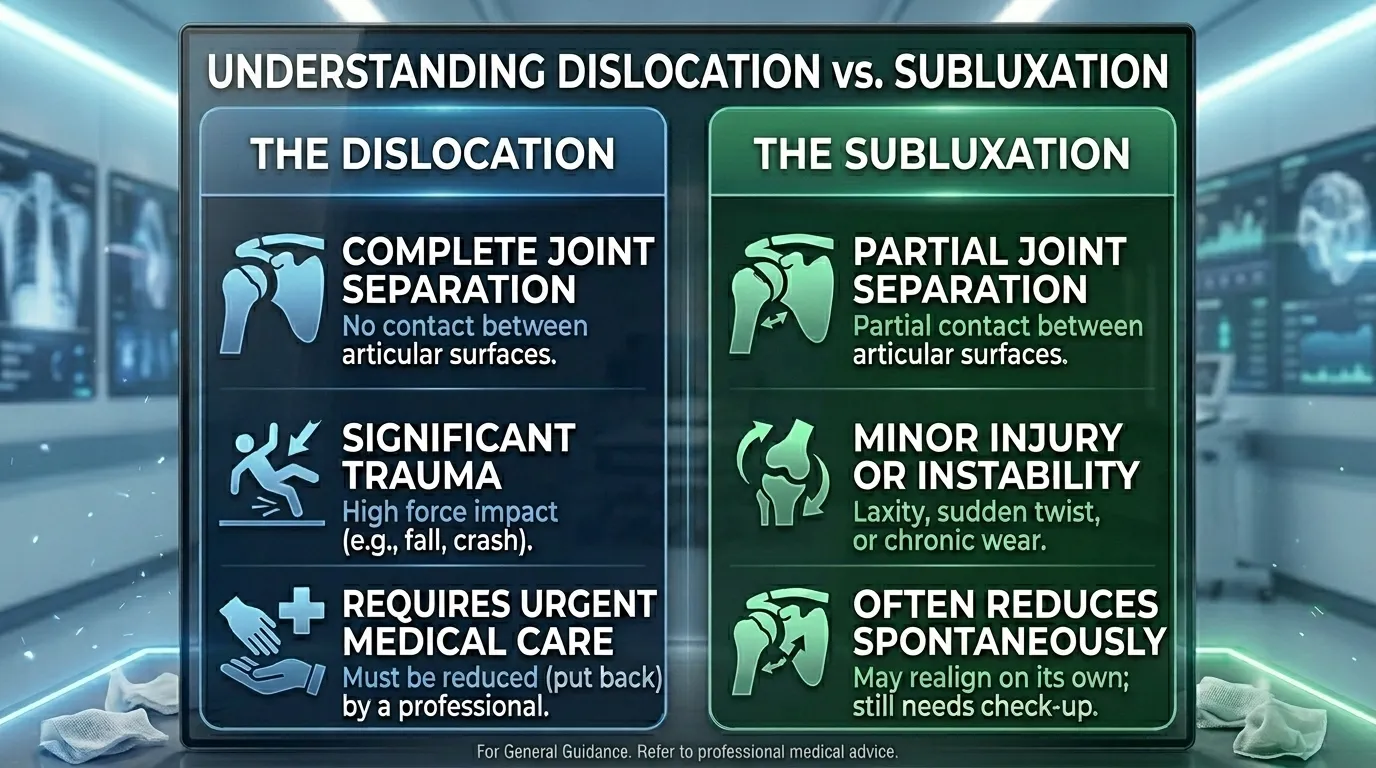
The primary difference between dislocation and subluxation lies in the degree to which a joint moves out of its normal position.
- Dislocation occurs when a joint is completely forced out of its normal alignment. The bones lose contact with each other entirely.
- Subluxation happens when a joint is only partially displaced. The bones remain partially connected but are not in the correct alignment.
In simple words, dislocation is a complete separation of the joint, while subluxation is a partial displacement. This difference affects pain level, treatment methods, and recovery time.
Why Is Their Difference Necessary to Know for Learners and Experts?
Understanding the difference between dislocation and subluxation is important for both learners and professionals in the medical field. Medical students, physiotherapists, and orthopedic specialists must recognize these injuries accurately because treatment approaches vary significantly.
For example, a dislocation may require immediate medical reduction, immobilization, or even surgery. On the other hand, subluxation may often be treated through physical therapy and joint stabilization techniques.
Beyond medicine, this knowledge benefits society as well. Athletes, trainers, and fitness enthusiasts frequently encounter joint injuries during sports activities. Knowing the difference helps them respond quickly and prevent long-term complications. Furthermore, public awareness of these conditions encourages early diagnosis, proper treatment, and better joint health for individuals of all ages.
Pronunciation of the Both (US & UK)
Dislocation
- US pronunciation: /ˌdɪs.loʊˈkeɪ.ʃən/
- UK pronunciation: /ˌdɪs.ləʊˈkeɪ.ʃən/
Subluxation
- US pronunciation: /ˌsʌb.lʌkˈseɪ.ʃən/
- UK pronunciation: /ˌsʌb.lʌkˈseɪ.ʃən/
Now that we understand how these terms sound and what they generally mean, let us explore the difference between dislocation and subluxation in greater detail through clear comparisons.
Difference Between the Keywords
1. Degree of Joint Displacement
Dislocation:
In dislocation, the joint bones completely separate from their normal position.
Examples:
- A shoulder dislocation during a basketball fall.
- A finger joint fully displaced after a sports accident.
Subluxation:
In subluxation, the bones remain partially connected but move out of alignment.
Examples:
- A mild shoulder subluxation in swimmers.
- Partial kneecap displacement during running.
2. Severity of Injury
Dislocation:
Usually severe and causes intense pain and visible deformity.
Examples:
- Hip dislocation after a car accident.
- Elbow dislocation during a fall.
Subluxation:
Often less severe and may sometimes correct itself.
Examples:
- Temporary kneecap shift.
- Mild spinal subluxation.
3. Bone Contact
Dislocation:
Bones lose all contact with each other.
Examples:
- Shoulder joint completely separated.
- Jaw joint forced out of socket.
Subluxation:
Bones still maintain partial contact.
Examples:
- Partial shoulder misalignment.
- Partial vertebral shift.
4. Visible Appearance
Dislocation:
The joint often looks abnormal or deformed.
Examples:
- Crooked finger after injury.
- Shoulder appearing lower than normal.
Subluxation:
The joint may appear almost normal.
Examples:
- Slight swelling in knee.
- Mild shoulder instability.
5. Pain Level
Dislocation:
Typically causes extreme pain.
Examples:
- Hip dislocation causing inability to move.
- Shoulder dislocation leading to severe discomfort.
Subluxation:
Pain is usually moderate.
Examples:
- Temporary shoulder instability.
- Mild spinal discomfort.
6. Treatment Requirement
Dislocation:
Often requires medical reduction or emergency treatment.
Examples:
- Doctor repositioning a shoulder joint.
- Surgical correction of a hip dislocation.
Subluxation:
May be treated with therapy or rest.
Examples:
- Physical therapy exercises.
- Joint stabilization techniques.
7. Recovery Time
Dislocation:
Recovery may take weeks or months.
Examples:
- Shoulder dislocation rehabilitation.
- Hip surgery recovery.
Subluxation:
Recovery may be shorter.
Examples:
- Mild kneecap subluxation healing in days.
- Minor shoulder instability recovery.
8. Risk of Recurrence
Dislocation:
Recurring dislocations can happen if ligaments weaken.
Examples:
- Repeated shoulder dislocations in athletes.
- Recurrent finger dislocations.
Subluxation:
Often occurs repeatedly if joint stability is poor.
Examples:
- Repeated kneecap shifting.
- Chronic shoulder instability.
9. Diagnosis Method
Dislocation:
Usually diagnosed with X-rays or scans.
Examples:
- X-ray confirming shoulder dislocation.
- CT scan detecting hip displacement.
Subluxation:
Sometimes diagnosed through physical examination or imaging.
Examples:
- MRI showing partial joint displacement.
- Clinical assessment by physiotherapists.
10. Impact on Mobility
Dislocation:
Movement becomes extremely limited.
Examples:
- Inability to lift the arm.
- Difficulty walking after hip dislocation.
Subluxation:
Movement may still be possible but unstable.
Examples:
- Slight knee instability during walking.
- Shoulder slipping during activity.
Nature and Behaviour of the Both
Dislocation is sudden, severe, and often caused by trauma such as accidents, falls, or intense sports activity. It forces the joint entirely out of position and usually requires immediate medical intervention.
Subluxation, on the other hand, behaves more subtly. It may occur due to weak ligaments, repetitive motion, or mild injuries. Some people experience recurrent subluxations because their joints are naturally unstable.
Why People Are Confused About Their Use?
Many people confuse these terms because both describe joints moving out of alignment. The symptoms—pain, swelling, and instability—may also look similar.
| Feature | Dislocation | Subluxation |
| Joint Position | Completely out of place | Partially out of place |
| Severity | Severe | Moderate |
| Bone Contact | No contact | Partial contact |
| Treatment | Often urgent | Usually conservative |
| Recovery | Longer | Shorter |
Similarity: Both involve joint misalignment and may require medical attention.
Which Is Better in What Situation?
Dislocation
Dislocation is never “better,” but in some medical contexts, it is easier to diagnose because the displacement is obvious. Doctors can quickly identify the problem through physical examination or imaging. Immediate treatment can restore joint position and prevent long-term complications.
Subluxation
Subluxation may be less severe and sometimes manageable with therapy and strengthening exercises. In sports medicine, mild subluxation cases can be treated through rehabilitation and preventive training, allowing athletes to return to activity faster than those with complete dislocations.
How the Keywords Are Used in Metaphors and Similes
Sometimes these medical terms appear metaphorically in writing.
Examples:
- “The political system was dislocated, losing its balance after the crisis.”
- “His routine felt subluxated, slightly out of alignment but not completely broken.”
Simile examples:
- “Her plans fell apart like a dislocated joint.”
- “The project felt unstable like a subluxated shoulder.”
Connotative Meaning of Both Keywords
Dislocation
Connotation: Mostly negative because it suggests serious disruption.
Examples:
- “The war caused a social dislocation in the community.”
- “Economic dislocation affected thousands of workers.”
Subluxation
Connotation: Usually neutral or mildly negative, as it indicates partial instability rather than complete damage.
Examples:
- “A subluxation in the system slowed progress.”
- “The company experienced a slight organizational subluxation.”
Idioms or Proverbs Related to the Words
Although exact idioms are rare, similar expressions exist.
- “Out of joint” – meaning something is wrong or misaligned.
Example: “The whole plan felt out of joint after the leader resigned.” - “Thrown out of place” – meaning disrupted or disturbed.
Example: “His sudden decision threw the entire project out of place.”
Works in Literature Containing the Keywords
- “Joint Dislocation in Orthopedic Practice” – Medical nonfiction, Dr. Ronald McRae, 1999
- “Spinal Subluxation: Historical Perspectives” – Medical research work, Scott Haldeman, 2005
- “The Dislocated Mind” – Psychological nonfiction, R. D. Laing, 1967
Movies Related to the Keywords
- “The Dislocated Man” – 1984, United States
- “Joint Dislocation Trauma” – 2013, medical documentary (USA)
- “Subluxation” – 2019, health awareness documentary (Canada)
Frequently Asked Questions
1. What is the main difference between dislocation and subluxation?
The main difference is that dislocation is a complete separation of the joint, while subluxation is only a partial displacement.
2. Is subluxation less painful than dislocation?
Yes, subluxation is usually less painful, although it can still cause discomfort and instability.
3. Can a subluxation turn into a dislocation?
Yes. If the joint experiences further stress or trauma, a subluxation may develop into a full dislocation.
4. Which injury requires immediate medical attention?
Dislocation typically requires urgent medical treatment because the joint is fully displaced.
5. How are these injuries diagnosed?
Doctors usually diagnose them through physical examination, X-rays, MRI scans, or CT imaging.
How Both Are Useful for Surroundings
Understanding these injuries helps communities respond better to accidents and sports injuries. Coaches, trainers, and first-aid providers can recognize symptoms early and provide appropriate care. This awareness reduces complications and promotes healthier lifestyles.
Final Words for the Both
Dislocation and subluxation are closely related medical conditions involving joint misalignment. However, the level of displacement and severity make them distinct. Recognizing their differences helps ensure proper diagnosis, treatment, and prevention.
Conclusion
The difference between dislocation and subluxation lies primarily in how far a joint moves out of its normal position. A dislocation represents a complete separation of bones within a joint, while a subluxation indicates only partial displacement. Although they may appear similar, their severity, treatment methods, and recovery times differ significantly. Understanding the difference between dislocation and subluxation is valuable for medical professionals, athletes, and ordinary individuals alike. Greater awareness of these joint injuries encourages early diagnosis, effective treatment, and improved physical health. By learning about these conditions, people can protect their joints, respond quickly to injuries, and maintain an active and healthy lifestyle.

I am content creator and comparison blogger focused on analyzing key differences between terms, concepts, and ideas to deliver accurate, easy-to-understand information. So I decided to create a platform where these differences are explained in the simplest way possible.