After a spicy dinner at a wedding, Ahmed felt a burning sensation rising in his chest. His friend handed him Tums, saying it works instantly. Later, his doctor suggested Pepcid for longer-lasting control. That real-life moment clearly explains the difference between Tums and Pepcid.
Both medicines treat heartburn, but they work in different ways. Understanding the difference between Tums and Pepcid helps people choose the right relief at the right time. Many people think they are the same because both reduce stomach discomfort.
However, the difference between Tums and Pepcid lies in how fast they work, how long they last, and how they affect stomach acid. Knowing the difference between Tums and Pepcid can save you from discomfort and unnecessary medication misuse.
Key Difference Between the Both
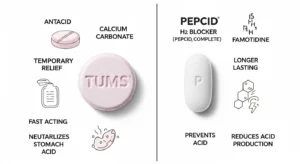
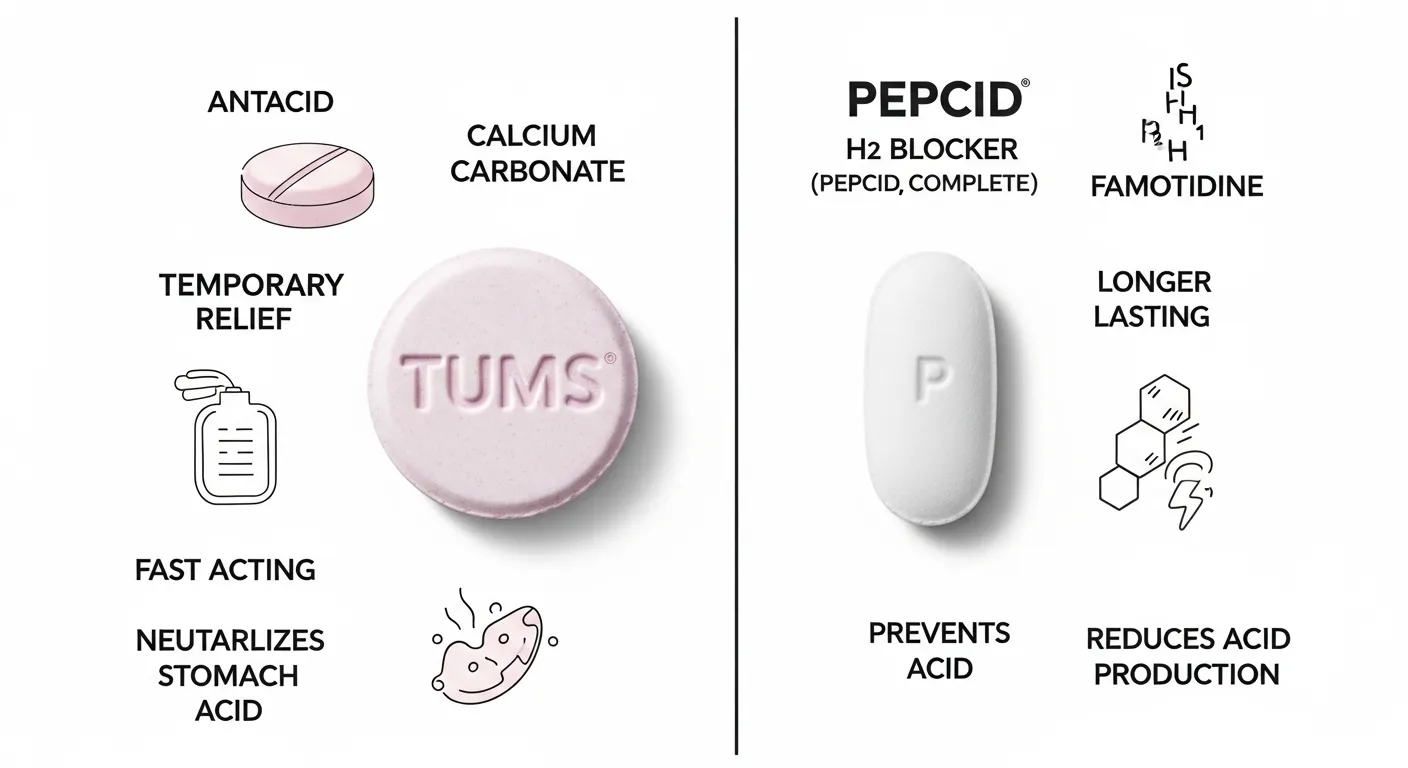
The main difference between Tums and Pepcid is their mechanism of action.
- Tums is an antacid that neutralizes stomach acid immediately.
- Pepcid is an H2 blocker that reduces acid production over time.
In simple words, Tums works instantly but for a short time, while Pepcid works slower but lasts longer.
Why Is Their Difference Necessary to Know for Learners and Experts?
Understanding the difference between Tums and Pepcid is important for both medical learners and healthcare professionals. Students studying pharmacology must know how different drug classes work in the body. Experts need this knowledge to prescribe safe and effective treatment.
In society, many people self-medicate for heartburn. Without knowing the difference, they may take the wrong medicine, leading to poor results or side effects. For example, frequent heartburn might require acid reduction (Pepcid), not just temporary neutralization (Tums). Therefore, awareness improves health literacy and promotes safer medication use.
Pronunciation of Both (US & UK)
Tums
- US: /tʌmz/
- UK: /tʌmz/
Pepcid
- US: /ˈpep.sɪd/
- UK: /ˈpep.sɪd/
Now that we understand the basics, let’s explore the detailed comparison to fully grasp the difference between Tums and Pepcid.
Difference Between Tums and Pepcid
1. Drug Class
Tums belongs to the antacid class.
Example 1: It neutralizes excess acid after overeating.
Example 2: It is commonly used for mild, occasional heartburn.
Pepcid belongs to H2 receptor blockers.
Example 1: It reduces acid production in the stomach lining.
Example 2: It is often recommended for frequent heartburn.
2. Active Ingredient
Tums contains calcium carbonate.
Example 1: Calcium carbonate reacts with stomach acid.
Example 2: It also provides calcium supplementation.
Pepcid contains famotidine.
Example 1: Famotidine blocks histamine receptors in the stomach.
Example 2: It lowers acid secretion for hours.
3. Speed of Action
Tums works within minutes.
Example 1: Relief starts almost immediately.
Example 2: Ideal after spicy food.
Pepcid takes longer (about 30–60 minutes).
Example 1: Better when taken before meals.
Example 2: Suitable for planned heartburn prevention.
4. Duration of Effect
Tums lasts 1–2 hours.
Example 1: Short-term relief.
Example 2: May require repeated doses.
Pepcid lasts up to 12 hours.
Example 1: Controls symptoms throughout the day.
Example 2: Often taken once or twice daily.
5. Use for Prevention
Tums is not ideal for prevention.
Example 1: It treats symptoms only after they appear.
Example 2: It does not reduce acid production long-term.
Pepcid can prevent heartburn.
Example 1: Taken before trigger foods.
Example 2: Helpful for nighttime acid reflux.
6. Side Effects
Tums may cause constipation.
Example 1: High calcium intake can slow digestion.
Example 2: Overuse may lead to kidney stones.
Pepcid may cause headache or dizziness.
Example 1: Some people feel mild fatigue.
Example 2: Rare allergic reactions can occur.
7. Suitable for Chronic GERD
Tums is not recommended for chronic GERD.
Example 1: It gives temporary relief only.
Example 2: It does not treat underlying acid production.
Pepcid may be used for mild GERD.
Example 1: Doctors prescribe it for regular symptoms.
Example 2: It reduces acid production consistently.
8. Calcium Content
Tums contains calcium.
Example 1: May benefit people with low calcium.
Example 2: Can interact with other medications.
Pepcid does not contain calcium.
Example 1: No added mineral benefits.
Example 2: Fewer mineral-related interactions.
9. Drug Interactions
Tums can affect absorption of other medicines.
Example 1: It may reduce antibiotic absorption.
Example 2: Should be spaced apart from iron supplements.
Pepcid has fewer absorption issues.
Example 1: Less interference with nutrients.
Example 2: Safer with many medications.
10. Availability
Both are available over the counter.
However:
- Tums is often sold as chewable tablets.
- Pepcid is sold as tablets or injections (prescription form).
Nature and Behaviour of Both
Tums acts like a quick fixer. It immediately neutralizes acid but does not stop its production. Its behavior is reactive.
Pepcid acts like a controller. It reduces acid production and works systematically. Its behavior is preventive and long-lasting.
Why People Are Confused About Their Use?
People are confused because both treat heartburn. They are available without prescription and are advertised similarly. The symptoms they treat are also the same, which makes the difference less obvious to the general public.
Table Showing Difference and Similarity
| Feature | Tums | Pepcid | Similarity |
| Drug Type | Antacid | H2 Blocker | Both treat heartburn |
| Speed | Fast | Moderate | Provide relief |
| Duration | Short | Long | OTC availability |
| Prevention | No | Yes | Used for acid issues |
| Ingredient | Calcium carbonate | Famotidine | Oral medication |
Which Is Better in What Situation?
Tums is better when heartburn occurs occasionally after meals. It gives quick relief and is easy to chew. If symptoms are rare and mild, Tums is enough.
Pepcid is better for frequent or predictable heartburn. It works longer and prevents acid buildup. It is helpful before eating spicy or heavy meals and for nighttime discomfort.
Use in Metaphors and Similes
- “His apology was like Tums—quick but temporary.”
- “Her strategy was Pepcid, preventing problems before they started.”
Connotative Meaning
Tums – Neutral to positive
Example: “I need a Tums solution to this small issue.”
Pepcid – Positive
Example: “We need a Pepcid approach to stop future risks.”
Idioms or Proverbs
No common idioms directly use these brand names, but metaphorical usage appears in modern speech:
- “Don’t use a Tums for a chronic problem.” (Temporary fix)
- “Be Pepcid, not panic.” (Prevent issues early)
Works in Literature
There are no classic literary works named after Tums or Pepcid. They are commercial brand names mainly appearing in advertisements and health-related discussions.
Movies Based on the Keywords
No movies are officially named Tums or Pepcid. However, both appear in medical documentaries and health programs.
Frequently Asked Questions
1. Is Tums stronger than Pepcid?
No. Tums works faster, but Pepcid lasts longer.
2. Can I take both together?
Sometimes yes, but consult a doctor first.
3. Which is safer for long-term use?
Pepcid may be safer for frequent heartburn under medical advice.
4. Does Tums cure GERD?
No, it only relieves symptoms temporarily.
5. Is Pepcid good for ulcers?
Yes, it can help reduce acid to allow healing.
How Both Are Useful for Surroundings
Both medications improve quality of life. They help people stay productive at work and comfortable during social gatherings. By reducing discomfort, they contribute to better health awareness in society.
Final Words for Both
Tums is a quick helper. Pepcid is a long-term planner. Both have their place in managing acid-related problems.
Conclusion
The difference between Tums and Pepcid lies mainly in how they work and how long they last. Tums neutralizes acid immediately but for a short time. Pepcid reduces acid production and provides longer relief. Choosing between them depends on your symptoms and frequency of heartburn. By understanding the difference between Tums and Pepcid, individuals can make smarter health decisions. Always consult a healthcare professional for persistent symptoms. Knowing the right medicine at the right time ensures comfort, safety, and better digestive health.

I am content creator and comparison blogger focused on analyzing key differences between terms, concepts, and ideas to deliver accurate, easy-to-understand information. So I decided to create a platform where these differences are explained in the simplest way possible.