Imagine walking into a cozy bedroom after a long day. The bed looks inviting, neatly layered with soft fabric that adds both comfort and style. But have you ever wondered whether that top layer is a coverlet or a quilt? Many people casually use these terms interchangeably, yet understanding the coverlet vs quilt distinction can completely change how you style your bedroom and choose bedding.
The coverlet vs quilt comparison is not just about appearance it also involves purpose, construction, and seasonal use. In everyday life, you may have seen a lightweight decorative layer or a thicker, padded bedding piece, but identifying them correctly matters more than you think.
Whether you’re a homeowner, designer, or simply someone upgrading your bedding, knowing the difference between coverlet and quilt helps you make smarter choices. As we explore the coverlet vs quilt topic in detail, you’ll discover how each plays a unique role in comfort and aesthetics.
Key Difference Between the Coverlet and Quilt
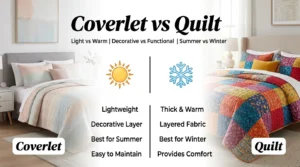
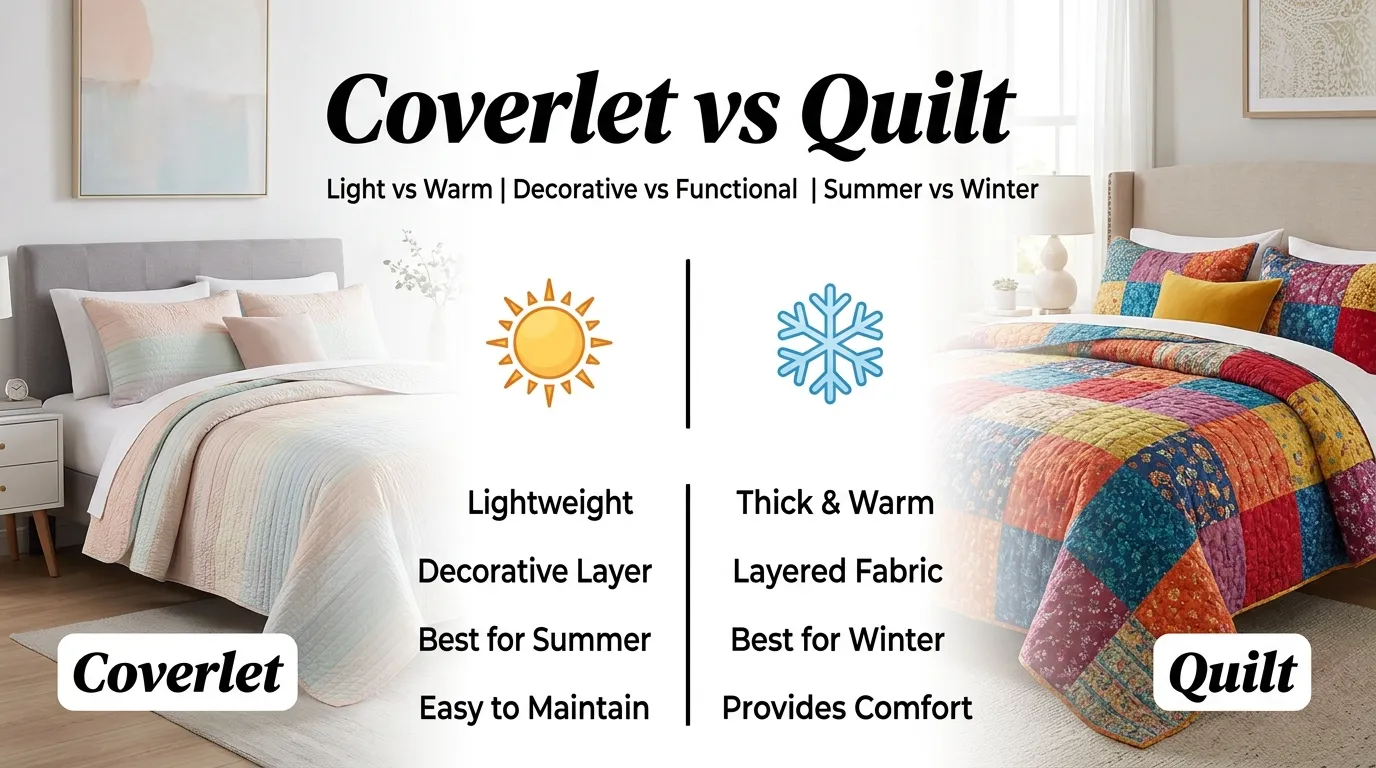
The main difference lies in construction and purpose. A coverlet is typically lightweight, decorative, and non-padded, while a quilt is heavier, layered, and designed for warmth. Coverlets are often used as a stylish top layer, whereas quilts function as both decoration and insulation.
Why Is Their Difference Important to Know?
Understanding the coverlet vs quilt difference is essential for both learners and experts because it influences comfort, interior design, and practical use.
For homeowners, choosing between them affects sleep quality and room aesthetics. Designers rely on these differences to create visually balanced spaces. In society, where home décor reflects personality and lifestyle, knowing whether to use a coverlet or quilt helps people make informed decisions. Moreover, retailers and manufacturers depend on these distinctions to guide customers correctly, avoiding confusion and dissatisfaction.
Pronunciation of Both (US & UK)
Before diving deeper, let’s learn how to say them correctly:
- Coverlet
- US: /ˈkʌv.ɚ.lɪt/
- UK: /ˈkʌv.ə.lɪt/
- Quilt
- US: /kwɪlt/
- UK: /kwɪlt/
Now that pronunciation is clear, let’s move into the heart of the discussion and explore their differences in detail.
Coverlet vs Quilt Difference in Details
1. Thickness
- Coverlet: Thin and lightweight
- Example 1: A summer bedspread
- Example 2: Decorative hotel bedding
- Quilt: Thick and padded
- Example 1: Winter bedding
- Example 2: Cozy layered bed cover
2. Construction
- Coverlet: Single or double-layer fabric
- Example 1: Woven cotton coverlet
- Example 2: Matelassé design
- Quilt: Three layers stitched together
- Example 1: Patchwork quilt
- Example 2: Handmade quilt
3. Purpose
- Coverlet: Decorative
- Example 1: Used in guest rooms
- Example 2: Adds elegance
- Quilt: Functional and decorative
- Example 1: Provides warmth
- Example 2: Used daily in cold weather
4. Warmth Level
- Coverlet: Minimal warmth
- Example 1: Spring bedding
- Example 2: Layer over sheets
- Quilt: High warmth
- Example 1: Winter nights
- Example 2: Cold climates
5. Size
- Coverlet: Smaller, does not reach the floor
- Example 1: Covers mattress only
- Example 2: Folded at foot
- Quilt: Larger, may hang down
- Example 1: Covers entire bed
- Example 2: Drapes over sides
6. Style
- Coverlet: Simple patterns
- Example 1: Solid color
- Example 2: Textured weave
- Quilt: Complex designs
- Example 1: Patchwork
- Example 2: Artistic stitching
7. Use in Layering
- Coverlet: Top decorative layer
- Example 1: Over duvet
- Example 2: Folded accent
- Quilt: Can be main layer
- Example 1: Primary bedding
- Example 2: Used alone
8. Seasonal Use
- Coverlet: Summer and spring
- Example 1: Warm weather
- Example 2: Light comfort
- Quilt: Autumn and winter
- Example 1: Cold nights
- Example 2: Extra warmth
9. Maintenance
- Coverlet: Easy to wash
- Example 1: Machine washable
- Example 2: Quick drying
- Quilt: Requires care
- Example 1: Delicate washing
- Example 2: Air drying
10. Cost
- Coverlet: Usually cheaper
- Example 1: Budget décor
- Example 2: Affordable layering
- Quilt: Often expensive
- Example 1: Handmade quilts
- Example 2: Designer bedding
Nature and Behaviour of Both
A coverlet behaves as a light, flexible, and decorative fabric, ideal for layering and enhancing visual appeal. It doesn’t trap much heat, making it perfect for mild weather.
A quilt, on the other hand, is structured, insulating, and comforting. Its layered construction allows it to retain warmth, making it suitable for colder conditions and long-term use.
Why People Are Confused About Their Use(?
| Feature | Coverlet | Quilt | Similarity |
|---|---|---|---|
| Purpose | Decorative | Decorative + functional | Both used on beds |
| Thickness | Thin | Thick | Both fabric layers |
| Warmth | Low | High | Provide comfort |
| Use | Layering | Main bedding | Bedroom essentials |
Confusion arises because both are placed on beds and may look similar at first glance.
Which Is Better in What Situation?
A coverlet is better for warm climates or when you want a neat, stylish bedroom appearance without adding heat. It works well in summer or as a decorative layer over other bedding.
A quilt is ideal for colder environments where warmth is necessary. It provides both comfort and functionality, making it perfect for winter use or regions with cooler temperatures.
Use in Metaphors and Similes
- “Her thoughts were layered like a quilt.”
- “The room was covered like a delicate coverlet.”
These comparisons highlight texture, layering, and softness.
Connotative Meaning
- Coverlet
- Positive: Elegance, simplicity
- Neutral: Decorative bedding
- Example: “A coverlet added charm to the room.”
- Quilt
- Positive: Warmth, comfort, tradition
- Neutral: Layered blanket
- Example: “The quilt reminded her of home.”
Idioms or Proverbs
While not many direct idioms exist, related expressions include:
- “Piece together like a quilt”
- Example: He pieced together the story like a quilt.
Works in Literature
- The Quilt – Short story, Ismat Chughtai, 1942
- Everyday Use – Alice Walker, 1973 (features quilts symbolically)
Movies Related to the Both
- How to Make an American Quilt – 1995, USA
- The Quilt – Various adaptations inspired by literature
Frequently Asked Questions
1. Is a coverlet warmer than a quilt?
No, a quilt is much warmer due to its layered padding.
2. Can I use a coverlet in winter?
Yes, but only as a decorative layer over warmer bedding.
3. Are quilts always handmade?
Not always; they can be machine-made or handmade.
4. Do hotels use coverlets or quilts?
Most hotels use coverlets for a clean, decorative look.
5. Which lasts longer?
Quilts generally last longer due to their thicker construction.
6. What is the main difference between a coverlet and a quilt?
A coverlet is lightweight and mainly decorative, while a quilt is thicker, padded, and designed to provide warmth along with style.
How Both Are Useful for Surroundings
Coverlets enhance the visual appeal of a room, making spaces look tidy and elegant. Quilts provide comfort and warmth, improving living conditions in colder environments. Together, they contribute to both aesthetics and functionality in households.
Final Words for Both
Coverlets and quilts each serve unique roles. One focuses on style and light comfort, while the other emphasizes warmth and durability. Choosing between them depends on your needs and environment.
Conclusion
In summary, understanding the coverlet vs quilt difference helps you make smarter decisions for your home. While a coverlet adds elegance and works well in warm seasons, a quilt offers comfort and warmth during colder months. Both have their own importance in bedding and interior design. By knowing their features, uses, and differences between coverlet and quilt, you can create a bedroom that is both stylish and functional. Ultimately, the right choice depends on your personal preferences, climate, and lifestyle needs.

I am content creator and comparison blogger focused on analyzing key differences between terms, concepts, and ideas to deliver accurate, easy-to-understand information. So I decided to create a platform where these differences are explained in the simplest way possible.