Last year, a middle-aged shopkeeper in a busy market began feeling sudden fluttering in his chest. He ignored it at first, thinking it was stress. But when the sensation returned with dizziness, his doctor explained the difference between arrhythmia and AFib.
Many people hear these words during hospital visits yet don’t truly understand them. The difference between arrhythmia and AFib matters because one is a broad condition while the other is a specific type.
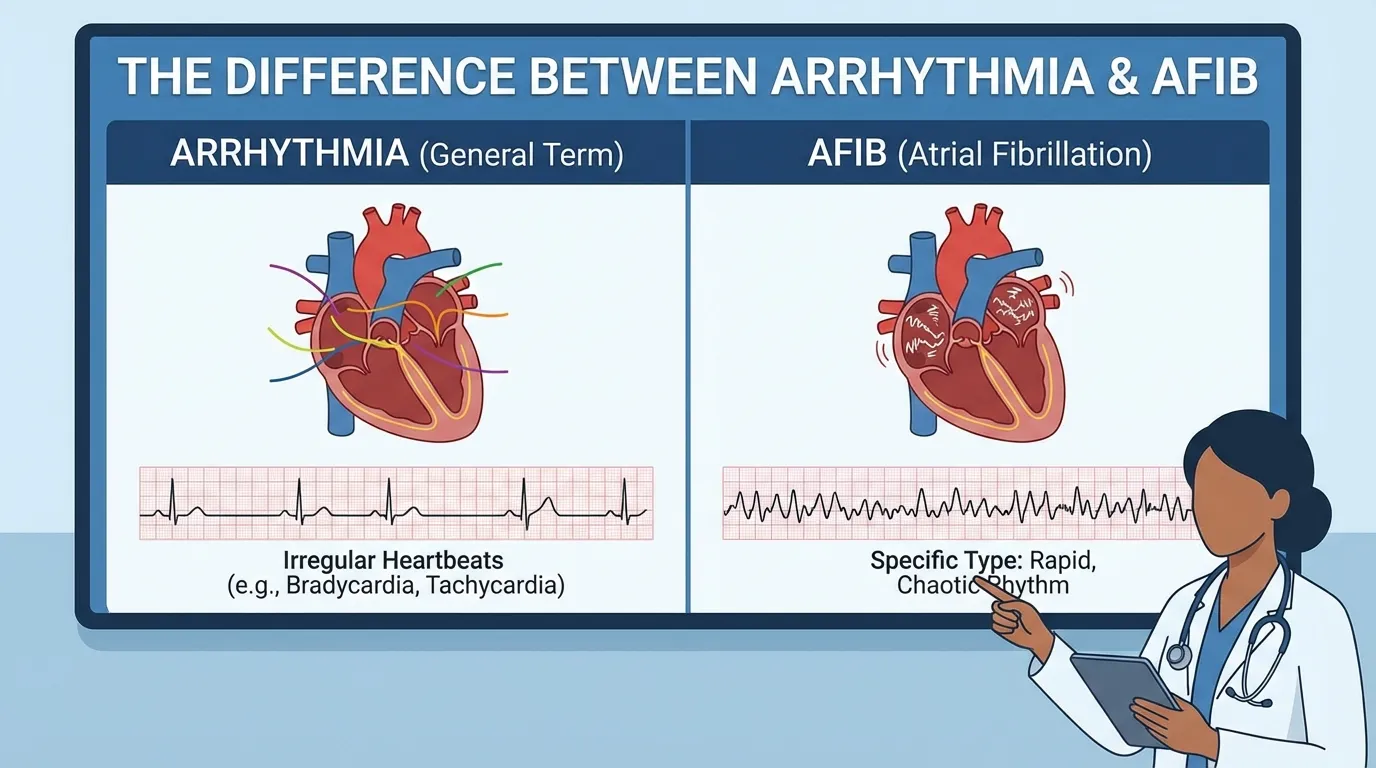
In simple terms, arrhythmia refers to any irregular heartbeat, while AFib short for atrial fibrillation is a particular kind of arrhythmia. Understanding the difference between arrhythmia and AFib can help patients seek timely care and avoid complications.
Key Difference Between the Both
The main difference between arrhythmia and AFib is scope.
- Arrhythmia is an umbrella term for any abnormal heart rhythm—too fast, too slow, or irregular.
- AFib (Atrial Fibrillation) is a specific type of arrhythmia where the upper chambers of the heart beat chaotically and irregularly.
Why Is Their Difference Necessary to Know for Learners and Experts?
Knowing the difference between arrhythmia and AFib is important for both medical students and healthcare professionals. Arrhythmias can range from harmless to life-threatening. AFib, however, is strongly linked to stroke risk and requires specific treatment like blood thinners.
For society, awareness helps in early detection. Millions worldwide suffer from AFib without knowing it. According to the American Heart Association, AFib significantly increases the risk of stroke. Understanding these differences can save lives by promoting faster diagnosis and treatment.
Pronunciation (US & UK)
- Arrhythmia
- US: /ə-RITH-mee-uh/
- UK: /ə-RITH-mee-ə/
- AFib (Atrial Fibrillation)
- US: /AY-fib/
- UK: /AY-fib/
Now that pronunciation is clear, let’s explore the detailed comparison.
Difference Between Arrhythmia and AFib
1. Definition
Arrhythmia: Any irregular heart rhythm.
Examples:
- A slow heartbeat (bradycardia).
- A rapid heartbeat (tachycardia).
AFib: A specific irregular rhythm in the atria.
Examples:
- Rapid, chaotic atrial beating.
- Irregular pulse detected during examination.
2. Scope
Arrhythmia: Broad category.
Examples:
- Ventricular tachycardia.
- Premature heartbeats.
AFib: Narrow category under arrhythmia.
Examples:
- Paroxysmal AFib.
- Persistent AFib.
3. Heart Chambers Affected
Arrhythmia: Can affect atria or ventricles.
Examples:
- Ventricular fibrillation.
- Atrial flutter.
AFib: Only affects atria.
Examples:
- Irregular atrial contractions.
- Blood pooling in upper chambers.
4. Severity Range
Arrhythmia: Can be mild or severe.
Examples:
- Harmless skipped beat.
- Sudden cardiac arrest.
AFib: Usually chronic and increases stroke risk.
Examples:
- Long-term irregular pulse.
- Clot formation leading to stroke.
5. Causes
Arrhythmia: Stress, caffeine, heart disease.
Examples:
- Anxiety-induced palpitations.
- Electrolyte imbalance.
AFib: High blood pressure, heart valve disease.
Examples:
- Long-term hypertension.
- Post-surgery complication.
6. Symptoms
Arrhythmia: Fluttering, dizziness, fainting.
Examples:
- Sudden blackout.
- Irregular heartbeat during exercise.
AFib: Fatigue, shortness of breath.
Examples:
- Weakness after mild activity.
- Persistent irregular pulse.
7. Stroke Risk
Arrhythmia: Depends on type.
Examples:
- Low risk in mild cases.
- High risk in ventricular fibrillation.
AFib: High stroke risk.
Examples:
- Blood clot in atrium.
- Embolic stroke.
8. Diagnosis
Arrhythmia: ECG, Holter monitor.
Examples:
- Routine ECG detection.
- 24-hour heart monitoring.
AFib: Confirmed via irregular ECG pattern.
Examples:
- Absence of P waves.
- Irregular R-R intervals.
9. Treatment
Arrhythmia: Lifestyle changes, medication.
Examples:
- Avoid caffeine.
- Antiarrhythmic drugs.
AFib: Blood thinners, cardioversion.
Examples:
- Warfarin therapy.
- Electrical cardioversion.
10. Long-Term Outlook
Arrhythmia: Varies widely.
Examples:
- Temporary stress-related case.
- Chronic heart disorder.
AFib: Often lifelong condition.
Examples:
- Ongoing medication use.
- Regular cardiology visits.
Nature and Behaviour of Both
Arrhythmia behaves unpredictably. It may appear suddenly and disappear quickly. AFib, however, tends to persist or recur frequently. While arrhythmia can be episodic, AFib often becomes chronic without treatment.
Why People Are Confused About Their Use?
People confuse them because AFib is commonly mentioned in media and hospitals. Since AFib is a type of arrhythmia, many assume both words mean exactly the same thing. Medical terminology also adds to confusion.
Table Showing Difference and Similarity
| Feature | Arrhythmia | AFib |
| Meaning | Any irregular heartbeat | Specific irregular atrial rhythm |
| Scope | Broad term | Specific condition |
| Stroke Risk | Depends on type | High |
| Affected Area | Atria or ventricles | Atria only |
| Treatment | Varies | Specific protocol |
| Similarity | Both involve irregular heart rhythm | Both involve irregular heart rhythm |
Which Is Better in What Situation?
Arrhythmia as a term is better when discussing general heart rhythm disorders. Doctors use it when the exact type is not yet diagnosed. It allows broad explanation and flexible diagnosis.
AFib is better when referring to a confirmed condition. It guides precise treatment plans and preventive care strategies. Medical clarity improves patient outcomes when the specific term is used.
Use in Metaphors and Similes
- “His life moved in arrhythmia, never following a steady beat.”
- “Her thoughts fluttered like AFib, fast and chaotic.”
Connotative Meaning
Arrhythmia – Neutral to negative.
Example: “The company’s workflow fell into arrhythmia after leadership changes.”
AFib – Negative.
Example: “The crisis spread through the team like AFib in a fragile heart.”
Idioms or Proverbs
While no direct idioms exist, heart-related ones apply:
- “Follow your heart.”
Example: Even after his arrhythmia diagnosis, he chose a peaceful life. - “Have a change of heart.”
Example: After learning about AFib risks, she changed her diet.
Works in Literature
- The Heart’s Code – Nonfiction, Paul Pearsall, 1998
- The Tell-Tale Heart – Gothic Fiction, Edgar Allan Poe, 1843
Movies Related to Heart Conditions
- Something the Lord Made (2004, USA)
- Arrhythmia (2017, Russia)
Frequently Asked Questions
1. Is AFib the same as arrhythmia?
No, AFib is a type of arrhythmia.
2. Is AFib more dangerous?
Yes, due to stroke risk.
3. Can arrhythmia go away?
Some types resolve naturally.
4. Does AFib always require treatment?
Most cases need medical management.
5. Can lifestyle changes help both?
Yes, healthy habits improve heart rhythm.
How Both Are Useful for Surroundings
Understanding these terms promotes awareness. Public health campaigns by groups like the World Health Organization emphasize cardiovascular education. Informed communities respond faster to symptoms and reduce emergency cases.
Final Words for Both
Arrhythmia represents diversity in heart rhythm disorders. AFib represents a serious, focused medical challenge requiring close care.
Conclusion
The difference between arrhythmia and AFib lies mainly in classification and risk. Arrhythmia describes any irregular heartbeat, while AFib is a specific, high-risk condition affecting the atria. Although they are related, they are not identical. Knowing the difference between arrhythmia and AFib improves diagnosis, treatment, and awareness. When patients understand these terms, they become more active in managing their health. Therefore, clarity about the difference between arrhythmia and AFib is essential for both medical learners and the general public.

I am content creator and comparison blogger focused on analyzing key differences between terms, concepts, and ideas to deliver accurate, easy-to-understand information. So I decided to create a platform where these differences are explained in the simplest way possible.