Many people search for the difference between cilantro and culantro because the names sound almost identical. In grocery stores, recipes, and cooking videos, these two herbs are often confused with each other. However, despite their similar names and somewhat related flavor profiles, cilantro and culantro are different plants with unique appearances, growing conditions, and culinary uses.
Understanding the difference between cilantro and culantro helps home cooks, food enthusiasts, and even professional chefs choose the right herb for authentic recipes. If you’ve ever wondered what cilantro is, how culantro differs, why some recipes specifically require one over the other, or whether they can be substituted, this guide covers everything.
By the end of this article, you’ll clearly understand their definitions, pronunciation, flavor differences, cooking applications, similarities, and practical uses.
Quick Answer: Difference Between Cilantro and Culantro
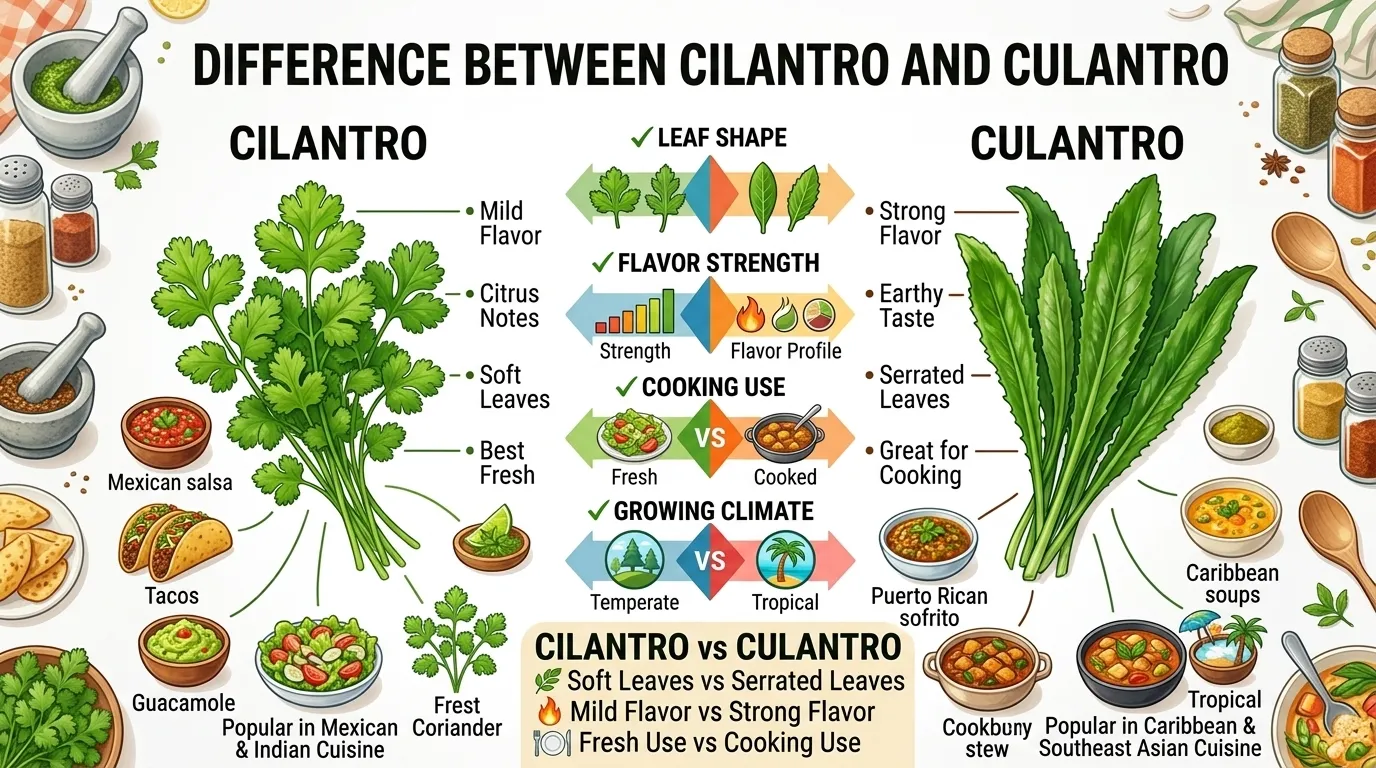
Cilantro and culantro are two different herbs. Cilantro has soft, delicate leaves and a mild citrus-like flavor, while culantro has long serrated leaves and a much stronger taste.
For example, Mexican salsa commonly uses cilantro, whereas many Caribbean and Puerto Rican dishes rely on culantro for a deeper herbal flavor.
Definition of Difference Between Cilantro and Culantro
- Cilantro: A leafy herb from the coriander plant (Coriandrum sativum) commonly used in Mexican, Indian, Middle Eastern, and Asian cuisine.
- Culantro: A tropical herb (Eryngium foetidum) with long jagged leaves and a stronger flavor often used in Caribbean, Latin American, and Southeast Asian cooking.
Example
A fresh bowl of pico de gallo typically contains cilantro, while traditional Puerto Rican sofrito often includes culantro.
Pronunciation of Both Herbs
Cilantro
- US Pronunciation: sih-LAHN-troh
- UK Pronunciation: sih-LAHN-troh
Culantro
- US Pronunciation: koo-LAHN-troh
- UK Pronunciation: koo-LAHN-troh
Although their names sound similar, their appearance and culinary roles are quite different. Let’s understand the differences in greater detail.
Cilantro vs Culantro Comparison Table
| Feature | Cilantro | Culantro |
|---|---|---|
| Scientific Name | Coriandrum sativum | Eryngium foetidum |
| Plant Family | Parsley family | Apiaceae family |
| Leaf Shape | Soft and rounded | Long and serrated |
| Flavor Strength | Mild to medium | Very strong |
| Aroma | Fresh and citrusy | Deep and pungent |
| Heat Tolerance | Prefers cooler temperatures | Thrives in tropical climates |
| Common Regions | Mexico, India, Middle East | Caribbean, Puerto Rico, Southeast Asia |
| Cooking Style | Often used fresh | Used fresh and cooked |
| Availability | Widely available | Less common |
| Substitution Ratio | Standard amount | Use less because flavor is stronger |
Key Differences Explained Between Difference Between Cilantro and Culantro
1. Appearance
Cilantro has delicate green leaves resembling flat-leaf parsley.
Culantro grows long blade-like leaves with saw-toothed edges.
Real-life example: In a grocery store produce section, cilantro looks soft and leafy while culantro resembles a tropical leafy plant.
2. Flavor Intensity
Culantro is significantly stronger.
Many cooks estimate culantro can be two to three times more intense than cilantro.
3. Climate Preference
Cilantro bolts quickly in hot weather.
Culantro thrives in humid tropical environments.
4. Culinary Tradition
Mexican recipes often feature cilantro.
Caribbean dishes frequently depend on culantro.
5. Availability
Most supermarkets stock cilantro.
Culantro is usually found in international or specialty markets.
6. Cooking Behavior
Cilantro loses flavor during prolonged cooking.
Culantro holds flavor much better when heated.
7. Cultural Significance
Different regions developed cooking traditions around the herb that grows best locally.
What Is Cilantro and Why Is It So Popular?
Cilantro is among the most widely used fresh herbs worldwide. It appears in:
- Salsa
- Guacamole
- Chutneys
- Curries
- Soups
- Rice dishes
- Salads
Its bright citrus-like notes make it ideal for adding freshness at the end of cooking.
Many users search Google for “what is cilantro used for” because it appears in cuisines across multiple continents.
What Is Culantro and Why Do Caribbean Cooks Love It?
Culantro is a tropical herb known for delivering intense herbal flavor.
It plays an important role in:
- Puerto Rican sofrito
- Dominican cooking
- Trinidadian dishes
- Vietnamese soups
- Thai cuisine
Unlike cilantro, culantro remains flavorful even after extended simmering.
This makes it especially valuable in stews and slow-cooked recipes.
Difference Between Cilantro and Culantro in Taste
Taste is where most people notice the biggest difference.
Cilantro Taste
- Fresh
- Bright
- Slightly citrusy
- Mild herbal notes
Culantro Taste
- Earthier
- Stronger
- More concentrated
- Slight peppery depth
A useful comparison is that culantro tastes somewhat like a more powerful version of cilantro.
However, they are not identical.
Can You Substitute Culantro for Cilantro?
Yes, but carefully.
Because culantro is stronger, a direct one-to-one substitution can overpower a recipe.
General Rule
- 1 tablespoon cilantro ≈ 1 teaspoon culantro
This ratio helps maintain flavor balance.
In practical cooking scenarios, start with less culantro and adjust gradually.
Why Do These Herbs Have Similar Names?
One of the biggest reasons people get confused is naming.
Historically, the herbs developed similar common names because their flavors share certain characteristics.
However:
- They are different species.
- They have different appearances.
- They grow differently.
- They serve different culinary roles.
The naming similarity creates confusion in recipes, food blogs, cooking videos, and social media platforms.
Difference Between Cilantro and Culantro Growing Conditions
Cilantro Growing Requirements
- Cooler weather
- Well-drained soil
- Moderate sunlight
Culantro Growing Requirements
- Warm temperatures
- High humidity
- Tropical environments
- Partial shade
Gardeners often discover this difference when trying to grow both herbs at home.
Difference and Similarity Between Cilantro and Culantro
| Feature | Cilantro | Culantro | Similarity |
|---|---|---|---|
| Plant Type | Herb | Herb | Both are culinary herbs |
| Flavor | Mild and citrusy | Strong and earthy | Both add freshness |
| Leaf Structure | Soft leaves | Serrated leaves | Both are green leafy herbs |
| Cuisine | Mexican, Indian | Caribbean, Southeast Asian | Both flavor traditional dishes |
| Fresh Use | Very common | Common | Both can be used fresh |
| Cooked Use | Less ideal | Excellent | Both enhance recipes |
| Aroma | Light | Strong | Both are aromatic |
| Culinary Purpose | Flavor enhancement | Flavor enhancement | Same overall goal |
This table clearly shows the difference and similarity between difference between cilantro and culantro for quick understanding.
Common Mistakes with Difference Between Cilantro and Culantro
Mistake 1: Assuming They Are the Same Plant
Correction: They belong to different species.
Mistake 2: Using Equal Amounts
Correction: Culantro is much stronger.
Mistake 3: Judging Only by Name
Correction: Similar names do not mean identical herbs.
Mistake 4: Replacing One Without Testing
Correction: Taste small amounts first.
Mistake 5: Growing Them the Same Way
Correction: They prefer different climates.
Mistake 6: Expecting Identical Flavor
Correction: Similar but not exactly the same.
Real Life Examples with Difference Between Cilantro and Culantro
Personal Cooking
A home cook making fresh salsa typically chooses cilantro.
Caribbean Kitchen
A Puerto Rican family preparing sofrito often uses culantro.
Restaurant Industry
Chefs use culantro in slow-cooked soups because it withstands heat better.
Food Content Creators
Cooking influencers on YouTube often explain the difference when demonstrating authentic regional recipes.
International Grocery Stores
Employees frequently answer customer questions regarding cilantro versus culantro.
When to Use Each Herb
Use Cilantro When:
- Making salsa
- Garnishing tacos
- Preparing guacamole
- Adding freshness to salads
Use Culantro When:
- Cooking soups
- Making sofrito
- Preparing Caribbean dishes
- Creating slow-cooked stews
Best Decision Rule
If a recipe specifically comes from Puerto Rican, Dominican, or Caribbean traditions, culantro is often the better choice.
Why People Get Confused in Difference Between Cilantro and Culantro
Several factors create confusion:
- Similar names
- Similar flavor family
- Translation differences
- Regional terminology
- Social media recipe simplifications
- Grocery store labeling issues
Many beginners discover the distinction only after tasting both herbs side by side.
Meta’s social platforms often show cooking creators comparing the herbs through recipe demonstrations, reflecting strong user interest in ingredient education.
Expert Insight
From a culinary perspective, the biggest mistake is treating cilantro and culantro as interchangeable ingredients.
In real professional kitchens, chefs choose herbs based on flavor strength, cooking duration, and cultural authenticity. While cilantro offers brightness and freshness, culantro provides deeper herbal intensity and better heat stability.
In practical use, understanding this distinction often improves recipe accuracy more than adding extra spices.
Frequently Asked Questions
Is culantro the same as cilantro?
No. They are different plants with different flavors and appearances.
Yes, but use a smaller amount.
Why is culantro harder to find?
It is less commonly grown and sold in mainstream supermarkets.
What cuisine uses culantro most?
Caribbean and Southeast Asian cuisines frequently use culantro.
Does cilantro and culantro taste the same?
Not exactly. Culantro has a more intense flavor.
Which herb survives cooking better?
Culantro retains flavor better during cooking.
Can I grow both at home?
Yes, but they require different growing conditions.
Is cilantro related to coriander?
Yes. Cilantro refers to the leaves of the coriander plant.
Why do some people dislike cilantro?
Some individuals have genetic traits that make cilantro taste soapy.
Conclusion
Understanding the difference between cilantro and culantro is essential for accurate cooking, gardening, and ingredient selection. Although the names are similar and both herbs contribute fresh herbal flavor, they are not the same plant. Cilantro offers a lighter, citrusy taste that works beautifully in fresh dishes, while culantro delivers a stronger, deeper flavor ideal for Caribbean, Latin American, and Southeast Asian cooking.
The easiest way to remember the distinction is this: cilantro is softer, milder, and commonly used fresh, whereas culantro is stronger, tougher, and performs exceptionally well in cooked dishes. Most confusion comes from their similar names, but once you compare their leaves, flavor intensity, and culinary roles, the difference becomes obvious.
Whether you’re preparing salsa, sofrito, soup, curry, or traditional regional recipes, choosing the correct herb can significantly improve authenticity and flavor. Now that you know the difference between cilantro and culantro, you’ll be able to identify, substitute, and use each herb with confidence.

My name is Ryan Mitchell, and I am a comparison content writer based in the United States. I specialize in creating clear and easy-to-understand articles that explain the differences between similar concepts, products, and ideas. My work focuses on helping readers quickly understand what makes two things different so they can make better decisions.