Many people get confused about the difference between tart and pie because both are popular baked desserts that often contain fruit fillings, pastry crusts, and similar ingredients. At first glance, a tart and a pie may look alike, but there are several important distinctions that affect their appearance, texture, preparation, and serving style.
Understanding the difference between tart and pie helps home bakers, dessert lovers, and culinary students choose the right dessert for different occasions. Whether you’re wondering what makes a tart different from a pie, how each dessert is made, or why professional bakers use them differently, this guide covers everything.
In this article, you’ll learn the complete difference between tart and pie, including definitions, pronunciation, comparison tables, real-life examples, common mistakes, and expert insights. By the end, you’ll have a clear understanding of when to use each and why the distinction matters.
Quick Answer: Difference Between Tart and Pie
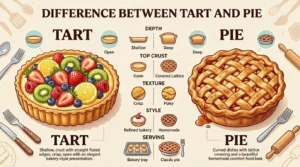
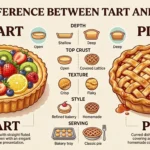
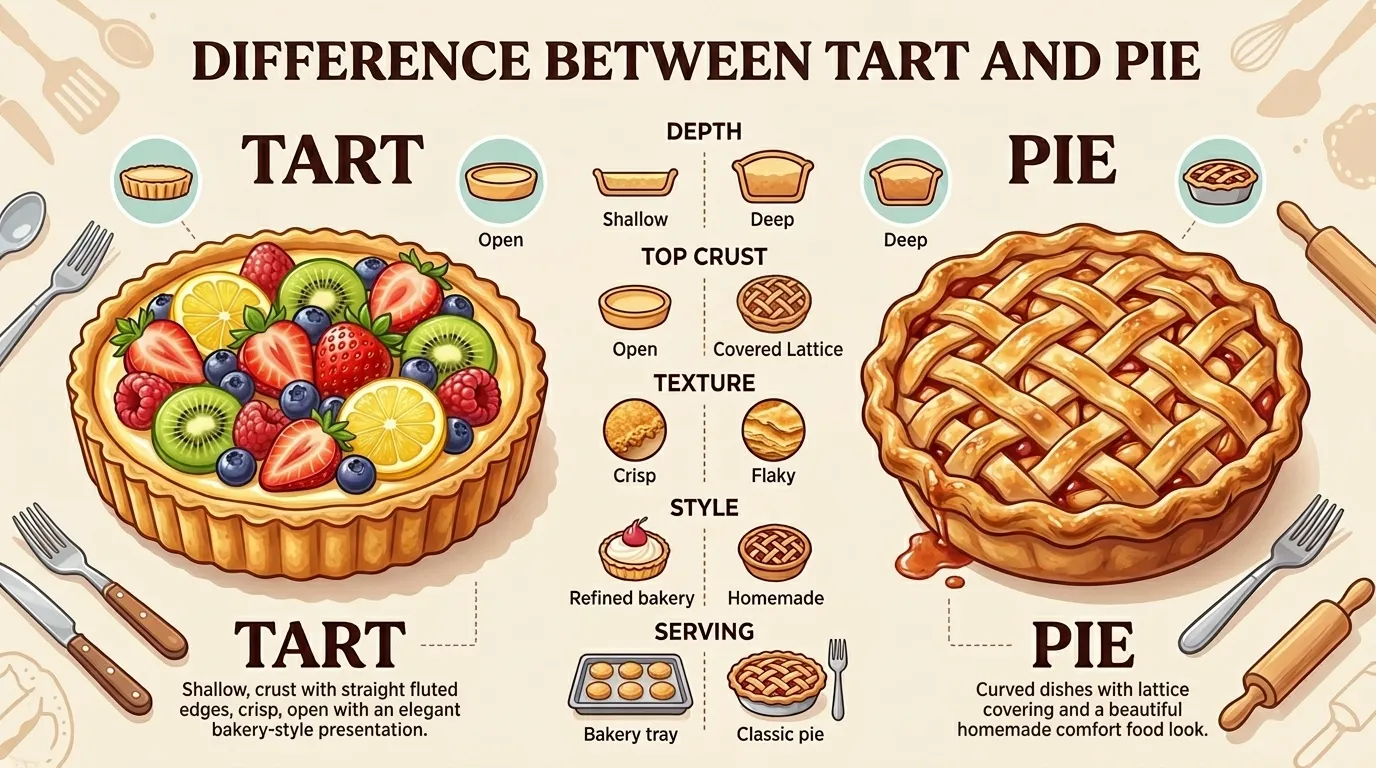
The main difference between tart and pie is that a tart usually has a shallow pastry shell with an open top, while a pie typically has deeper sides and may have a full top crust, lattice crust, or crumb topping.
Example:
A strawberry tart often displays fruit openly on top, while an apple pie is usually baked inside a deeper crust and often covered with another layer of pastry.
Definition of Tart and Pie
- Tart: A baked dessert made in a shallow pastry shell with straight sides and usually an open top that showcases the filling.
- Pie: A baked dish with a pastry crust and filling, typically baked in a deeper dish and often covered with a top crust.
Example: A lemon tart is open-faced, while a classic apple pie often has a top crust.
Pronunciation of Both Terms
| Term | US Pronunciation | UK Pronunciation |
|---|---|---|
| Tart | /tɑrt/ | /tɑːt/ |
| Pie | /paɪ/ | /paɪ/ |
Now that you know what each dessert is and how to pronounce them, let’s explore the complete difference between tart and pie in detail.
Tart vs Pie Comparison Table
| Feature | Tart | Pie |
|---|---|---|
| Shape | Shallow with straight sides | Deeper with sloped sides |
| Top Crust | Usually open | Often covered |
| Appearance | Elegant and decorative | Rustic and traditional |
| Filling Visibility | Fully visible | Often partially hidden |
| Crust Texture | Firm and crisp | Softer and flaky |
| Serving Style | Often served in slices | Served in slices or portions |
| Baking Pan | Tart pan with removable bottom | Pie dish or pie plate |
| Presentation | Formal and refined | Casual and comforting |
| Sweetness | Often lighter | Can be richer |
| Popular Use | Fruit, custard, chocolate | Fruit, meat, cream, savory fillings |
Key Differences Explained Between Difference Between Tart and Pie
1. Crust Structure
A tart crust is usually firmer and more cookie-like. Pie crusts are typically flaky and tender.
Example: Lemon tart crust remains crisp when sliced, while apple pie crust flakes apart.
2. Depth
Tarts are generally shallow. Pies are deeper and can hold larger amounts of filling.
Real-world insight: This is why pies are common at family gatherings where larger portions are needed.
3. Top Coverage
Most tarts have open tops. Many pies feature top crusts, lattice designs, or crumb toppings.
4. Presentation
Tarts are often associated with bakery displays and elegant desserts. Pies are known for home-style comfort.
5. Serving Occasions
Tarts frequently appear at formal dinners, cafes, and pastry shops. Pies are common during holidays and family celebrations.
6. Baking Equipment
A tart pan has straight edges and often a removable base. Pie dishes usually have sloped sides.
7. Filling Focus
Tarts highlight the filling visually. Pies focus more on the combination of crust and filling.
8. Texture Experience
Tarts provide a crisp bite. Pies offer a softer and flakier eating experience.
What Is a Tart and How Does It Work?
A tart is a pastry-based dessert or savory dish baked in a shallow pan. The crust is usually pre-shaped and often baked before adding certain fillings.
Common tart fillings include:
- Fresh berries
- Lemon curd
- Chocolate ganache
- Custard
- Seasonal fruits
The open design allows bakers to create attractive presentations. This visual appeal is one reason tarts are frequently featured in bakery windows and food photography.
What Is a Pie and Why Is It So Popular?
A pie consists of a pastry shell filled with sweet or savory ingredients. Unlike many tarts, pies often have a top crust.
Popular pie varieties include:
- Apple pie
- Pumpkin pie
- Cherry pie
- Chicken pot pie
- Pecan pie
Pies have become symbols of comfort food because they are filling, versatile, and ideal for sharing.
Why Does the Difference Between Tart and Pie Exist?
The distinction developed through culinary traditions.
Tarts evolved largely from European pastry-making techniques where presentation and precise craftsmanship were highly valued.
Pies became popular because they were practical. The crust protected fillings during baking and storage, making them useful long before refrigeration existed.
In simple words, tarts emphasize elegance, while pies emphasize functionality and comfort.
Difference Between Tart and Pie in Baking Techniques
Tart Baking Method
- Prepare pastry dough.
- Press into tart pan.
- Chill dough.
- Blind bake if necessary.
- Add filling.
- Finish baking or chill.
Pie Baking Method
- Roll pastry dough.
- Line pie dish.
- Add filling.
- Add top crust if desired.
- Bake until golden brown.
Many beginners notice that tart-making often requires more attention to presentation and precision.
Which Has a Better Crust: Tart or Pie?
This depends on personal preference.
Tart Crust
Pros
- Crisp texture
- Clean slices
- Professional appearance
Cons
- Less flaky
- Can be harder to make
Pie Crust
Pros
- Buttery layers
- Tender texture
- Traditional taste
Cons
- Can become soggy
Most pastry chefs prefer tart crusts for presentation, while many home bakers favor pie crusts for comfort and familiarity.
Difference Between Tart and Pie for Sweet Desserts
When comparing sweet desserts, both options perform well.
Best Uses for Tarts
- Fruit displays
- Custard desserts
- Chocolate desserts
- Elegant events
Best Uses for Pies
- Holiday gatherings
- Family dinners
- Seasonal fruit desserts
- Traditional celebrations
The choice often depends on whether appearance or comfort is the priority.
Can Tarts and Pies Be Savory?
Yes.
Savory Tart Examples
- Tomato tart
- Cheese tart
- Spinach tart
Savory Pie Examples
- Chicken pot pie
- Shepherd’s pie
- Meat pie
In practical use, savory pies are generally more common because their deeper structure accommodates hearty fillings.
Difference Between Tart and Pie: Similarity and Difference Table
| Feature | Tart | Pie | Similarity |
|---|---|---|---|
| Basic Structure | Pastry shell | Pastry shell | Both use crust and filling |
| Filling | Sweet or savory | Sweet or savory | Both support many fillings |
| Baking Process | Usually baked | Usually baked | Both involve oven preparation |
| Crust Material | Pastry dough | Pastry dough | Similar ingredients |
| Serving Method | Sliced portions | Sliced portions | Both are shareable desserts |
| Fruit Usage | Very common | Very common | Both frequently use fruit |
| Dessert Category | Often dessert | Often dessert | Both belong to baked dessert family |
| Customization | Highly customizable | Highly customizable | Many recipe variations exist |
This table clearly shows the difference and similarity between difference between tart and pie for quick understanding.
Common Mistakes with Difference Between Tart and Pie
Mistake 1: Assuming All Open Desserts Are Tarts
Correction: Some pies are open-faced too.
Mistake 2: Thinking Pies Must Be Sweet
Correction: Many pies are savory.
Mistake 3: Believing Crust Type Is Identical
Correction: Tart crusts are generally firmer.
Mistake 4: Ignoring Pan Shape
Correction: Tart pans and pie dishes are designed differently.
Mistake 5: Using Terms Interchangeably
Correction: Professional bakers distinguish them based on structure and preparation.
Mistake 6: Focusing Only on Filling
Correction: Crust design is often the biggest difference.
Real-Life Examples with Difference Between Tart and Pie
Scenario 1: Home Baking
A beginner wants to make an apple dessert. A pie is usually easier and more forgiving.
Scenario 2: Wedding Dessert Table
A fruit tart provides a more elegant presentation.
Scenario 3: Bakery Display
Tarts are often showcased because colorful toppings attract customers.
Scenario 4: Holiday Dinner
Pumpkin pie remains a traditional favorite.
Scenario 5: Restaurant Dessert Menu
Chefs frequently use tarts because they plate beautifully.
Scenario 6: Savory Meal
Chicken pot pie offers a complete and filling meal option.
When to Use Each
Choose a Tart When:
- Presentation matters.
- You want visible fruit toppings.
- You need neat slices.
- You’re serving guests at formal events.
Choose a Pie When:
- You want larger portions.
- Comfort food is the goal.
- You need a traditional dessert.
- You prefer a flaky crust.
Why People Get Confused in Difference Between Tart and Pie
Several factors create confusion:
- Similar ingredients
- Overlapping recipes
- Regional naming differences
- Media and social media usage
- Bakery marketing terminology
Many users get confused because recipes shared on platforms like Instagram and YouTube often label desserts loosely, even when professional pastry standards would classify them differently.
Expert Insight
From a professional baking perspective, the biggest distinction isn’t the filling—it’s the crust structure and presentation philosophy.
In real scenarios, pastry chefs often select tarts when visual appeal is important because the filling remains fully visible. Pies are chosen when warmth, comfort, and larger serving sizes matter more.
Most beginners focus on what’s inside the dessert. Experienced bakers focus on the crust design, pan shape, and serving purpose. Understanding these factors instantly makes it easier to distinguish between the two.
Frequently Asked Questions (FAQs)
Is a tart healthier than a pie?
Not necessarily. Nutritional value depends on ingredients and portion size.
What is the biggest difference between tart and pie?
The biggest difference is that tarts are usually open-faced and shallow, while pies are deeper and often covered.
Can a tart have a top crust?
It can, but most traditional tarts remain open.
Why are tart crusts firmer?
They typically contain more fat and less liquid, creating a crisp texture.
Is cheesecake a tart or a pie?
Cheesecake is generally classified separately, though some styles resemble tarts.
Can both tarts and pies be savory?
Yes. Both can contain meat, vegetables, cheese, or other savory fillings.
Which is easier for beginners?
Many beginners find pies easier because they are more forgiving.
Are tart pans different from pie pans?
Yes. Tart pans usually have straight sides and removable bottoms.
Why do bakeries prefer tarts?
Their visual presentation often attracts customers more effectively.
Which dessert is more traditional?
Pies have a longer history as practical everyday baked foods.
Conclusion
Understanding the difference between tart and pie is simpler once you focus on structure, depth, crust style, and presentation. A tart is generally shallow, elegant, and open-faced, showcasing its filling beautifully. A pie is deeper, often covered with a crust, and associated with hearty, comforting flavors.
While both desserts share many ingredients and baking techniques, they serve slightly different purposes. Tarts are often chosen for visual appeal and refined presentation, while pies are loved for tradition, versatility, and satisfying portions.
Ultimately, the difference between tart and pie comes down to more than appearance—it reflects two distinct baking traditions that continue to delight dessert lovers around the world. Whether you choose a tart or a pie, understanding these differences helps you appreciate both even more.

I am content creator and comparison blogger focused on analyzing key differences between terms, concepts, and ideas to deliver accurate, easy-to-understand information. So I decided to create a platform where these differences are explained in the simplest way possible.