Many people searching for the difference between dermatologist and esthetician are dealing with a common problem: they want healthier skin but are unsure which professional can actually help. At first glance, both work with skin, offer treatments, and help improve appearance. However, the difference between dermatologist and esthetician is much bigger than most people realize.
Understanding the difference between dermatologist and esthetician can save you time, money, and frustration. One is a medical doctor trained to diagnose and treat skin diseases, while the other specializes in cosmetic skin care and beauty treatments. Choosing the right expert depends on your skin concerns, goals, and overall health needs.
In this guide, you’ll learn what each professional does, their qualifications, treatment options, costs, similarities, and how to decide which one is right for your situation.
Quick Answer: Difference Between Dermatologist and Esthetician
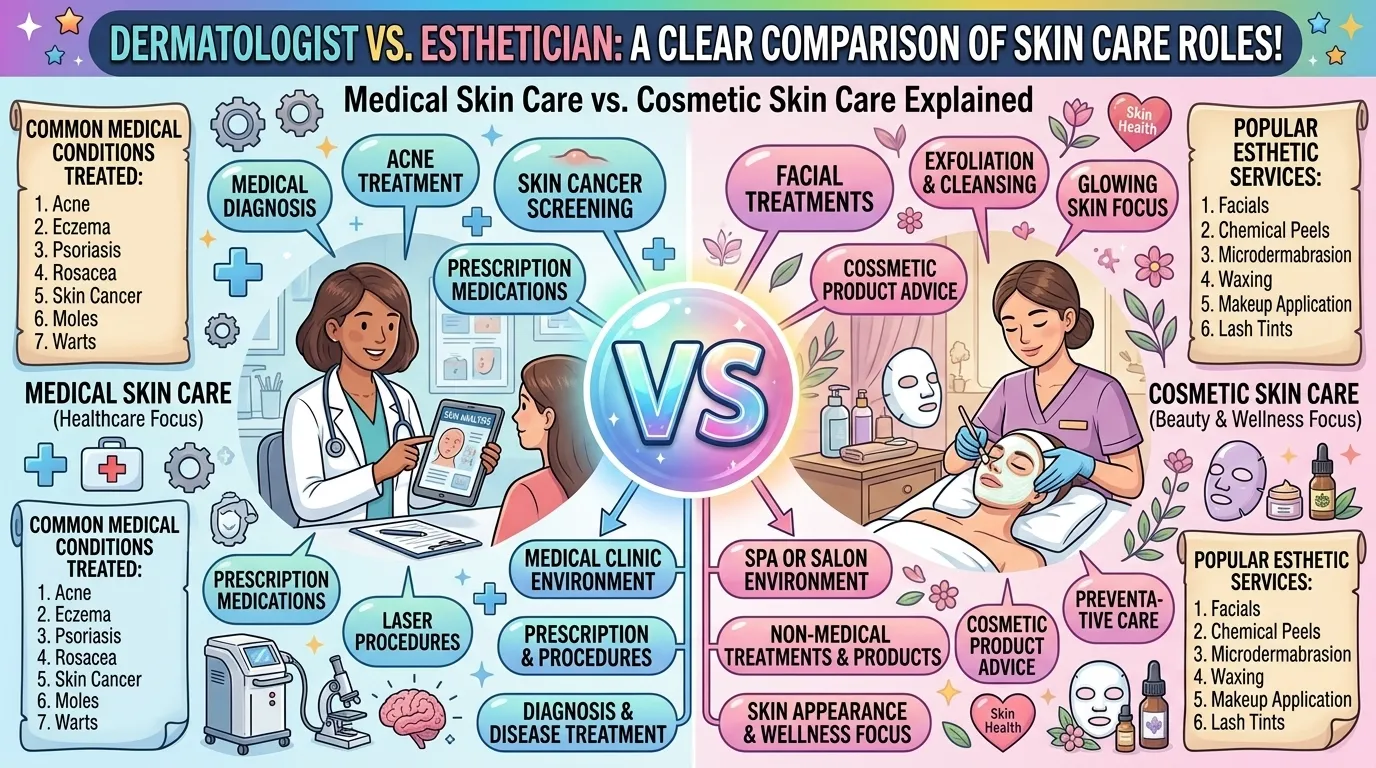
A dermatologist is a licensed medical doctor who diagnoses and treats skin diseases, medical conditions, and complex skin problems such as acne, eczema, psoriasis, and skin cancer.
An esthetician is a skincare professional who focuses on cosmetic treatments like facials, cleansing, exfoliation, and improving skin appearance.
Example: If you have severe acne causing scarring, visit a dermatologist. If you want a relaxing facial and healthier-looking skin, an esthetician is usually the better choice.
Definition of Dermatologist and Esthetician
- Dermatologist: A medical doctor specializing in the diagnosis, treatment, and prevention of conditions affecting the skin, hair, and nails.
- Esthetician: A licensed skincare specialist trained in cosmetic treatments designed to improve the appearance and health of the skin.
Simple Example: A dermatologist treats acne medically, while an esthetician helps maintain clear skin through skincare treatments.
Pronunciation of Both Terms (US & UK)
| Term | US Pronunciation | UK Pronunciation |
| Dermatologist | dur-muh-TOL-uh-jist | dur-muh-TOL-uh-jist |
| Esthetician | es-thuh-TISH-un | ees-thuh-TISH-un |
Now that we understand the basic definitions, let’s explore the key differences in detail.
Dermatologist vs Esthetician Comparison Table
| Comparison Point | Dermatologist | Esthetician |
| Education | Medical school and specialized residency | Esthetics training program |
| Medical License | Yes | No |
| Diagnoses Diseases | Yes | No |
| Prescribes Medication | Yes | No |
| Treats Skin Cancer | Yes | No |
| Performs Facials | Rarely | Yes |
| Cosmetic Procedures | Advanced medical procedures | Non-medical skincare treatments |
| Handles Severe Acne | Yes | Limited support |
| Insurance Coverage | Often covered for medical issues | Usually not covered |
| Main Focus | Medical skin health | Cosmetic skin improvement |
Key Differences Explained Between Dermatologist and Esthetician
1. Medical Training
The biggest difference lies in education.
A dermatologist completes medical school and years of specialized training. An esthetician completes professional skincare training but is not a physician.
Real-life example: A patient with suspicious moles requires a dermatologist’s medical expertise.
2. Ability to Diagnose Conditions
Dermatologists can diagnose diseases and medical disorders.
Estheticians cannot legally diagnose medical conditions.
Example: Red, itchy patches may be eczema, which requires medical diagnosis.
3. Prescription Authority
Dermatologists can prescribe medications.
Estheticians cannot prescribe drugs.
Example: Prescription acne treatments require a dermatologist.
4. Treatment Scope
Dermatologists perform medical and cosmetic procedures.
Estheticians focus on beauty and maintenance treatments.
5. Skin Cancer Detection
Dermatologists screen for and treat skin cancer.
Estheticians may notice unusual skin changes but must refer clients to doctors.
6. Equipment and Procedures
Dermatologists often use advanced medical technology.
Estheticians typically perform non-invasive skincare services.
7. Insurance Coverage
Medical dermatology visits are often covered by insurance.
Cosmetic esthetician services usually are not.
Why Does the Difference Between Dermatologist and Esthetician Exist?
The distinction exists because skin concerns fall into two categories:
- Medical problems
- Cosmetic concerns
Medical conditions require extensive scientific and clinical training. Cosmetic skincare focuses more on appearance, maintenance, and wellness.
This separation helps protect patients while ensuring they receive appropriate care.
What Does a Dermatologist Actually Do?
A dermatologist treats conditions affecting the skin, hair, and nails.
Common services include:
- Acne treatment
- Eczema treatment
- Psoriasis management
- Skin cancer screening
- Mole removal
- Hair loss treatment
- Rosacea treatment
- Cosmetic injections
- Laser treatments
In practical use, dermatologists combine medical science with cosmetic expertise.
What Does an Esthetician Actually Do?
An esthetician focuses on improving skin appearance and maintenance.
Typical services include:
- Facials
- Deep cleansing
- Exfoliation
- Chemical peels (depending on licensing laws)
- Hydrating treatments
- Anti-aging skincare
- Blackhead extraction
- Product recommendations
Many users get confused because estheticians often work in spas, skincare clinics, and beauty centers that look similar to dermatology offices.
Can a Dermatologist and Esthetician Work Together?
Absolutely.
Many modern skin clinics combine both professionals to provide comprehensive care.
For example:
- Dermatologist treats severe acne medically.
- Esthetician provides maintenance facials.
- Together they improve both skin health and appearance.
This collaborative approach has become increasingly popular in 2026 skincare practices.
Difference Between Dermatologist and Esthetician for Acne Treatment
Acne is one of the most searched topics related to this comparison.
Dermatologist for Acne
Best for:
- Severe acne
- Hormonal acne
- Cystic acne
- Acne scarring
- Prescription treatment
Esthetician for Acne
Best for:
- Mild breakouts
- Preventive skincare
- Facial treatments
- Product guidance
Rule of thumb: If acne is painful, persistent, or causing scars, consult a dermatologist.
Difference Between Dermatologist and Esthetician for Anti-Aging
Both professionals can help with aging skin, but their methods differ.
Dermatologist
May provide:
- Prescription retinoids
- Laser resurfacing
- Botox
- Fillers
- Medical-grade treatments
Esthetician
May provide:
- Anti-aging facials
- Hydration treatments
- Massage techniques
- Skincare routines
For significant wrinkle reduction, dermatologists generally offer stronger solutions.
Difference and Similarity Between Dermatologist and Esthetician
| Feature | Dermatologist | Esthetician | Similarity |
| Main Role | Medical skin expert | Cosmetic skin expert | Both focus on skin health |
| Education | Medical degree | Esthetics certification | Require specialized training |
| Skin Analysis | Medical diagnosis | Cosmetic assessment | Both evaluate skin condition |
| Acne Help | Medical treatment | Maintenance support | Both can assist acne sufferers |
| Procedures | Medical and cosmetic | Cosmetic only | Improve skin appearance |
| Client Goal | Treat conditions | Enhance appearance | Better skin outcomes |
| Work Setting | Clinics and hospitals | Spas and skincare centers | Both work with clients directly |
| Skin Knowledge | Clinical science | Cosmetic skincare science | Strong understanding of skin |
This table clearly shows the difference and similarity between dermatologist and esthetician for quick understanding.
Common Mistakes With Dermatologist and Esthetician
Mistake 1: Thinking They Have the Same Training
Correction: Dermatologists are medical doctors; estheticians are skincare specialists.
Mistake 2: Visiting an Esthetician for Medical Conditions
Correction: Medical concerns require professional medical evaluation.
Mistake 3: Assuming Dermatologists Only Treat Diseases
Correction: Many dermatologists also offer cosmetic treatments.
Mistake 4: Ignoring Professional Skincare Maintenance
Correction: Estheticians can play a valuable role in long-term skin care.
Mistake 5: Self-Diagnosing Skin Problems
Correction: Unusual symptoms should always be assessed medically.
Real-Life Examples of Dermatologist vs Esthetician
Scenario 1: Teen With Severe Acne
Best choice: Dermatologist
Reason: Medical treatment may be needed.
Scenario 2: Preparing for a Wedding
Best choice: Esthetician
Reason: Cosmetic skin enhancement is the goal.
Scenario 3: Suspicious Mole
Best choice: Dermatologist
Reason: Possible skin cancer evaluation.
Scenario 4: Monthly Skin Maintenance
Best choice: Esthetician
Reason: Regular facials and skincare.
Scenario 5: Chronic Eczema
Best choice: Dermatologist
Reason: Medical diagnosis and treatment required.
When to Use Each
Choose a Dermatologist If:
- You have acne that won’t improve.
- You suspect a skin disease.
- You need prescription medication.
- You have unusual moles.
- You need medical treatment.
Choose an Esthetician If:
- You want facials.
- You need skincare advice.
- You want smoother skin.
- You seek relaxation treatments.
- You want ongoing cosmetic maintenance.
Why People Get Confused About Dermatologists and Estheticians
Several factors create confusion:
- Both work with skin.
- Social media platforms like Instagram frequently use the terms interchangeably.
- Beauty influencers often blur medical and cosmetic skincare advice.
- Many clinics offer both services under one brand.
As a result, consumers sometimes misunderstand the professional boundaries of each role.
Expert Insight
From a professional skincare perspective, the best choice depends entirely on your goal.
In real scenarios, dermatologists are essential when a medical diagnosis or prescription treatment is needed. Estheticians provide tremendous value for maintaining healthy-looking skin and supporting cosmetic goals.
Most beginners assume one professional replaces the other. In reality, the strongest skincare results often come from combining medical expertise with consistent skincare maintenance.
The smartest approach is matching the professional to the problem rather than choosing based solely on cost or convenience.
Frequently Asked Questions
Is a dermatologist better than an esthetician?
Not necessarily. They serve different purposes. Dermatologists handle medical conditions, while estheticians focus on cosmetic skincare.
Can an esthetician diagnose skin diseases?
No. Estheticians cannot medically diagnose skin disorders.
Should I see a dermatologist or esthetician for acne?
Mild acne may benefit from esthetician treatments. Severe or persistent acne usually requires a dermatologist.
Can estheticians perform chemical peels?
Yes, depending on local regulations and licensing requirements.
Do dermatologists perform facials?
Some dermatology clinics offer facials, but estheticians typically specialize in them.
Can an esthetician remove skin cancer?
No. Skin cancer diagnosis and treatment require a dermatologist or other qualified physician.
Is insurance likely to cover esthetician treatments?
Usually no, because most esthetician services are cosmetic.
Can I visit both a dermatologist and an esthetician?
Yes. Many people use both for complete skin care.
Who helps with anti-aging concerns?
Both can help, but dermatologists provide more advanced medical anti-aging treatments.
What is the main difference between dermatologist and esthetician?
A dermatologist is a medical doctor who treats skin diseases, while an esthetician focuses on cosmetic skincare and appearance enhancement.
Conclusion
Understanding the difference between dermatologist and esthetician is essential for making informed skincare decisions. Although both professionals work with skin and help people achieve healthier, more attractive skin, their training, responsibilities, and treatment capabilities are very different.
A dermatologist is the right choice when medical expertise is needed. They diagnose diseases, prescribe medications, perform medical procedures, and address serious skin concerns. An esthetician, on the other hand, specializes in cosmetic skincare, facials, maintenance treatments, and helping clients improve their skin’s appearance.
The key takeaway is simple: choose a dermatologist for medical skin issues and an esthetician for cosmetic skin care. In many cases, using both professionals together provides the best results. By understanding the difference between dermatologist and esthetician, you can confidently select the right expert for your unique skincare needs and achieve healthier skin in the most effective way possible.

I am content creator and comparison blogger focused on analyzing key differences between terms, concepts, and ideas to deliver accurate, easy-to-understand information. So I decided to create a platform where these differences are explained in the simplest way possible.