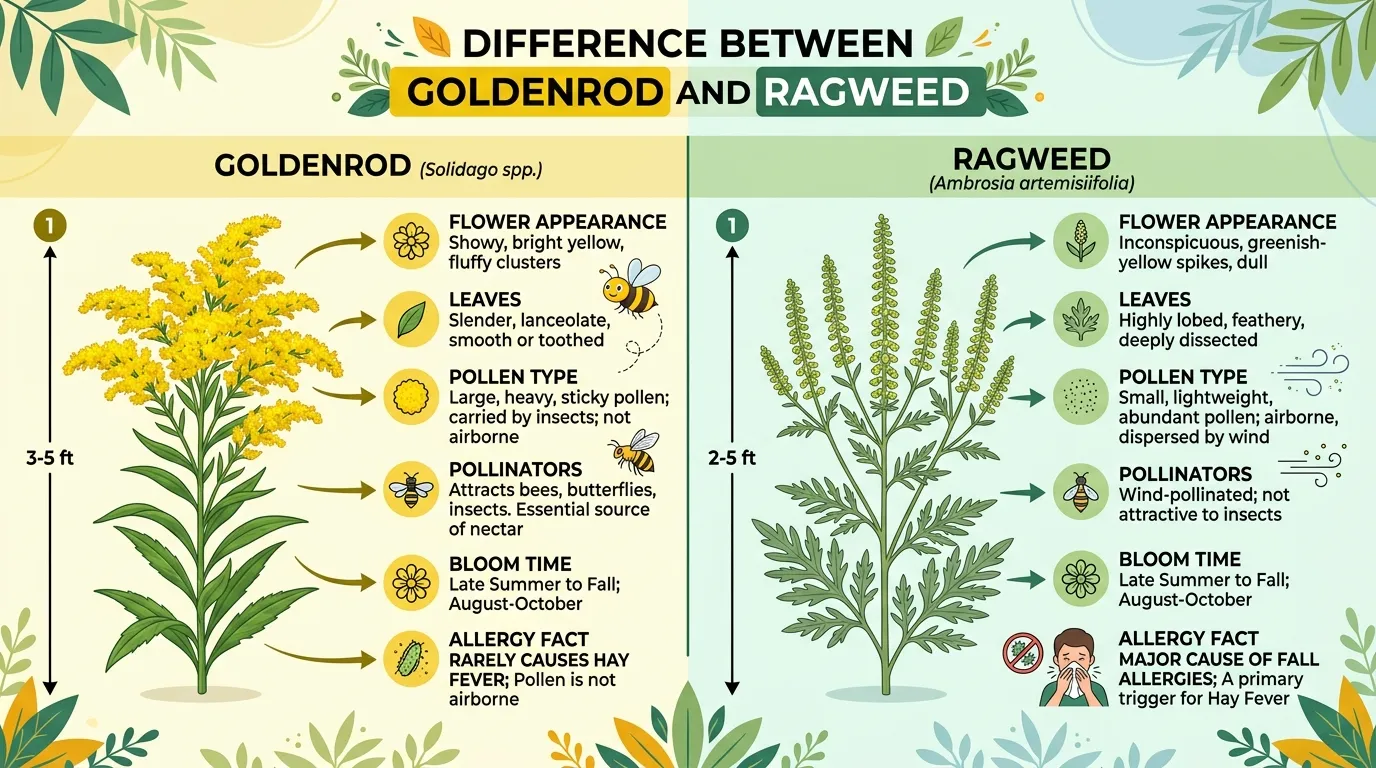
Many people search for the “difference between goldenrod and ragweed” during allergy season because both plants appear around the same time in late summer and early fall. Their growth patterns overlap, and this often creates confusion among gardeners, allergy sufferers, and even beginners learning about wild plants.
The biggest misunderstanding is that goldenrod is commonly blamed for seasonal allergies simply because of its bright yellow flowers. In reality, ragweed is usually the true cause of sneezing, itchy eyes, and hay fever symptoms. Understanding the difference between goldenrod and ragweed helps people identify allergy triggers correctly and avoid removing beneficial plants unnecessarily.
In this complete guide, you will learn what goldenrod and ragweed are, how to identify them, why people confuse them, which plant actually causes allergies, and how both plants affect nature, gardening, and health.
Quick Answer: Difference Between Goldenrod and Ragweed
Goldenrod is a yellow flowering plant that mostly relies on insects like bees for pollination, while ragweed is a green weed that spreads lightweight pollen through the air and commonly causes allergies.
For example, if someone experiences fall allergies near yellow flowers, ragweed nearby is usually the real reason behind the symptoms.
Definition of Goldenrod and Ragweed
- Goldenrod: A flowering plant from the Solidago family known for its golden-yellow blooms and pollinator-friendly nature.
- Ragweed: A fast-growing weed from the Ambrosia family that produces airborne pollen responsible for seasonal allergies.
Example: Goldenrod is often grown in gardens, while ragweed commonly grows wild along roadsides and empty land.
Pronunciation of Both Terms
| Term | US Pronunciation | UK Pronunciation |
| Goldenrod | gol-duhn-rod | gohl-duhn-rod |
| Ragweed | rag-weed | rag-weed |
Now let’s understand why these two plants are frequently confused with each other.
Comparison Table: Goldenrod vs Ragweed
| Feature | Goldenrod | Ragweed |
| Flower Color | Bright yellow | Greenish and dull |
| Allergy Impact | Rarely causes allergies | Major allergy trigger |
| Pollination Type | Insect pollinated | Wind pollinated |
| Garden Use | Decorative and beneficial | Usually unwanted |
| Pollen Texture | Heavy and sticky | Tiny and airborne |
| Visibility | Easy to notice | Often hidden |
| Wildlife Benefit | Supports bees and butterflies | Limited ecological value |
| Growth Areas | Meadows and gardens | Roadsides and fields |
Key Differences Explained Between Goldenrod and Ragweed
1. Appearance
Goldenrod has bright yellow flowers that stand out clearly in fields and gardens. Ragweed, on the other hand, has small green flowers that blend into surrounding plants.
This is one reason why many people incorrectly blame goldenrod for allergies. The visible yellow flowers attract attention first.
2. Allergy Connection
Ragweed is one of the most common causes of seasonal hay fever. Its lightweight pollen travels through the air easily and spreads across large distances.
Goldenrod pollen is heavier and sticky. Bees and insects carry it instead of the wind, which means it rarely enters the air in large amounts.
3. Pollination Method
Goldenrod depends on pollinators such as butterflies and bees to move pollen between flowers.
Ragweed depends entirely on wind pollination. Because of this, ragweed releases massive amounts of airborne pollen during allergy season.
4. Gardening Importance
Goldenrod is often planted in pollinator gardens because it helps bees gather nectar during late summer.
Ragweed is usually removed because it spreads aggressively and creates allergy problems for many people.
5. Environmental Role
Goldenrod supports biodiversity by feeding pollinators when fewer flowers are available.
Ragweed mainly survives through rapid reproduction and wind-based pollen spread.
6. Leaf Structure
Goldenrod leaves are usually long and narrow.
Ragweed leaves look deeply cut or fern-like, making them easier to identify once you know the difference.
Why People Get Confused Between Goldenrod and Ragweed
They Bloom During the Same Season
Both plants grow strongly in late summer and early autumn, which overlaps directly with allergy season.
Bright Flowers Create Assumptions
People naturally blame colorful flowers for pollen allergies. Goldenrod becomes the obvious target because of its bright appearance.
In reality, ragweed spreads more pollen even though it looks plain and less noticeable.
Ragweed Is Harder to Notice
Ragweed flowers are green and blend into weeds and grass. Many people never realize it is growing nearby.
Online Misinformation
Visual content shared on platforms like Instagram and videos on YouTube often focus on flower color instead of pollen science, which increases confusion.
What Does Goldenrod Look Like?
Goldenrod usually grows tall with clusters of bright yellow flowers. It commonly appears in:
- Wildflower meadows
- Pollinator gardens
- Open sunny fields
- Native plant landscapes
Bees and butterflies are often seen around goldenrod because it provides valuable nectar late in the season.
What Does Ragweed Look Like?
Ragweed has greenish flower spikes and deeply divided leaves. It often grows in:
- Roadsides
- Empty lots
- Construction areas
- Neglected land
Unlike goldenrod, ragweed is usually not planted intentionally.
Which Plant Actually Causes Allergies?
Ragweed Is the Main Allergy Trigger
Ragweed pollen is extremely lightweight and travels easily through the wind. Even small amounts can trigger symptoms such as:
- Sneezing
- Runny nose
- Itchy eyes
- Sinus pressure
- Hay fever
Millions of people experience ragweed allergies every year.
Goldenrod Rarely Causes Seasonal Allergies
Goldenrod pollen does not float through the air easily because it is sticky and heavy.
Most allergy experts agree that goldenrod is wrongly blamed in many situations.
Common Mistakes with Goldenrod and Ragweed
1. Blaming Goldenrod for Sneezing
Many beginners assume yellow flowers are causing allergies when ragweed nearby is usually responsible.
2. Removing Helpful Pollinator Plants
Some homeowners remove goldenrod unnecessarily without understanding its environmental benefits.
3. Ignoring Ragweed
Because ragweed flowers are less noticeable, people often fail to identify the actual allergy source.
4. Using Flower Color Alone for Identification
Plant identification should include leaves, flower shape, and pollen behavior — not just color.
5. Assuming All Pollen Behaves the Same Way
Different plants spread pollen differently. Wind-pollinated weeds like ragweed affect allergies much more than insect-pollinated flowers.
Real-Life Examples of Goldenrod and Ragweed
Home Garden Example
A homeowner notices allergy symptoms every September and blames yellow flowers in the backyard. Later, hidden ragweed growing behind a fence is discovered as the real cause.
Landscaping Example
Professional landscapers often preserve goldenrod for pollinator support while removing ragweed from public spaces.
Medical Example
Doctors and allergy specialists track ragweed pollen levels during fall allergy season because they affect millions of patients.
Environmental Example
Wildlife gardens intentionally use goldenrod to support bees, butterflies, and biodiversity.
When to Use Each Plant Knowledge
When Goldenrod Matters
Goldenrod knowledge is useful for:
- Pollinator gardening
- Native landscaping
- Wildlife conservation
- Decorative planting
When Ragweed Matters
Ragweed awareness becomes important if:
- You suffer from seasonal allergies
- You manage outdoor land
- You work in landscaping
- You monitor pollen exposure
Why Understanding the Difference Matters
Learning the difference between goldenrod and ragweed helps people:
- Identify allergy triggers correctly
- Protect beneficial pollinator plants
- Improve gardening decisions
- Avoid online misinformation
- Understand seasonal pollen behavior
In practical situations, this knowledge can improve both health awareness and environmental understanding.
Expert Insight
From a botanical perspective, goldenrod is one of the most misunderstood wildflowers in North America. Most seasonal allergy problems linked to yellow flowers are actually caused by nearby ragweed pollen.
In real gardening and ecological restoration projects, goldenrod is considered highly valuable because it supports pollinators during an important seasonal transition period. Ragweed, however, is managed carefully because of its strong allergy impact.
Understanding how pollen travels is more important than judging a plant by its appearance alone.
FAQs About the Difference Between Goldenrod and Ragweed
Is goldenrod responsible for hay fever?
No. Ragweed is usually the primary cause of hay fever symptoms.
Why do people confuse goldenrod with ragweed?
Both plants bloom during late summer and often grow close together.
Can goldenrod cause allergies?
It rarely causes allergies because its pollen is heavy and insect-carried.
How can I identify ragweed easily?
Look for green flower spikes and deeply divided leaves.
Is goldenrod good for pollinators?
Yes. Goldenrod is excellent for bees and butterflies.
Does ragweed grow every year?
Yes. Ragweed returns annually during allergy season.
Should I remove goldenrod from my yard?
Usually no, unless you personally react to it. It benefits pollinators and biodiversity.
Why is ragweed dangerous for allergy sufferers?
Its lightweight pollen spreads easily through the air and travels long distances.
Conclusion
The difference between goldenrod and ragweed is much clearer once you understand how each plant functions in nature. Goldenrod is a bright yellow flowering plant that mainly benefits pollinators, while ragweed is a wind-pollinated weed responsible for many seasonal allergies.
Although they bloom during the same season, their pollen systems are completely different. Goldenrod uses heavy pollen carried by insects, while ragweed releases tiny airborne pollen particles that spread easily through the wind. This is why ragweed becomes a major allergy trigger every fall.
In simple words, goldenrod is often misunderstood, while ragweed is usually the real culprit behind seasonal allergies.

I am content creator and comparison blogger focused on analyzing key differences between terms, concepts, and ideas to deliver accurate, easy-to-understand information. So I decided to create a platform where these differences are explained in the simplest way possible.