Many people search the difference between RSV and flu during cold and flu season because both illnesses can start with coughing, congestion, and fever. Parents especially get worried when children suddenly become sick and ask questions like “What are the first signs of RSV?” or “Is RSV or flu worse for babies?”
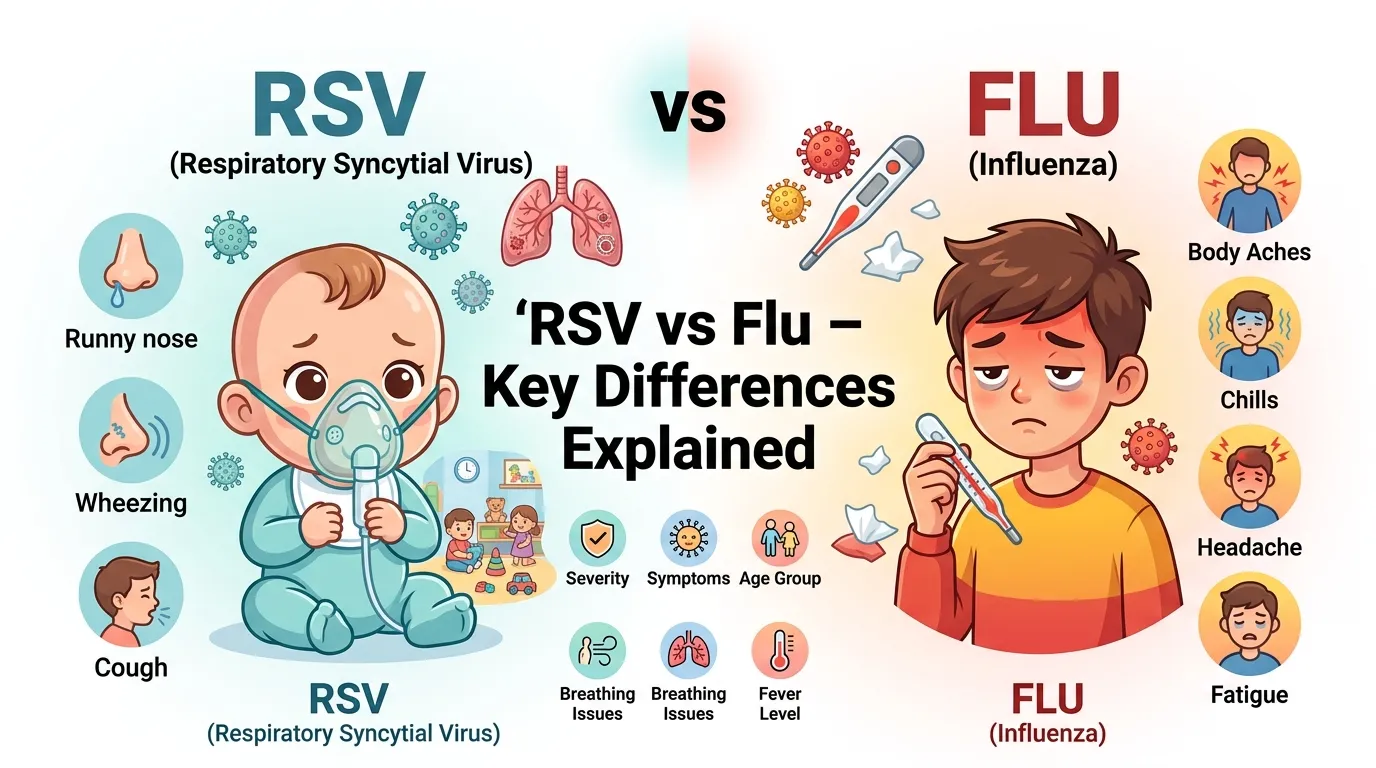
In simple words, RSV and flu are both contagious respiratory infections, but they are caused by different viruses and affect the body differently. RSV usually causes more breathing-related symptoms like wheezing, while the flu often brings sudden fever, body aches, and extreme tiredness.
Another common confusion is “How is RSV different from a cold?” because mild RSV symptoms can look like a normal cold in the beginning. Many users also wonder “How do I know if it’s a virus or flu?” when symptoms overlap during winter months.
This guide explains the difference between RSV and flu clearly with symptoms, causes, treatment, severity, prevention, and real-life examples so you do not need another article after reading this one.
Quick Answer: Difference Between RSV and Flu
RSV (Respiratory Syncytial Virus) and flu (influenza) are viral respiratory infections, but they affect people differently. RSV commonly causes wheezing and breathing trouble in babies and older adults, while flu usually causes sudden fever, body aches, chills, and fatigue.
For example, a baby with RSV may struggle to breathe or feed properly, while someone with flu may suddenly develop high fever and severe weakness overnight.
Definition of RSV and Flu
- RSV (Respiratory Syncytial Virus): A respiratory virus that infects the lungs and airways, especially dangerous for infants and older people.
- Flu (Influenza): A contagious viral infection caused by influenza viruses that mainly affects the nose, throat, and lungs.
Example
If a child has wheezing and breathing difficulty, doctors may suspect RSV. If someone suddenly develops fever, chills, and body pain, flu is more likely.
Pronunciation of Both Terms
- RSV
- US Pronunciation: “ar-es-vee”
- UK Pronunciation: “ar-es-vee”
- Flu
- US Pronunciation: “floo”
- UK Pronunciation: “floo”
Now let’s understand this clearly with side-by-side comparisons and real-world medical situations.
Difference Between RSV and Flu Comparison Table
| Feature | RSV | Flu | Similarity |
| Virus Type | Respiratory Syncytial Virus | Influenza Virus | Both are contagious viruses |
| Main Risk Group | Babies and older people | All age groups | Both can become serious |
| Fever | Mild or moderate | Usually high | Fever may occur in both |
| Breathing Problems | Very common | Less common | Both affect lungs |
| Body Aches | Rare | Very common | Both cause weakness |
| Symptom Onset | Gradual | Sudden | Both spread quickly |
| Wheezing | Common | Less common | Respiratory symptoms occur in both |
| Seasonal Spread | Fall and winter | Winter | Seasonal illnesses |
| Vaccine Availability | Limited but growing | Annual vaccines available | Prevention exists |
| Recovery | Longer in infants | Faster in healthy adults | Rest is important |
This table clearly shows the difference and similarity between difference between RSV and flu for quick understanding.
Key Differences Between RSV and Flu in Details
1. RSV Mainly Affects Breathing
RSV often attacks the smaller airways in the lungs, especially in infants. This is why wheezing and breathing difficulty happen more often.
In practical use, doctors monitor oxygen levels closely in babies with RSV.
2. Flu Causes Stronger Body Pain
People with influenza commonly experience:
- Body aches
- Chills
- Extreme tiredness
- Sudden fever
Many users describe flu symptoms as feeling “hit all at once.”
3. RSV Symptoms Usually Start Slowly
One of the first signs of RSV is usually a runny nose followed by mild coughing and congestion. After a day or two, wheezing or breathing difficulty may develop.
Flu symptoms normally appear much faster.
4. Flu Spreads Aggressively in Crowded Places
Schools, offices, and public transport help influenza spread rapidly. Search spikes on Google often increase during winter outbreaks.
5. RSV Is More Concerning for Babies
Many parents ask, “Is RSV or flu worse for babies?”
In many real scenarios, RSV becomes more dangerous for infants because their airways are smaller. Severe RSV can lead to bronchiolitis and hospitalization.
6. RSV Can Look Like a Common Cold
People often wonder, “How is RSV different from a cold?”
A cold usually stays mild, but RSV may gradually worsen and create breathing problems, especially in young children.
What Are the First Signs of RSV?
The first signs of RSV are often mild and easy to confuse with a cold.
Early RSV Symptoms
- Runny nose
- Sneezing
- Mild cough
- Low fever
- Reduced appetite
- Congestion
After early symptoms, RSV may progress into:
- Wheezing
- Rapid breathing
- Chest retractions
- Trouble feeding in babies
Most beginners ignore the early phase because it feels like a simple cold at first.
How Is RSV Different From a Cold?
This is one of the most searched respiratory health questions online.
Common Cold
- Usually mild
- Less breathing difficulty
- Symptoms improve steadily
RSV
- Can worsen after several days
- Often causes wheezing
- More dangerous for babies and older people
In simple words, RSV may start like a cold but can move deeper into the lungs.
That difference is extremely important in pediatric healthcare.
Is RSV or Flu Worse for Babies?
For babies under one year old, RSV is often considered more dangerous because it directly affects breathing.
RSV Risks for Babies
- Wheezing
- Fast breathing
- Poor feeding
- Low oxygen levels
Flu Risks for Babies
- Fever
- Dehydration
- Fatigue
- Irritability
In hospitals, RSV season fills pediatric wards because infants can struggle to breathe even when symptoms initially seem mild.
How Do I Know if It’s a Virus or Flu?
Many users search this question because flu itself is also caused by a virus.
In simple words:
- “Virus” is a broad category
- Flu is a specific viral infection
Signs It May Be Flu
- Sudden high fever
- Strong body aches
- Chills
- Extreme fatigue
Signs It May Be Another Virus Like RSV
- Wheezing
- Gradual symptom development
- Breathing problems
- Mild fever
Doctors often use rapid tests to confirm whether symptoms are caused by influenza, RSV, or another respiratory virus.
Symptoms of RSV vs Flu
RSV Symptoms
- Wheezing
- Congestion
- Mild fever
- Persistent cough
- Trouble breathing
Flu Symptoms
- High fever
- Chills
- Muscle aches
- Headache
- Fatigue
Shared Symptoms
- Cough
- Runny nose
- Sore throat
- Weakness
This symptom overlap is why many users confuse RSV, flu, and common colds.
What Causes of RSV and Flu?
RSV Cause
RSV spreads through respiratory droplets and contaminated surfaces. Babies often catch RSV from:
- Daycare centers
- Family members
- Shared toys
Flu Cause
Influenza viruses spread rapidly through coughing, sneezing, and close contact.
Platforms like YouTube and Instagram frequently share winter flu prevention content because seasonal outbreaks affect millions every year.
How Doctors Diagnose RSV and Flu
Doctors may use:
- Nasal swab testing
- PCR testing
- Rapid antigen tests
- Oxygen level monitoring
Since respiratory illnesses overlap heavily, hospitals often test for:
- RSV
- Influenza
- COVID-19
simultaneously.
Treatment Options for RSV and Flu
RSV Treatment
There is no universal cure for RSV.
Treatment usually focuses on:
- Rest
- Hydration
- Humidified air
- Oxygen support if severe
Flu Treatment
Doctors may prescribe antiviral medicine if flu is diagnosed early.
Supportive care includes:
- Fever reducers
- Fluids
- Rest
- Monitoring symptoms
Antibiotics do not treat RSV or flu because both are viral illnesses.
Difference Between RSV and Flu in Adults
Adults usually recover from RSV more easily unless they are older or immunocompromised.
RSV in Adults
- Cold-like symptoms
- Mild cough
- Congestion
Flu in Adults
- Severe exhaustion
- Fever
- Body pain
- Sudden illness
Flu tends to disrupt daily life more dramatically in healthy adults.
Similarities Between RSV and Flu
Even though they are different viruses, RSV and flu share several similarities:
- Both spread easily
- Both affect the respiratory system
- Both peak during colder seasons
- Both may cause pneumonia
- Both can become serious in high-risk people
This overlap explains why comparison searches are growing rapidly on Google.
Common Mistakes With Both
Mistake 1: Assuming RSV Is Just a Cold
RSV may become severe, especially in infants.
Mistake 2: Thinking Only Children Get RSV
Older adults can also develop serious RSV complications.
Mistake 3: Ignoring Breathing Symptoms
Breathing difficulty should never be ignored in babies.
Mistake 4: Using Antibiotics Automatically
Antibiotics do not work against viruses.
Mistake 5: Waiting Too Long for Medical Help
Delayed treatment can increase complications.
Real Life Examples With Difference Between RSV and Flu
Scenario 1: Infant With Wheezing
A baby develops congestion and mild cough that worsens into wheezing after daycare exposure. Testing confirms RSV.
Scenario 2: Sudden Office Illness
An office worker develops fever, chills, and body pain overnight. Doctors diagnose influenza.
Scenario 3: Older People Winter Infection
A older citizen with breathing problems develops RSV complications requiring oxygen support.
Scenario 4: School Flu Outbreak
Several children suddenly miss school with fever and exhaustion during flu season.
When to Use Each
RSV Is More Likely When:
- Wheezing is present
- Symptoms worsen gradually
- Babies struggle to breathe
Flu Is More Likely When:
- Symptoms appear suddenly
- Fever is high
- Body aches are severe
This helps parents and caregivers make faster healthcare decisions.
Why People Get Confused in RSV and Flu
Confusion happens because:
- Symptoms overlap
- Both spread in winter
- RSV can resemble a cold early on
- Social media simplifies medical information
Online platforms sometimes mix terms together, which increases misunderstanding among beginners.
Expert Insight
In real healthcare scenarios, breathing quality matters more than fever alone when evaluating RSV in babies. Many parents focus mainly on temperature, but doctors carefully watch:
- oxygen levels
- chest movement
- feeding behavior
- breathing speed
Flu tends to affect the whole body more aggressively, while RSV focuses heavily on the respiratory tract.
This difference helps healthcare professionals decide when hospitalization may be necessary.
Frequently Asked Questions
What are the first signs of RSV?
The first signs usually include runny nose, congestion, sneezing, and mild cough before breathing symptoms worsen.
How is RSV different from a cold?
A cold usually stays mild, while RSV can move deeper into the lungs and cause wheezing or breathing difficulty.
Is RSV or flu worse for babies?
RSV is often more dangerous for babies because it strongly affects breathing.
How do I know if it’s a virus or flu?
Flu is a specific viral infection. Sudden fever and body aches often suggest flu, while wheezing may suggest RSV.
Can adults get RSV?
Yes. Adults, especially older people, can develop RSV infections.
Does RSV always cause fever?
No. Some RSV cases cause little or no fever.
How long does flu usually last?
Most flu symptoms improve within 5–7 days, though fatigue may last longer.
Can RSV turn into pneumonia?
Yes. Severe RSV infections may lead to pneumonia or bronchiolitis.
Is there a vaccine for RSV?
Yes. RSV vaccines are now available for some high-risk groups.
Can RSV and flu happen together?
Yes. Coinfections can occur during respiratory virus season.
Conclusion
Understanding the difference between RSV and flu helps families respond faster and more safely during respiratory illness season. While both infections spread easily and share symptoms like cough and congestion, they affect the body differently.
RSV mainly targets the lungs and breathing passages, making it especially dangerous for babies and older adults. Flu, on the other hand, often causes sudden fever, severe fatigue, chills, and body aches across all age groups.
Many people ask questions like “What are the first signs of RSV?”, “How is RSV different from a cold?”, “Is RSV or flu worse for babies?”, and “How do I know if it’s a virus or flu?” because these illnesses overlap heavily in the early stages. The key difference usually comes down to breathing problems versus strong full-body symptoms.

I am content creator and comparison blogger focused on analyzing key differences between terms, concepts, and ideas to deliver accurate, easy-to-understand information. So I decided to create a platform where these differences are explained in the simplest way possible.