In modern culture, smoking devices have evolved into various forms, each offering a unique experience. Two commonly discussed tools are the bong and the bubbler. Understanding the bong vs bubbler difference becomes important when people want clarity about their design, function, and cultural relevance.
Imagine a group of friends discussing which device provides smoother filtration—some argue for bongs due to their size, while others prefer bubblers for their portability. This everyday debate highlights the curiosity around bong vs bubbler, especially for beginners trying to make informed decisions.
The phrase bong vs bubbler often appears in online searches because users want to understand how these tools differ in experience and practicality. Whether you are a learner or an expert, knowing the difference between bong and bubbler helps in making better choices and understanding their broader social context. In simple terms, a bong is typically a larger water filtration device, while a bubbler is a smaller, handheld version combining features of both pipes and bongs.
What is the Key Difference Between Bong and Bubbler ?
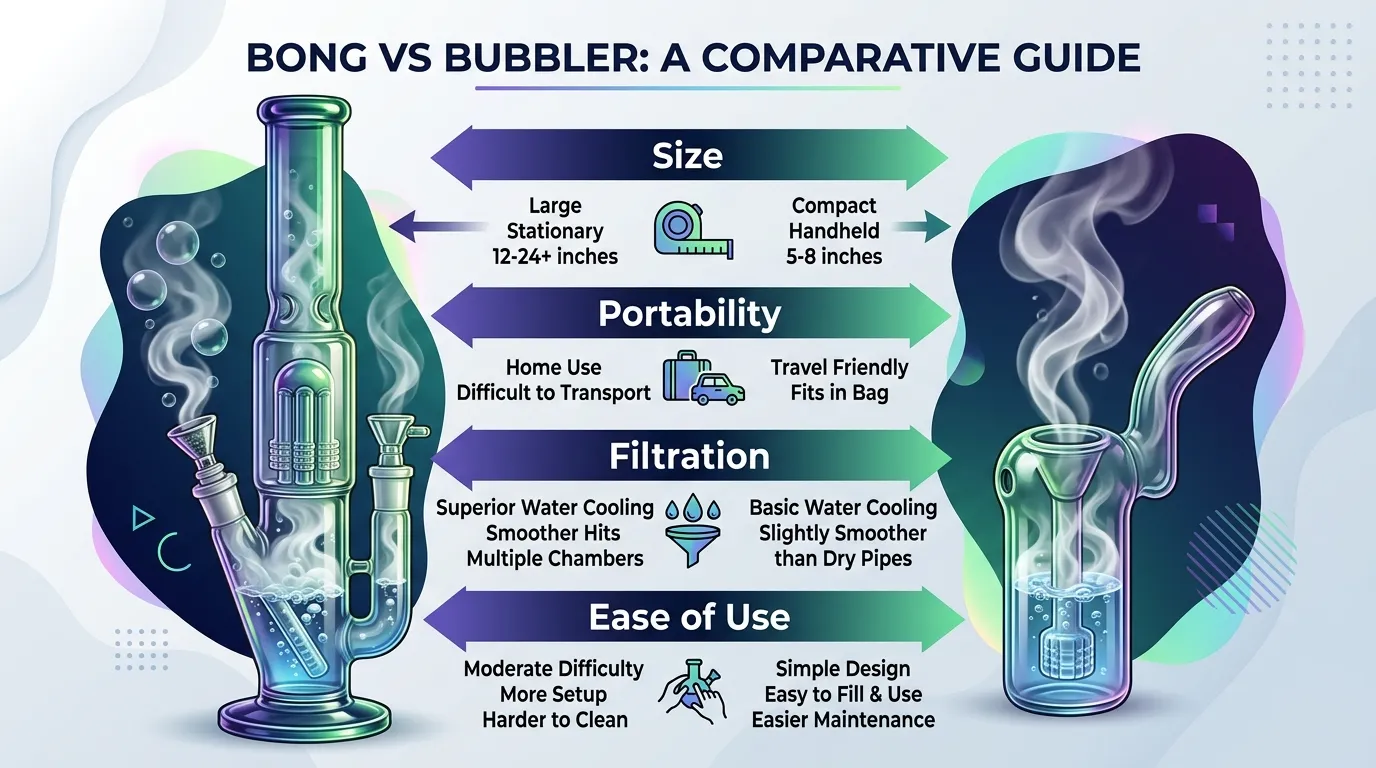
The main difference lies in size, portability, and filtration level. A bong is larger and offers more filtration, while a bubbler is compact and easier to carry with moderate filtration.
Why Is Their Difference Important for Learners and Experts?
Understanding the difference between bong and bubbler is not just about usage—it reflects awareness of design, safety, and social responsibility. For learners, it prevents confusion and helps build foundational knowledge. For experts, it enhances discussions around efficiency, practicality, and cultural perception.
In society, these tools are often part of conversations about lifestyle choices, regulations, and health awareness. Knowing the distinction helps individuals engage responsibly and make informed decisions.
Pronunciation of Both (US & UK)
- Bong
- US: /bɔːŋ/
- UK: /bɒŋ/
- Bubbler
- US: /ˈbʌb.lɚ/
- UK: /ˈbʌb.lə/
Now that pronunciation is clear, let’s move deeper into the bong vs bubbler comparison to understand their practical differences.
Bong vs Bubbler Difference in Details
1. Size
- Bong: Usually large and tall
- Example 1: A tall glass bong placed on a table
- Example 2: A multi-chamber bong used at home
- Bubbler: Small and compact
- Example 1: Pocket-sized bubbler
- Example 2: Handheld mini bubbler
2. Portability
- Bong: Not easy to carry
- Example 1: Needs a stable surface
- Example 2: Risky during travel
- Bubbler: Highly portable
- Example 1: Fits in a bag
- Example 2: Easy for outdoor use
3. Water Capacity
- Bong: Holds more water
- Example 1: Deep water chamber
- Example 2: Multi-level filtration
- Bubbler: Limited water
- Example 1: Small chamber
- Example 2: Minimal filtration
4. Filtration Level
- Bong: Strong filtration
- Example 1: Smooth output
- Example 2: Reduced harshness
- Bubbler: Moderate filtration
- Example 1: Slight cooling
- Example 2: Less refined experience
5. Design Complexity
- Bong: Complex design
- Example 1: Percolators
- Example 2: Ice catchers
- Bubbler: Simple structure
- Example 1: One-piece design
- Example 2: Basic water chamber
6. Cleaning
- Bong: Harder to clean
- Example 1: Multiple parts
- Example 2: Narrow tubes
- Bubbler: Easier to clean
- Example 1: Simple rinse
- Example 2: Fewer components
7. Durability
- Bong: More fragile
- Example 1: Breaks easily if dropped
- Example 2: Thin glass sections
- Bubbler: Slightly more durable
- Example 1: Thick glass
- Example 2: Compact body
8. Usage Setting
- Bong: Mostly indoor
- Example 1: Home use
- Example 2: Social gatherings
- Bubbler: Indoor & outdoor
- Example 1: Travel use
- Example 2: Personal sessions
9. Cost
- Bong: More expensive
- Example 1: High-end glass bong
- Example 2: Designer pieces
- Bubbler: Affordable
- Example 1: Budget-friendly options
- Example 2: Simple designs
10. Experience
- Bong: Smoother and cooler
- Example 1: Filtered inhale
- Example 2: Larger airflow
- Bubbler: Balanced experience
- Example 1: Mild cooling
- Example 2: Quick usage
Nature and Behaviour of Both
- Bong:
Bongs are designed for deeper filtration and smoother output. They are stable, powerful, and often used in controlled environments. - Bubbler:
Bubblers are versatile, compact, and user-friendly. They combine convenience with moderate filtration.
Why People Are Confused About Their Use?
People often confuse them because both use water filtration and look somewhat similar. Marketing, lack of awareness, and overlapping features increase confusion in the bong vs bubbler discussion.
Comparison Table (Bong vs Bubbler)
| Feature | Bong | Bubbler | Similarity |
| Size | Large | Small | Both handheld tools |
| Filtration | High | Moderate | Use water |
| Portability | Low | High | Easy to use |
| Design | Complex | Simple | Glass material common |
Which Is Better in What Situation?
A bong is better in situations where smoothness and strong filtration are priorities. For example, in a home setting where stability and comfort matter, a bong provides a refined experience. Its larger size allows better cooling and filtration.
A bubbler, on the other hand, is ideal for portability and convenience. In outdoor or travel situations, a bubbler is easier to carry and use. It provides a balance between simplicity and performance.
Use in Metaphors and Similes
- “His setup was as complex as a bong with multiple chambers.”
- “Her approach was simple like a bubbler—effective yet straightforward.”
Connotative Meaning
- Bong:
- Neutral/Negative depending on context
- Example: “The bong symbolized a laid-back lifestyle.”
- Bubbler:
- Neutral/Positive
- Example: “The bubbler reflected convenience and simplicity.”
Idioms or Proverbs Related
These words are not traditionally part of idioms, but can be used creatively:
- “Don’t complicate things like a bong when a bubbler will do.”
- “Keep it simple like a bubbler.”
Works in Literature
- “Smoke and Culture” – Sociology, John Harris, 2015
- “Modern Lifestyles” – Non-fiction, Sarah Lee, 2018
Movies Related to Both
- “Half Baked” (1998, USA)
- “Pineapple Express” (2008, USA)
Frequently Asked Questions
1. What is the main difference between bong and bubbler?
The main difference is size and filtration level.
2. Which is more portable?
Bubblers are more portable.
3. Which offers smoother experience?
Bongs generally provide smoother filtration.
4. Are both easy to clean?
Bubblers are easier to clean than bongs.
5. Which is better for beginners?
Bubblers are usually more beginner-friendly.
How Both Are Useful for Surroundings
Both tools are part of social and cultural environments. They contribute to discussions about lifestyle choices, design innovation, and even art, as many are handcrafted.
Final Words for Both
Understanding bong vs bubbler helps clarify their roles, benefits, and limitations. Each serves a unique purpose depending on user needs.
Conclusion
The difference between bong and bubbler lies in their design, portability, and filtration capabilities. While bongs offer a smoother and more refined experience, bubblers provide convenience and ease of use. The bong vs bubbler comparison is essential for anyone looking to understand these tools in a broader cultural and functional context. By exploring their differences, similarities, and applications, users can make informed decisions and appreciate their unique features. Ultimately, the choice depends on personal preference, usage environment, and desired experience.

I am content creator and comparison blogger focused on analyzing key differences between terms, concepts, and ideas to deliver accurate, easy-to-understand information. So I decided to create a platform where these differences are explained in the simplest way possible.