When it comes to Japanese cuisine, noodles are one of the most important and widely enjoyed foods, both in Japan and around the world. Among all noodle varieties, ramen and udon are the two most popular dishes that often confuse people because they may look similar at first glance. However, once you explore them closely, you realize they are completely different in terms of ingredients, preparation, taste, texture, and cultural background.
Ramen is a flavorful and rich noodle dish that has become a global favorite, especially in countries where people enjoy bold and savory meals. It is known for its deep broth, springy noodles, and wide variety of toppings that make every bowl unique. On the other hand, udon is a traditional Japanese noodle dish known for its thick, soft noodles and light, comforting broth that focuses more on simplicity and natural taste rather than strong flavors.
Both dishes are deeply rooted in Japanese food culture and are enjoyed in different situations. Ramen is often chosen when someone wants a rich, filling, and flavorful meal, while udon is preferred when people want something light, warm, and soothing. In this detailed guide, we will explore the ramen vs udon in depth so you can clearly understand how they differ and which one suits your taste better.
What is Ramen?
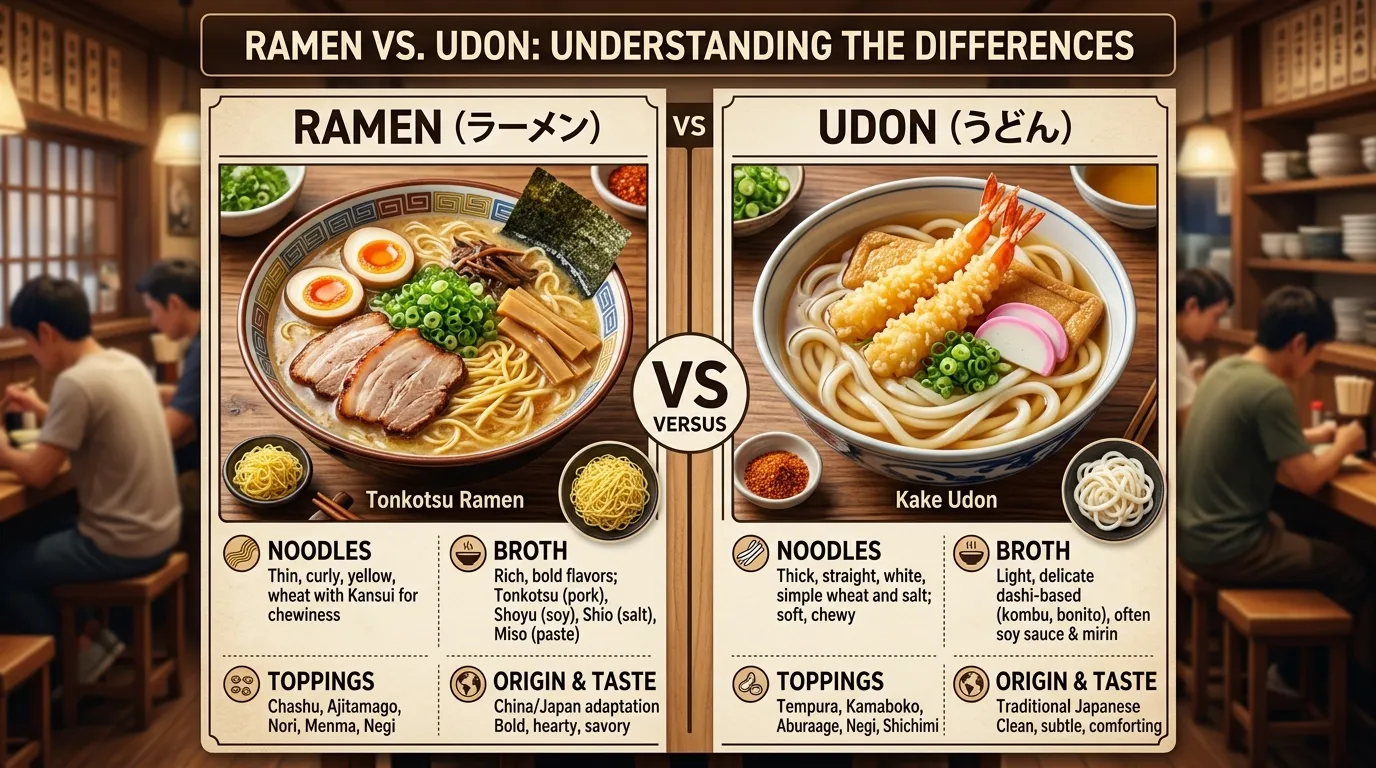
Ramen is a Japanese noodle dish made from thin wheat noodles served in a rich and flavorful broth. It comes in various styles such as miso ramen, shoyu (soy sauce) ramen, shio (salt) ramen, and tonkotsu (pork bone) ramen. Each type offers a different flavor profile, making ramen highly versatile and customizable. It is usually topped with ingredients like eggs, meat, vegetables, and seaweed to create a complete meal.
What is Udon?
Udon is a traditional Japanese noodle dish made with thick wheat noodles served in a light broth. It is known for its soft and chewy texture and mild taste. Udon can be enjoyed in hot soup or cold dipping styles. Popular variations include kitsune udon (with sweet tofu), tempura udon, and curry udon.
Quick Comparison Table(Ramen vs Udon)
| Feature | Ramen | Udon |
| Origin | Influenced by Chinese cuisine | Traditional Japanese dish |
| Noodle Thickness | Thin and curly | Thick and straight |
| Texture | Firm, springy | Soft, chewy |
| Flour Type | Wheat flour + kansui | Wheat flour + salt + water |
| Broth Style | Rich, heavy, complex | Light, simple, mild |
| Flavor Intensity | Strong and savory | Subtle and soothing |
| Cooking Time | Longer preparation | Relatively quick |
| Toppings | Egg, pork, seaweed, corn | Tempura, tofu, green onion |
| Color | Yellowish noodles | White noodles |
| Popularity Style | Modern global street food | Traditional comfort food |
Key Differences Between Ramen and Udon
1. Noodle Shape and Structure
Ramen noodles are thin, slightly curly, and designed to absorb broth easily. Their structure allows them to carry strong flavors in every bite. Udon noodles are thick, straight, and heavy, giving a chewy texture that feels more filling and soft in the mouth.
2. Texture and Mouthfeel
Ramen provides a firm and elastic bite that feels energetic and light. Udon, however, delivers a soft and smooth chewing experience, making it more comforting and heavy at the same time.
3. Ingredients Difference
Ramen uses wheat flour mixed with kansui (alkaline water), which gives it a yellowish color and springy texture. Udon is made with only wheat flour, salt, and water, which results in a simple and natural noodle structure.
4. Broth Composition
Ramen broth is rich and complex, often made from soy sauce, miso, salt, or pork bones (tonkotsu). Each broth type delivers a different depth of flavor. Udon broth is based on dashi stock, which is lighter and focuses on enhancing the natural taste of noodles.
5. Flavor Strength
Ramen has a bold, strong, and layered flavor profile. Every spoonful delivers a mix of savory richness. Udon is mild and subtle, focusing on simplicity and natural taste rather than intensity.
6. Cooking Method and Preparation
Ramen requires more preparation time due to broth cooking, noodle preparation, and toppings arrangement. Udon is easier and quicker to prepare, often served in simple hot broth or cold dipping style.
7. Toppings Variety
Ramen is known for its variety of toppings such as boiled eggs, pork slices, bamboo shoots, seaweed, corn, and mushrooms. Udon is more minimalistic, usually served with tempura, tofu, or green onions.
8. Cultural Background
Ramen has Chinese origins but evolved in Japan into a modern, globally popular dish. Udon is deeply rooted in traditional Japanese cuisine and has been consumed for centuries as comfort food.
9. Popularity and Usage Style
Ramen is widely considered a trendy and global fast-food-style dish. Udon is more traditional and often associated with home-style meals and seasonal comfort dishes.
10. Eating Experience
Ramen offers a rich and exciting eating experience with strong flavors and multiple textures in one bowl. Udon provides a calm, warm, and soothing experience that feels simple yet satisfying.
When to Choose Ramen or Udon
Choose Ramen When:
- You want a rich and flavorful meal
- You enjoy strong savory taste
- You prefer variety in toppings
- You want a filling dish
Choose Udon When:
- You want a light and simple meal
- You prefer soft noodles
- You want comfort food
- You like mild flavors
Similarities Between Ramen and Udon
- Both are Japanese noodle dishes
- Both use wheat flour as base ingredient
- Both can be served hot or cold
- Both are customizable with toppings
- Both are widely popular globally
FAQs
1. Which is healthier, ramen or udon?
Udon is generally lighter, while ramen is richer and higher in calories depending on broth.
2. Which noodle is thicker, ramen or udon?
Udon noodles are much thicker than ramen noodles.
3. Is ramen or udon more popular?
Ramen is more globally popular, but udon is very popular in Japan.
4. Can both be eaten cold?
Yes, both ramen and udon have cold versions.
5. Which is better for beginners?
Udon is easier for beginners due to its mild taste.
Conclusion
The ramen vs udon difference lies in their texture, ingredients, flavor intensity, and cultural identity. Ramen is a bold, rich, and flavorful noodle dish that delivers a complex and satisfying eating experience. It is ideal for those who enjoy strong tastes, variety in toppings, and a more modern food style. Udon, on the other hand, is soft, thick, and mild in flavor, offering a simple yet deeply comforting experience. It represents traditional Japanese home-style cooking and is perfect for people who prefer light, soothing meals. Both noodles have their own unique identity and charm. Ramen excites your taste buds with rich flavors, while udon relaxes you with its simplicity and warmth. Instead of comparing ramen vs udon as better or worse, it is more accurate to say they serve different moods and purposes.
Final Words for Both
- Ramen = bold, rich, and complex
- Udon = soft, simple, and comforting
Understanding ramen vs udon difference helps you appreciate Japanese cuisine more deeply and choose the right dish based on your mood and preference.

I am content creator and comparison blogger focused on analyzing key differences between terms, concepts, and ideas to deliver accurate, easy-to-understand information. So I decided to create a platform where these differences are explained in the simplest way possible.