Imagine you’re sitting in a cozy Japanese restaurant for the first time. The menu is full of unfamiliar yet exciting dishes. You notice two popular options: sushi and maki. You wonder aren’t they the same thing? This confusion is quite common, especially for beginners exploring Japanese cuisine. Understanding the difference between sushi and maki can completely change your dining experience and appreciation of food culture.
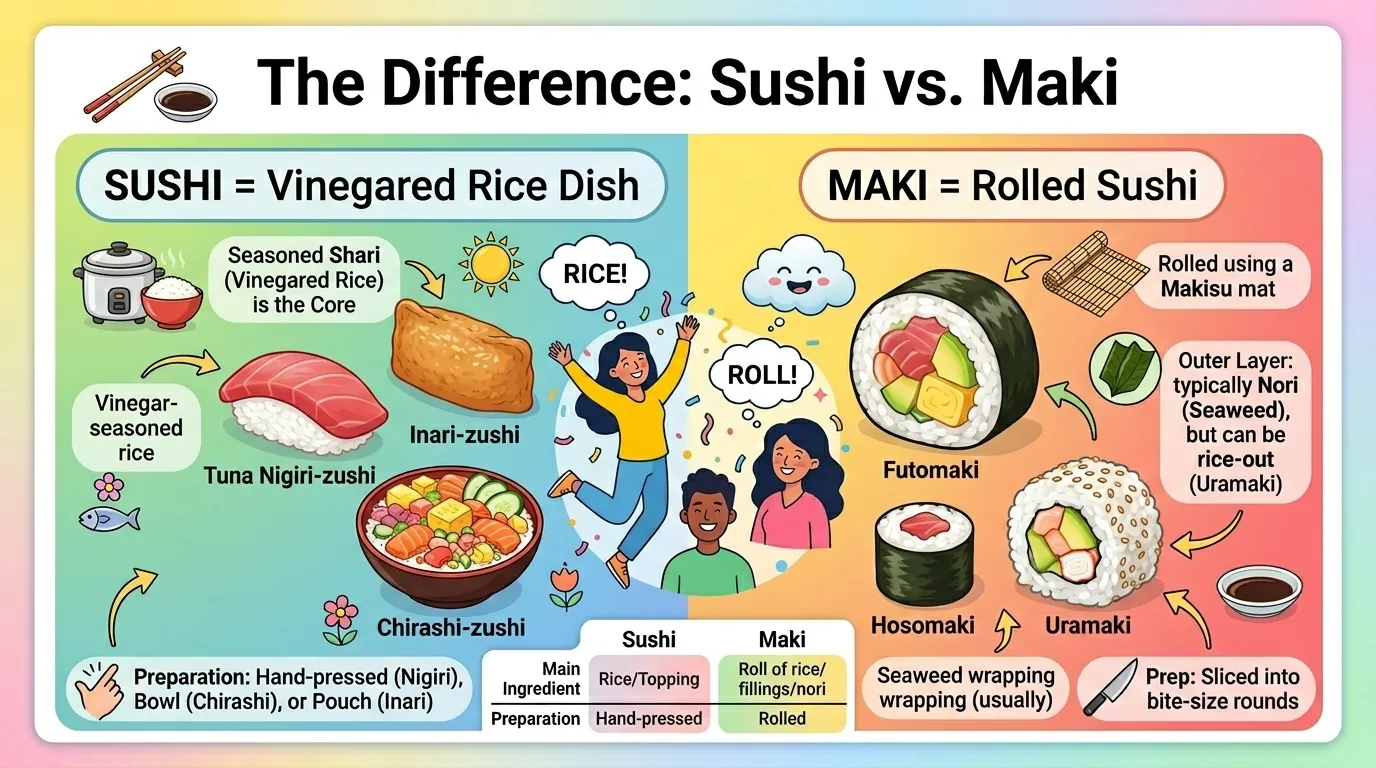
In simple terms, sushi is a broad category of Japanese dishes that use vinegared rice, while maki is a specific type of sushi rolled in seaweed. The topic of sushi vs maki often comes up among food lovers, chefs, and even culinary students.
Whether you’re a beginner or an expert, knowing difference between them helps you order confidently, cook accurately, and speak about food more precisely. This guide will break down everything you need to know about these terms in a clear and engaging way.
Key Difference Between Both
The main difference lies in their structure and definition:
- Sushi refers to any dish made with vinegared rice combined with ingredients like fish, vegetables, or eggs.
- Maki (or makizushi) is a type of sushi that is rolled using seaweed (nori), rice, and fillings.
So, all maki is sushi, but not all sushi is maki.
Why Is Their Difference Important?
Understanding the difference between sushi and maki is important for both learners and experts:
- For learners: It builds basic culinary knowledge and avoids confusion while ordering.
- For chefs: It ensures accuracy in preparation and presentation.
- For society: Food is a cultural bridge. Knowing these terms promotes respect for Japanese traditions and enhances global food appreciation.
This knowledge also helps in social settings, making conversations about food more meaningful and informed.
Pronunciation of Both (US & UK)
- Sushi
- US: /ˈsuːʃi/
- UK: /ˈsuːʃi/
- Maki
- US: /ˈmɑːki/
- UK: /ˈmæki/
Now that you can say them correctly, let’s dive deeper into their differences.
Difference Between Sushi and Maki
1. Definition
- Sushi is a general term for vinegared rice dishes.
Examples: Nigiri sushi, chirashi sushi - Maki is rolled sushi wrapped in seaweed.
Examples: California roll, tuna roll
2. Structure
- Sushi can be served in many forms.
Examples: Hand-pressed rice with fish, rice bowls - Maki is always cylindrical rolls.
Examples: Thick rolls, thin rolls
3. Preparation Method
- Sushi may be hand-shaped or assembled.
Examples: Nigiri formed by hand, chirashi assembled in bowls - Maki is rolled using a bamboo mat.
Examples: Hosomaki (thin rolls), futomaki (thick rolls)
4. Use of Seaweed
- Sushi does not always use seaweed.
Examples: Nigiri (no seaweed), sashimi (no rice or seaweed) - Maki always uses seaweed (nori).
Examples: Standard rolls, inside-out rolls
5. Variety
- Sushi includes many types.
Examples: Nigiri, sashimi, temaki - Maki is just one type.
Examples: Hosomaki, uramaki
6. Presentation
- Sushi can be artistic and varied.
Examples: Decorative plates, rice bowls - Maki is neatly sliced into pieces.
Examples: 6–8 roll pieces, uniform slices
7. Ingredients
- Sushi uses diverse ingredients.
Examples: Raw fish, cooked seafood - Maki uses fillings inside rolls.
Examples: Avocado, crab sticks
8. Eating Style
- Sushi can be eaten in one bite or multiple bites.
Examples: Nigiri (one bite), chirashi (multiple bites) - Maki is eaten piece by piece.
Examples: Roll slices, bite-sized pieces
9. Cultural Role
- Sushi represents Japanese culinary identity.
Examples: Traditional meals, fine dining - Maki is popular globally.
Examples: Fast food sushi, fusion dishes
10. Complexity
- Sushi can be simple or complex.
Examples: Basic nigiri, elaborate platters - Maki is usually simpler to prepare.
Examples: Basic cucumber rolls, simple tuna rolls
Nature and Behaviour of Both
Sushi is versatile, diverse, and traditional. It adapts to different ingredients and styles, reflecting creativity and heritage.
Maki is structured, consistent, and modern. It is easy to customize and widely محبوب (popular) across the world due to its simplicity.
Why People Are Confused About Their Use?
| Aspect | Sushi | Maki | Similarity |
| Definition | Broad category | Specific type | Both are Japanese dishes |
| Structure | Various forms | Rolled form | Use rice |
| Seaweed | Optional | Always used | Often includes nori |
| Popularity | Traditional | Global favorite | Widely consumed |
Which Is Better in What Situation?
Sushi is better when you want an authentic and traditional Japanese dining experience. It offers a variety of textures and flavors, making it ideal for formal meals or special occasions.
Maki is better for casual dining, quick meals, or beginners trying Japanese food. Its bite-sized pieces and familiar ingredients make it easy and enjoyable.
Metaphors and Similes
- “Life is like sushi varied and full of surprises.”
- “He rolled through problems like maki—smooth and precise.”
Connotative Meaning
- Sushi
- Positive: Luxury, tradition
Example: “Dining on sushi feels elegant.” - Neutral: Food category
- Negative: Expensive
- Positive: Luxury, tradition
- Maki
- Positive: Simplicity, accessibility
Example: “Maki is perfect for beginners.” - Neutral: Specific dish
- Positive: Simplicity, accessibility
Idioms or Proverbs
(No direct idioms exist, but creative usage can be:)
- “Don’t judge sushi by its rice.”
Example: Don’t judge people by appearances.
Works in Literature
- “The Sushi Economy” – Sasha Issenberg (Non-fiction, 2007)
- “Sushi for Beginners” – Marian Keyes (Fiction, 2000)
Movies Related to Both
- Jiro Dreams of Sushi (2011, Japan)
- East Side Sushi (2014, USA)
FAQs
1. Is maki a type of sushi?
Yes, maki is a rolled type of sushi.
2. Does sushi always contain raw fish?
No, sushi can include cooked or vegetarian ingredients.
3. What makes maki different from other sushi?
Its rolled structure using seaweed.
4. Which is easier to eat?
Maki is easier due to its bite-sized pieces.
How Both Are Useful for Surroundings
Sushi promotes cultural exchange and culinary diversity, while maki makes Japanese food accessible worldwide. Both contribute to global food trends and healthy eating habits.
Final Words for Both
Sushi represents tradition, artistry, and diversity. Maki represents simplicity, convenience, and global appeal. Together, they form a beautiful part of Japanese cuisine.
Conclusion
Understanding the difference between sushi and maki helps you appreciate Japanese cuisine on a deeper level. While sushi is a broad category, maki is a specific and popular type within it. The discussion of sushi vs maki highlights how food can be both diverse and specialized. Whether you prefer the elegance of sushi or the simplicity of maki, both offer unique experiences. Next time you visit a restaurant, you’ll confidently know what to order and why. Exploring them is not just about food it’s about culture, knowledge, and enjoyment.

My name is Ryan Mitchell, and I am a comparison content writer based in the United States. I specialize in creating clear and easy-to-understand articles that explain the differences between similar concepts, products, and ideas. My work focuses on helping readers quickly understand what makes two things different so they can make better decisions.