In everyday life, we constantly measure things whether it’s buying furniture, planning a room layout, or checking the size of a screen. Yet many people still confuse basic dimensions, especially when it comes to understanding width vs length.
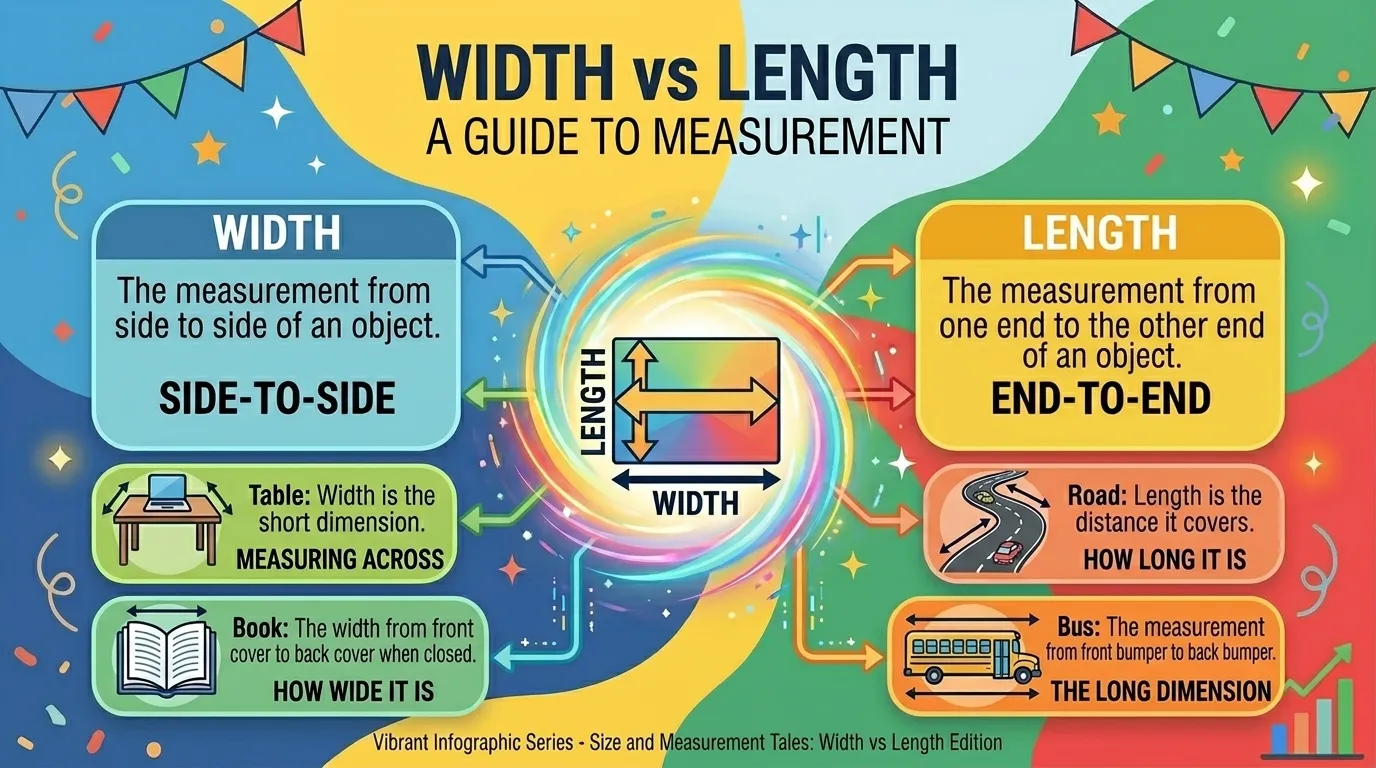
Imagine ordering a table online and receiving one that doesn’t fit your space simply because the dimensions were misunderstood. This kind of mistake is more common than you might think. The concept of difference between width and length is simple, but its importance is huge. Width usually refers to how wide something is from side to side, while length refers to how long it is from one end to the other.
When people compare width vs length, they often realize that these two measurements work together to define the overall size of an object. Understanding this distinction improves accuracy in communication, design, and daily decisions. Whether you’re a student or a professional, mastering both helps you avoid confusion and make smarter choices.
Key Difference Between the Both
The main difference is based on direction. Length is typically the longest side of an object, measured from end to end, while width is the shorter side, measured across from one side to the other.
Why Is Their Difference Necessary to Know for Learners and Experts?
Understanding these dimensions is essential in both education and professional life. For students, it builds a strong base in geometry and measurement concepts. Without clarity, even simple problems can become confusing.
For professionals such as engineers, architects, and designers, mixing up width and length can lead to serious consequences. Incorrect measurements can affect construction, design accuracy, and overall functionality. In society, accurate dimensions are crucial in fields like manufacturing, interior design, and technology. Knowing the difference ensures efficiency, safety, and precision in real-world applications.
Pronunciation of the Both (US & UK)
- Width
- US: /wɪdθ/
- UK: /wɪdθ/
- Length
- US: /lɛŋθ/
- UK: /lɛŋθ/
Now that we know how to pronounce them, let’s explore their differences in detail.
Difference Between Width and Length
Direction of Measurement
Width is measured from side to side, while length is measured from end to end.
Examples:
- The width of a table is measured across.
- The length of a table is measured from one end to another.
Relative Size
Length is generally the longer dimension, while width is the shorter one.
Examples:
- A rectangle usually has a longer length than width.
- A book’s width is smaller than its length.
Orientation
Width often refers to horizontal space, while length refers to vertical or forward extension.
Examples:
- The width of a TV defines its horizontal span.
- The length of a rope shows how far it can extend.
Use in Shapes
In geometry, both define shapes and sizes.
Examples:
- In rectangles, length is greater than width.
- In squares, both are equal.
Application in Daily Life
Width is related to side space, while length is related to forward distance.
Examples:
- The width of a bed determines how many people can lie on it.
- The length determines if a tall person can fit comfortably.
In Clothing
Width relates to fitting, while length relates to coverage.
Examples:
- Shirt width affects comfort.
- Shirt length affects how long it falls.
In Roads and Spaces
Width defines capacity, while length defines distance.
Examples:
- A wide road allows more vehicles.
- A long road connects far places.
In Screens and Devices
Width impacts display spread, while length (or height) affects viewing area.
Examples:
- A phone’s width affects how it fits in your hand.
- Its length affects the screen experience.
Measurement Context
Width is measured across, while length is measured along.
Examples:
- Measure the width across a table.
- Measure the length along its side.
Perception
Width gives a sense of breadth, while length gives a sense of extension.
Examples:
- A wide river looks expansive.
- A long bridge looks endless.
Nature and Behaviour of the Both
Width represents how broad something is. It is linked with space, openness, and capacity.
Length represents how far something extends. It is associated with distance, duration, and reach.
Why People Are Confused About Their Use?
People often confuse these terms because both describe size and are used together. In some cases, the orientation of an object changes the way we describe it, which adds to the confusion when comparing both.
| Aspect | Width | Length |
| Direction | Side to side | End to end |
| Size | Usually shorter | Usually longer |
| Use | Breadth, space | Distance, extension |
| Similarity | Both measure dimensions | Both measure dimensions |
Which Is Better in What Situation?
Width is better when discussing space and capacity. For example, when choosing furniture, width determines how much area it occupies. A wider sofa provides more seating and comfort for multiple people.
Length is better when discussing reach and coverage. For example, when buying curtains or cables, length ensures they extend properly. Choosing the correct length avoids inconvenience and ensures proper functionality.
Use in Metaphors and Similes
- “The road stretched in length like an endless path.”
- “Her knowledge had great width, covering many subjects.”
Connotative Meaning of Both
- Width
- Positive: Broad thinking (e.g., “He has width of vision.”)
- Neutral: Measurement
- Negative: Rarely negative
- Length
- Positive: Long-lasting (e.g., “A relationship of great length.”)
- Neutral: Measurement
- Negative: Tedious (e.g., “The lecture felt too long.”)
Idioms or Proverbs Related to the Words
- “Go to great lengths” – to make a strong effort
Example: She went to great lengths to achieve her goals. - “At arm’s length” – keeping distance
Example: He kept the issue at arm’s length.
Works in Literature
- Flatland: A Romance of Many Dimensions (Science fiction, Edwin A. Abbott, 1884)
- The Measure of a Man (Philosophical, Sidney Poitier, 2000)
Movie Names
- The Longest Yard (2005, USA)
- The Longest Day (1962, USA)
Frequently Asked Questions
What is the main difference between both?
Width measures side-to-side distance, while length measures end-to-end distance.
Is length always bigger than width?
In most cases, yes, but in shapes like squares, they can be equal.
Can orientation change their meaning?
Yes, depending on how an object is placed, width and length can be interpreted differently.
Why do people confuse them?
Because both are dimensions and often used together in measurements.
Where are these terms commonly used?
In geometry, construction, design, and everyday measurements.
How Both Are Useful for Surroundings
Both are essential for organizing and designing our surroundings. From building houses to arranging furniture, both dimensions help ensure comfort, functionality, and proper use of space.
Final Words for the Both
Both may seem basic, but they are fundamental to understanding the physical world. Their correct use ensures clarity, accuracy, and better communication.
Conclusion
The difference between width and length is simple yet extremely important. Width describes how wide something is, while length explains how long it extends. Together, they define the size and shape of objects in a meaningful way. Understanding width vs length allows you to measure accurately, communicate clearly, and avoid costly mistakes. Whether in academics, professional work, or daily life, mastering these concepts brings precision and confidence. In the end, a clear understanding of dimensions leads to better planning, smarter decisions, and improved outcomes.

My name is Ryan Mitchell, and I am a comparison content writer based in the United States. I specialize in creating clear and easy-to-understand articles that explain the differences between similar concepts, products, and ideas. My work focuses on helping readers quickly understand what makes two things different so they can make better decisions.