Many people use the terms sweatshirt and sweater interchangeably, but they are actually different types of clothing. Understanding the difference between sweatshirt and sweater helps you choose the right outfit for comfort, fashion, weather, and specific occasions.
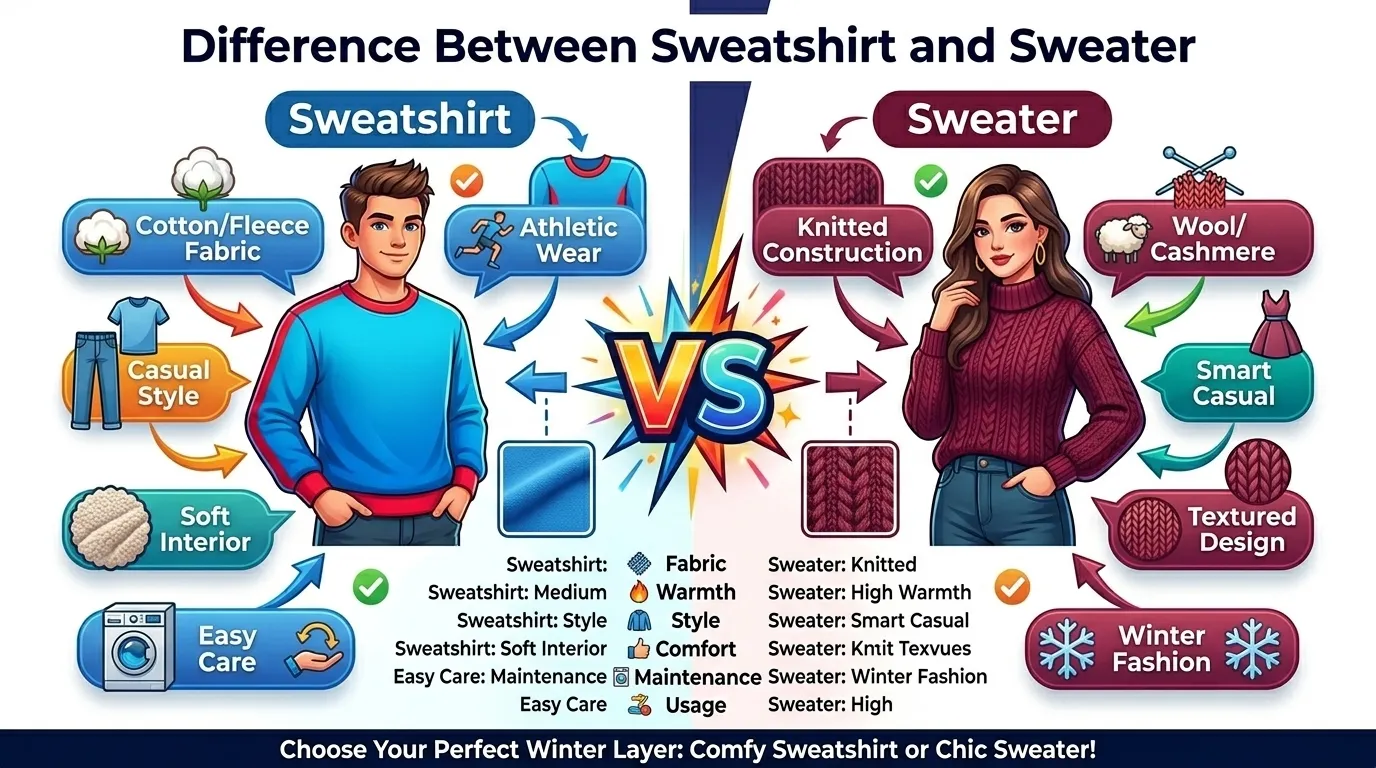
The difference between sweatshirt and sweater mainly comes down to material, design, warmth, and intended use. While both garments help keep you warm, they serve different purposes. A sweatshirt is usually made from cotton or fleece and has roots in sportswear, whereas a sweater is commonly knitted from wool, cotton, or synthetic fibers and is often associated with casual or smart-casual fashion.
In this guide, you’ll learn the complete difference between sweatshirt and sweater, including definitions, pronunciation, comparison tables, real-life examples, common mistakes, styling tips, and expert insights. By the end, you’ll know exactly which one to wear and when.
Quick Answer: Difference Between Sweatshirt and Sweater
A sweatshirt is a thick, soft pullover typically made from cotton or fleece and designed for warmth, comfort, and casual wear.
A sweater is a knitted garment made from wool, cotton, cashmere, or synthetic fibers that provides warmth and often has a more fashionable appearance.
Example:
- Wearing a fleece sweatshirt while jogging on a chilly morning.
- Wearing a wool sweater to an office meeting or family gathering.
Definition of Sweatshirt and Sweater
- Sweatshirt: A soft, usually cotton or fleece garment designed for comfort, warmth, and casual or athletic wear.
- Sweater: A knitted upper-body garment made from wool, cotton, cashmere, or synthetic fibers primarily intended to provide warmth.
Simple Example:
A gray fleece top from a sportswear brand is usually a sweatshirt, while a knitted wool pullover is a sweater.
Pronunciation of Both Terms
| Word | US Pronunciation | UK Pronunciation |
|---|---|---|
| Sweatshirt | /ˈswet.ʃɝːt/ | /ˈswet.ʃɜːt/ |
| Sweater | /ˈswet̬.ɚ/ | /ˈswet.ə/ |
Now that you know how to pronounce both words correctly, let’s understand the features that truly separate them.
Sweatshirt vs Sweater Comparison Table
| Feature | Sweatshirt | Sweater |
|---|---|---|
| Material | Cotton, fleece, polyester blends | Wool, cashmere, cotton, acrylic |
| Construction | Sewn fabric | Knitted fabric |
| Appearance | Sporty and casual | Stylish and versatile |
| Warmth | Moderate to high | Moderate to very high |
| Texture | Smooth and soft | Textured and knitted |
| Best Use | Casual wear, workouts, lounging | Casual, business casual, formal layering |
| Stretch | Limited natural stretch | Usually more flexible |
| Maintenance | Easier to wash | Often requires special care |
| Fashion Level | Relaxed style | Broader fashion appeal |
| Origin | Athletic clothing | Traditional cold-weather clothing |
Key Differences Explained Between Difference Between Sweatshirt and Sweater
1. Material Composition
Sweatshirts are generally made from cotton fleece or polyester blends. These fabrics feel soft against the skin and are designed for comfort.
Sweaters are knitted from wool, cashmere, cotton, acrylic, or blended yarns. This gives them a distinct texture and appearance.
2. Construction Method
A sweatshirt is sewn from fabric panels.
A sweater is created through knitting techniques, which produce visible patterns and stitches.
3. Fashion Purpose
Sweatshirts focus on comfort and casual styling.
Sweaters offer more styling flexibility and can work in both casual and professional settings.
4. Athletic Heritage
Sweatshirts originated from sportswear and athletic apparel.
Sweaters developed as practical cold-weather garments.
5. Warmth Level
Heavy wool sweaters often provide greater insulation than standard sweatshirts.
However, fleece-lined sweatshirts can be exceptionally warm.
6. Outfit Pairing
Sweatshirts pair naturally with joggers, sneakers, and jeans.
Sweaters work with jeans, chinos, trousers, skirts, and even business-casual outfits.
7. Maintenance Requirements
Most sweatshirts are machine washable.
Many wool sweaters require gentle washing or dry cleaning.
What Is a Sweatshirt?
A sweatshirt is a long-sleeved pullover designed primarily for comfort and warmth. It became popular through sports and athletic culture and remains a staple of casual fashion.
Common sweatshirt features include:
- Cotton fleece lining
- Ribbed cuffs
- Ribbed waistband
- Crew neck design
- Relaxed fit
Brands such as Nike, Adidas, and Under Armour frequently produce sweatshirts designed for active lifestyles.
What Is a Sweater?
A sweater is a knitted garment created to provide warmth during cooler temperatures. It comes in numerous styles including:
- Crew neck sweaters
- V-neck sweaters
- Cardigans
- Turtlenecks
- Cable-knit sweaters
Fashion brands often use wool, cashmere, cotton, and premium yarn blends to create sweaters suitable for both casual and professional settings.
Why Does the Difference Between Sweatshirt and Sweater Matter?
Many users get confused because both garments are worn during cold weather.
However, choosing the wrong option can affect:
- Comfort
- Style
- Layering ability
- Professional appearance
- Temperature regulation
For example, a sweatshirt may look too casual at a business-casual workplace, while a wool sweater may feel too warm during physical activity.
Difference Between Sweatshirt and Sweater in Fabric and Texture
Sweatshirt Fabric
Common materials:
- Cotton
- Polyester
- Fleece
- Cotton-poly blends
Texture:
- Soft
- Smooth
- Plush interior
Sweater Fabric
Common materials:
- Wool
- Merino wool
- Cashmere
- Cotton yarn
- Acrylic
Texture:
- Knitted
- Textured
- Patterned
The visible knitting pattern is one of the easiest ways to identify a sweater.
Which Is Better for Winter: Sweatshirt or Sweater?
The answer depends on your needs.
Choose a Sweatshirt If:
- You want casual comfort.
- You are exercising outdoors.
- You prefer easy maintenance.
- You need a sporty look.
Choose a Sweater If:
- You want maximum style.
- You need business-casual clothing.
- You prefer traditional winter wear.
- You need superior insulation from wool fabrics.
In real scenarios, many people own both because they serve different purposes.
Difference Between Sweatshirt and Sweater for Fashion and Styling
Fashion trends on platforms like Instagram, YouTube, and Pinterest show how each garment fits different aesthetics.
Sweatshirt Style
Popular with:
- Streetwear
- Athleisure
- Campus fashion
- Casual weekends
Sweater Style
Popular with:
- Smart casual outfits
- Office attire
- Seasonal fashion
- Layered winter looks
This distinction is one reason fashion influencers frequently discuss sweatshirt vs sweater choices.
Difference and Similarity Between Sweatshirt and Sweater
| Feature | Sweatshirt | Sweater | Similarity |
|---|---|---|---|
| Meaning | Casual warm top | Knitted warm top | Both provide warmth |
| Material | Cotton or fleece | Wool or knitted fibers | Both use soft fabrics |
| Usage | Casual and athletic | Casual to semi-formal | Both worn in cool weather |
| Appearance | Sporty | Stylish | Both come in many colors |
| Construction | Sewn fabric | Knitted fabric | Both cover upper body |
| Warmth | Moderate to high | Moderate to very high | Both protect against cold |
| Care | Easy washing | May need extra care | Both require maintenance |
| Popularity | Sportswear market | Fashion market | Both widely used worldwide |
This table clearly shows the difference and similarity between difference between sweatshirt and sweater for quick understanding.
Common Mistakes With Difference Between Sweatshirt and Sweater
Mistake 1: Calling Every Warm Top a Sweater
Not all warm tops are sweaters. Construction matters.
Correction: Check whether the garment is knitted.
Mistake 2: Assuming Sweatshirts Are Always Sportswear
Modern sweatshirts are also fashion items.
Correction: Many streetwear brands use sweatshirts as fashion statements.
Mistake 3: Thinking Sweaters Must Be Wool
Sweaters can be made from cotton, acrylic, or cashmere.
Correction: Focus on knitting rather than material alone.
Mistake 4: Using Them Interchangeably in Shopping
This can lead to purchasing the wrong item online.
Correction: Review product descriptions carefully.
Mistake 5: Assuming One Is Always Warmer
Material thickness affects warmth.
Correction: Compare fabric weight and insulation.
Real-Life Examples With Difference Between Sweatshirt and Sweater
Scenario 1: Gym Session
A fleece sweatshirt keeps you comfortable before and after workouts.
Scenario 2: Office Meeting
A merino wool sweater looks more professional than a sports sweatshirt.
Scenario 3: College Campus
Students often choose oversized sweatshirts for everyday comfort.
Scenario 4: Winter Vacation
A thick cable-knit sweater provides excellent insulation.
Scenario 5: Coffee Shop Meeting
A lightweight sweater offers a polished appearance while staying comfortable.
When to Use Each
Use a Sweatshirt When
- Exercising outdoors
- Running errands
- Traveling comfortably
- Relaxing at home
- Creating a streetwear look
Use a Sweater When
- Attending work meetings
- Going to dinner
- Layering winter outfits
- Visiting formal gatherings
- Building a smart-casual wardrobe
Why People Get Confused in Difference Between Sweatshirt and Sweater
Several factors contribute to confusion:
Similar Function
Both garments provide warmth.
Regional Language Differences
Different countries sometimes use clothing terms differently.
Online Shopping Labels
Retailers occasionally categorize products inconsistently.
Fashion Trends
Modern oversized sweaters and sweatshirts can appear visually similar.
Media Influence
Social media content often uses clothing terms loosely.
Frequently Asked Questions
Is a sweatshirt the same as a sweater?
No. A sweatshirt is usually made from cotton or fleece, while a sweater is knitted from yarn-based materials.
Which is warmer, a sweatshirt or a sweater?
A thick wool sweater is often warmer, but heavyweight fleece sweatshirts can also provide significant warmth.
Can a sweatshirt be worn in winter?
Yes. Many fleece-lined sweatshirts are designed specifically for cold weather.
Why is it called a sweatshirt?
The garment was originally designed for athletes to absorb sweat while providing comfort during physical activity.
Are hoodies considered sweatshirts?
Yes. A hoodie is generally a type of sweatshirt that includes a hood.
Can sweaters be worn professionally?
Absolutely. Many sweaters fit business-casual and office dress codes.
What materials are used in sweaters?
Common materials include wool, cashmere, cotton, acrylic, and blended yarns.
Which is better for casual wear?
Both work well, but sweatshirts are generally considered more casual.
How can I tell if clothing is a sweater?
Look for visible knitting patterns and yarn construction.
Should I own both a sweatshirt and a sweater?
Yes. Each serves different styling and comfort needs.
Conclusion
You can easily understand the difference between a sweatshirt and a sweater by looking at how manufacturers make each garment. Manufacturers typically construct sweatshirts from cotton or fleece fabric and design them for casual comfort, athletic activities, and everyday wear. In contrast, knitters create sweaters from wool, cotton, cashmere, or synthetic yarns, giving them a more refined and stylish appearance. This difference in construction helps define the unique purpose and look of each garment.
While both provide warmth, they are not identical. Sweatshirts excel in relaxed settings, travel, workouts, and streetwear fashion. Sweaters shine in professional environments, winter layering, and smart-casual outfits. The biggest distinction remains construction: sewn fabric usually means sweatshirt, while knitted fabric usually means sweater.

I am content creator and comparison blogger focused on analyzing key differences between terms, concepts, and ideas to deliver accurate, easy-to-understand information. So I decided to create a platform where these differences are explained in the simplest way possible.